
What is a Medical Claim?
Your practice treats a patient. The doctor spends time, gives care, and uses resources, but the question is, how does your practice get paid? How does the insurance company know what treatment was done? What confirms the money comes fast and correct?
A medical claim is the answer. It is a form or document your practice sends to the insurance company. This form explains exactly what services were given, why they were given, and how much your practice should be paid . Without a medical claim, insurance cannot process payment, and your practice may lose money.
Each medical claim contains important details . It shows patient information like name, date of birth, and insurance plan. It lists practice information like doctor name, clinic address, and NPI number. It also lists services and procedures provided and the charges for each. Insurance uses this information to decide how much to pay your practice.
Medical claims also use special codes . These are CPT codes for procedures and ICD codes for diagnoses. Codes tell insurance exactly what your practice did and why. For example, if a blood test is done, the claim shows the correct test code and the reason for it. If codes are wrong, insurance may deny the claim or pay less.
For your practice, medical claims are essential . They make sure you are paid for the work you do . They also confirm your patients’ insurance covers the treatment. Correct claims prevent delays, denials, and extra work for your staff.
Making a medical claim is more than filling a form . Every detail must be correct. From patient information to procedure codes, one small mistake can stop payment . That is why your practice must check every claim carefully before sending it to insurance.
A medical claim works like a bridge . It connects your practice, the patient, and the insurance company. It carries all information so everyone knows what happened and how much should be paid. Without this bridge, payments get stuck, and your practice loses money.
Medical claims also help your practice track income . Each claim shows what services were done and the payment expected. When claims are submitted correctly, staff can see which claims are paid, pending, or need follow-up. This helps your practice manage money easily.
Accuracy is very important . A small mistake in patient name, date of birth, procedure code, or insurance information can delay or deny payment . Every staff member handling claims must double-check details before submission.
Claims also protect your practice from insurance problems . If a payment is questioned, a correct claim shows proof of services done. This reduces audits, rejections, and confusion.
A medical claim is the lifeline of your practice . It confirms work is recognized, payments are received, and patients’ insurance works properly. Each claim matters. One claim can make the
difference between on-time payment and a denied claim. Proper claims show your practice is professional, organized, and trustworthy.
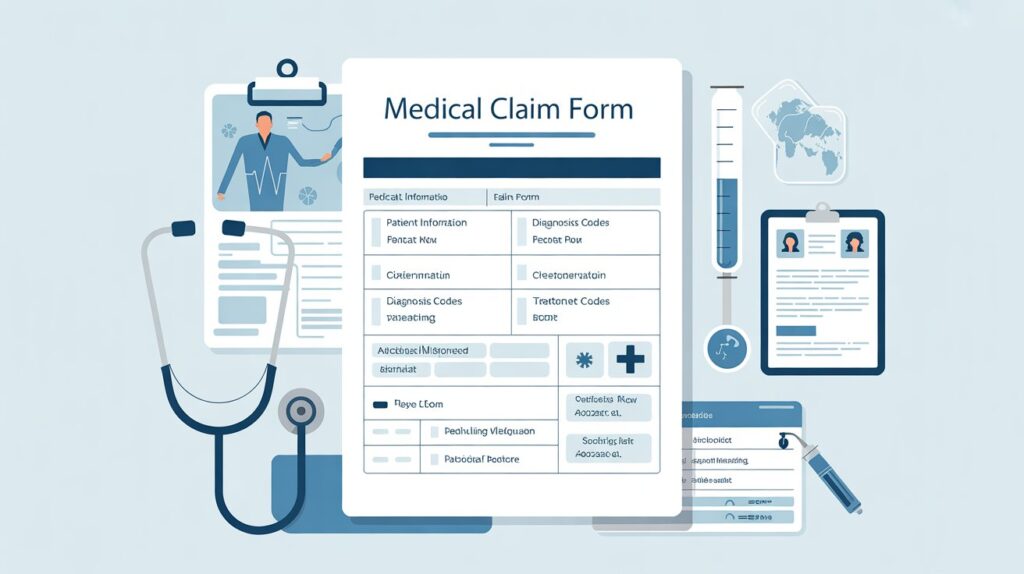
Why Medical Claims Are Important?
Every practice depends on getting paid for the work it does. Medical claims are the main way your practice gets money from insurance . Without claims, even if your doctor treats patients every day, your practice will not receive proper payment.
Medical claims are important for several reasons. First, they show exactly what services were provided . Insurance companies cannot guess what was done—they need proof. A claim gives them all the details: patient information, procedure codes, diagnosis codes, and charges. When claims are accurate, insurance pays faster and without problems.
Second, medical claims protect your practice legally . If insurance questions a payment, the claim serves as proof of services. It shows that your practice provided treatment and charged the correct amount. A clean claim avoids audits, rejections, and unnecessary disputes.
Third, claims help your practice plan finances . Each claim shows how much the practice should receive. Staff can track which claims are paid, pending, or need follow-up. This helps the practice manage money, plan expenses, and avoid cash flow problems.
Fourth, medical claims help patients too . A correct claim confirms insurance covers the treatment. Patients don’t have to pay more than needed, and there is no confusion about coverage.
Finally, claims keep your practice professional and organized . Accurate, timely claims show that your practice knows billing rules and follows them carefully. This builds trust with insurance companies and with patients.
Because of all this, every staff member handling claims must check details carefully . Even a small mistake can delay payment or cause denial. Proper claims save time, reduce stress, and help your practice run smoothly.
Key Parts of a Medical Claim
A medical claim is not just one page with some numbers. It is made of many small parts , and every part has a job. If one part is wrong or missing, insurance may not pay your practice. That is why your staff must understand every section of a medical claim very clearly.
Below are the main parts that every claim must have.
Patient Information
This part tells insurance who the patient is . It includes the patient name, date of birth, gender, and insurance ID number. If even one letter in the name is wrong or the date of birth does not match, the claim can be rejected. Insurance systems match this data with their records, so it must be exact.
Practice and Provider Information
This part shows who gave the care . It includes your practice name, address, phone number, and the doctor or provider NPI number. Insurance uses this to know which practice should be paid. If the NPI is wrong, payment can go to the wrong place or be denied.
Insurance Information
This part shows which insurance company is responsible for payment. It includes the plan name, policy number, and group number. This tells insurance that the patient was covered on the day of service.
Diagnosis Codes
Diagnosis codes explain why the patient was treated . These codes come from ICD. They tell insurance what problem the patient had. For example, chest pain, diabetes, or high blood pressure all have different codes. The diagnosis must match the treatment given.
Procedure Codes
Procedure codes come from CPT . They tell insurance what the doctor did . For example, exams, tests, or treatments all have different CPT codes. If the wrong code is used, insurance may not pay or may pay less.
Dates of Service
This part shows when the patient was treated . Insurance only pays for services given while the policy was active. Wrong dates can cause denial.
Charges
This part shows how much your practice is asking to be paid . Each service has its own amount. Insurance uses this to calculate how much they will allow and pay.
Provider Signature
Some claims need a provider or practice signature. This confirms the services were done and billed honestly.
Each of these parts must work together. When all sections are correct, your claim becomes a
clean claim , which means faster payment and fewer problems for your practice.
How Medical Claims Move Through the Insurance System
When your practice sends a medical claim, it does not go straight to payment. The claim travels through several steps inside the insurance system. Each step checks something different. If the claim passes all checks, your practice gets paid. If it fails at any step, the claim is delayed or denied.
First, the claim goes into the insurance intake system . Here, the insurance company checks if the patient is active and if the policy was valid on the date of service. If the patient coverage is not active, the claim stops here.
Next, the claim goes to a format check . Insurance systems make sure the claim form is filled in correctly. They check patient name, insurance number, provider NPI, and service dates. If something is missing or typed wrong, the claim is rejected.
After that, the claim goes to code review . Insurance checks the CPT and ICD codes. They look to see if the diagnosis matches the procedure. If a heart test is billed but the diagnosis does not support it, the claim can be denied.
Then the claim goes to policy rules . Insurance checks what the patient plan covers. Some plans do not pay for certain services. If the service is not covered, insurance will deny it or pay only part of it.
After this, the claim goes to pricing . Insurance decides how much they allow for each service. They use their own fee schedule, not the practice charges.
Finally, the claim goes to payment or denial . If everything is correct, insurance sends payment to your practice. If there is a problem, they send a denial or request for more information.
This is why clean claims are so important. A correct claim moves fast. A bad claim gets stuck.
Common Types of Medical Claims
Medical claims are not all the same. Different situations use different types of claims. Your practice must know which type to send, or insurance may not process it. The table below shows the most common claim types used in medical billing.
| Claim Type | What It Means | When Your Practice Uses It |
| Primary Claim | The first claim sent to insurance | When the patient has only one insurance |
| Secondary Claim | The claim sent after the first insurance pays | When the patient has two insurance plans |
| Corrected Claim | A claim sent to fix a mistake | When the first claim had wrong data |
| Resubmitted Claim | A claim sent again after denial | When insurance asks for changes |
| Paper Claim | A claim sent by mail | When electronic claims are not allowed |
| Electronic Claim | A claim sent through software | Used by most practices today |
| In Network Claim | Sent to patient’s main insurance | When the practice is in the plan |
| Out of Network Claim | Sent when the practice is not in the plan | When the patient uses outside coverage |
Knowing the correct claim type helps your practice avoid delays and payment problems.
In-Network vs Out-of-Network Claims
When your practice treats a patient, the insurance plan may have a network of preferred doctors and clinics. These are called in-network providers . If your practice is part of this network, claims are usually easier to process, and payment comes faster. When your practice is not in the network , it is called out-of-network , and claims can be more complicated.
Understanding the difference between in-network and out-of-network claims is important for your staff. It affects how much insurance pays , how fast payment comes , and how much the patient may owe .
For in-network claims , your practice follows the rules set by the insurance plan. The insurance usually pays a higher percentage, and the patient may only need to pay a copay or deductible. In-network claims are often processed faster because insurance already has agreements with your practice.
For out-of-network claims , insurance may pay less or not at all. The patient may have to pay more, and your staff may need to submit additional documentation. Out-of-network claims can take longer to process and sometimes require pre-approval.
Your billing staff must know whether the patient is in-network or out-of-network before services are provided. This helps set patient expectations , avoid surprises , and prevent denials . If the patient is out-of-network, your staff may need to explain that the patient may be responsible for extra costs.
Out-of-network claims often need extra steps : verifying coverage, checking allowed amounts, and sometimes obtaining pre-authorization. Your team should also check whether the payer requires specific forms or additional documentation.
Proper coding and documentation are important for both in-network and out-of-network claims. Errors in coding can cause delays or denials, especially for out-of-network claims. Clear provider notes and accurate CPT and ICD codes are essential.
Many practices have different billing strategies for in-network and out-of-network patients. For example, for out-of-network patients, your staff may collect a deposit or full payment upfront to reduce financial risk. For in-network patients, claims can usually be submitted without extra payments because insurance covers most of the cost.
In-Network vs Out-of-Network Claims
| Feature | In-Network | Out-of-Network |
| Payment Speed | Faster | Slower |
| Insurance Coverage | Higher | Lower or partial |
| Patient Responsibility | Usually copay/deductible | Often higher, may pay full upfront |
| Pre-Authorization | Sometimes required | Often required |
| Denial Risk | Lower | Higher |
| Documentation Needed | Standard | Extra forms or documentation may be required |
| Claim Submission | Standard electronic or paper | May require special submission or appeal |
| Coding Importance | Important | Very important to prevent denial |
| Staff Effort | Moderate | High, more follow-up needed |
| Revenue Predictability | High | Less predictable |
For in-network claims, your team can focus on speed and accuracy . Verify patient information, check coverage, use correct codes, and submit the claim electronically. Because agreements with insurance exist, payment is more predictable, and follow-ups are easier.
For out-of-network claims, your team must plan carefully . Verify the patient’s plan, check allowed amounts, collect any required payments upfront, and prepare additional documentation. Staff should also explain costs to the patient before the service. This reduces surprise bills and confirms the patient knows their responsibility.
Both claim types need accurate coding and documentation . Provider notes must clearly describe services provided. CPT and ICD codes must match exactly what was done and why. Denials are more common for out-of-network claims, so extra attention is needed.
Staff training is also critical. Your team should know how to check patient insurance , how to submit claims properly , and how to follow up on unpaid claims . Consistent processes reduce errors, speed up payment, and protect your practice’s revenue.
In-network claims are simpler, but your team should never assume all information is correct. Always verify coverage and patient data. Out-of-network claims require more time and effort, but with careful handling, your practice can still collect most of the payment.
Proper systems, staff training, and software support help your practice manage both types efficiently. This confirms claims move quickly, payments are received, and patients remain satisfied.
Clean Claim Submission Process
A clean claim means your practice sends a claim that is right the first time . It has no missing data, no wrong codes, and no format problems. Clean claims move fast through insurance and bring payment with less delay.
Correct Patient Data
The process starts at the front desk. Your staff collects patient name, date of birth, insurance number, and plan details. If this data is wrong, the claim will fail later.
Clear Provider Notes
After the visit, the provider writes what was done. These notes must be clear and complete. Coders use these notes to select the right codes.
Accurate Coding
Medical coders choose ICD codes for diagnosis and CPT codes for procedures. The codes must match what the provider did. Wrong codes lead to denial.
Proper Charge Entry
The biller enters codes and charges into the system. Every service must be listed with the correct amount.
Payer Rule Check
Each insurance plan has rules. Some need modifiers or approval. The biller checks these rules before sending the claim.
Claim Scrubber Review
Software checks the claim for errors like missing data or wrong code pairs. These errors are fixed before sending.
Timely Claim Submission
After all checks, the claim is sent to insurance on time. Fast submission means faster payment.
Electronic vs Paper Claim Submission
Practices can send medical claims in two main ways. One is electronic , and the other is paper . Most practices today use electronic claims because they are faster and safer. The table below shows how they are different.
| Feature | Electronic Claims | Paper Claims |
| How it is sent | Through billing software | Through postal mail |
| Speed | Very fast | Very slow |
| Error rate | Low because system checks | High because humans fill it |
| Tracking | Easy to track in system | Hard to track after sending |
| Cost | Lower cost | Higher cost for printing and mailing |
| Acceptance | Accepted by most insurance | Not accepted by all payers |
| Fixing errors | Can be corrected quickly | Must be mailed again |
Electronic claims help your practice get paid faster and with fewer problems. Paper claims are now used only when required by some insurance plans.
Top Reasons Medical Claims Get Denied
Medical claim denials hurt your practice. They delay payment and create extra work. Below are the most common reasons claims are denied.
- Wrong patient name, date of birth, or insurance number
- Missing or incorrect provider NPI
- CPT or ICD codes do not match the service
- Service not covered by the patient plan
- Claim sent after the deadline
- Missing modifier when required
- No prior approval for the service
- Duplicate claim sent
- Policy was not active on the date of service
- Poor or missing provider notes
When your practice avoids these mistakes, more claims get paid the first time.
How to Fix and Resubmit a Denied Medical Claim
When a medical claim is denied, it can feel frustrating for any practice. Your team did the work, the doctor treated the patient, and yet the insurance company did not send payment. But a denied claim does not mean lost money. It means the claim needs to be checked, corrected, and sent again. When this is done the right way, most denied claims can still be paid.
A denial usually comes with a message from the insurance company. This message explains why the claim was not accepted. It may say there was missing information, wrong codes, expired insurance, or no approval. Your billing staff must read this message very carefully. This is the first step. If the reason is not understood, the same mistake will happen again.
The first thing your practice should do is review the denial code . Every insurance company sends a reason code with the denial. This code tells what went wrong. It might be for patient details, coding errors, coverage issues, or timing. Your biller must look up this code and understand what it means.
After this, your team should open the original claim. Look at all parts of it. Check the patient name, date of birth, insurance ID, provider NPI, service date, and all codes. Compare it with the denial reason. Very often, one small error caused the whole claim to fail.
If the problem is patient or insurance information, your staff should contact the patient or check the insurance system to get the correct data. If the insurance number was wrong or the plan was inactive, this must be fixed before resubmission. Sending the same wrong information again will lead to another denial.
If the problem is with codes , then your coder should review the doctor’s notes. The notes must support the CPT and ICD codes used. If the diagnosis does not support the procedure, insurance will not pay. The coder must select a code that truly matches what the provider did and why it was done.
Sometimes a claim is denied because no prior approval was on file. In this case, your staff may need to contact the insurance company and ask if a retro approval is allowed. Some payers accept this if the service was medically needed. If approval is not possible, your practice may need to bill the patient.
If the claim was denied for being late , your practice should check the filing deadline. Many payers allow resubmission within a set time. If it is still inside the limit, you can resend the claim with a correction. If the time has passed, you may need to appeal.
Once the mistake is found and corrected, the claim must be marked as a corrected or resubmitted claim . This tells the insurance company not to treat it as a new claim but as a fix to the old one. This is very important. If you send it as a new claim, it may be denied as a duplicate.
After resubmission, your team must track the claim . Do not assume it will be paid. Use your billing software or payer portal to check its status. If it stays pending for too long, your staff should call the insurance company to ask for an update.
Sometimes insurance will still deny the claim after resubmission. In this case, your practice may need to file an appeal . An appeal is a formal request asking the insurance company to review the claim again. The appeal should include a letter, medical notes, and any proof that shows the service was correct and needed.
Writing a good appeal letter is important. It should be clear, simple, and based on facts. It should explain what service was done, why it was needed, and why it should be paid. Many claims get approved after a strong appeal.
Your practice should also learn from every denial . If many claims are denied for the same reason, it means there is a problem in your workflow. Maybe front desk data is wrong, or coding is weak, or staff is missing payer rules. Fixing these issues helps stop future denials.
Denials are part of medical billing, but they should not control your practice. With the right steps, most denied claims can be corrected and paid. A strong follow-up system protects your revenue and keeps your cash flow healthy.
How Medical Practices Can Reduce Claim Denials
Claim denials create stress for practices. They slow down payment and increase staff workload. The good news is that many denials can be prevented if the right steps are followed from the start. Reducing denials helps your practice get paid faster and stay financially stable.
The first step is correct patient registration . Front desk staff must collect accurate patient name, date of birth, insurance ID, and plan details. Insurance cards should be checked carefully at every visit. Even one small typing mistake can cause a denial.
The second step is insurance verification before the visit . Your staff should confirm that the patient policy is active and that the service is covered. This helps avoid denials for inactive plans or non-covered services.
The third step is clear provider documentation . Doctors must write clear notes that explain what service was done and why it was needed. Coders depend on these notes. Poor documentation leads to wrong coding and denied claims.
The fourth step is accurate medical coding . Coders must choose CPT and ICD codes that truly match the provider notes. Codes must follow payer rules. Using outdated or incorrect codes often leads to rejection.
The fifth step is checking payer rules . Each insurance company has its own rules. Some need modifiers, some need approval, and some have limits. Your billing team must know these rules before sending claims.
The sixth step is claim review before submission . Use claim scrubbers or manual checks to find missing data, code errors, or formatting problems. Fixing issues early saves time later.
The final step is strong follow-up . Even clean claims need tracking. Your staff should monitor claims and act quickly if insurance requests more information.
When practices focus on prevention, denials drop, payments come faster, and staff workload becomes lighter.
Role of Medical Billing Software in Claim Processing
Medical billing software plays a big role in how your practice sends and tracks claims. Without good software, billing becomes slow, manual, and full of mistakes. With the right system, claims move faster and with fewer errors.
Billing software helps your staff enter patient and insurance data in one place. This reduces typing errors and keeps records clean. When a patient returns, their information is already saved, which saves time and avoids mistakes.
The software also helps with medical coding . Many systems suggest codes based on provider notes. This supports coders and helps prevent wrong code use.
Another key feature is the claim scrubber . Before a claim is sent, the system checks it for missing fields, wrong codes, or payer rule issues. This catches problems early and increases clean claim rates.
Billing software also allows electronic claim submission . This means claims go directly to insurance through a clearinghouse. This is much faster than paper and allows real-time tracking.
Your staff can also track claim status inside the system. They can see if a claim is paid, pending, or denied. This helps them follow up on time and keep cash flow steady.
Good billing software supports your practice by making claims easier, faster, and more accurate.
Steps to Submit a Medical Claim
Submitting a medical claim correctly is very important for your practice. If a claim is done wrong, payment is delayed or denied. Your staff must follow each step carefully. Below, we break the claim submission process into simple steps .
Patient Registration
The first step is to collect all patient information . This includes name, date of birth, address, and insurance details. Accurate registration is key because wrong data here can cause claim denials later.
Verify Insurance Coverage
Before services are provided, your staff should check the patient’s insurance . Confirm the plan is active, the service is covered, and if there are any pre-authorizations required. This prevents surprises for both your practice and the patient.
Provider Documentation
Doctors must write clear notes about the patient visit . Notes should explain what was done and why. Coders rely on these notes to select the correct codes. Poor documentation can lead to mistakes and claim denials.
Medical Coding
Professional coders translate provider notes into ICD and CPT codes . ICD codes show the diagnosis, and CPT codes show the service provided. Correct coding is essential for insurance to process the claim correctly.
Superbill Creation
A superbill is a summary of services and codes for a patient visit. It includes patient info, codes, charges, and provider details. Superbill acts as the foundation for the claim and must be accurate.
Claim Entry and Review
Your billing staff enters the claim into the system. Then they review all data carefully. This includes patient info, provider info, codes, charges, and insurance details. Some practices use software to scrub claims for errors before submission.
Claim Submission
Finally, the claim is submitted to the insurance company. This can be electronic or paper , depending on payer requirements. Electronic submission is faster and easier to track.
Track and Follow-Up
After submission, your staff should monitor the claim status . They can see if it is pending, approved, or denied. Quick follow-up on issues confirms faster payment and fewer delays.
Handle Denials and Corrections
If the claim is denied, your staff reviews the reason, corrects the errors, and resubmits the claim. This step confirms that the practice still receives payment and avoids repeated mistakes.
Payment Posting
Once the claim is approved, insurance payment is posted to the patient account . This helps your practice keep accurate financial records and track revenue.
Following these steps carefully helps your practice reduce errors, avoid denials, and get paid faster . Every step is important, and skipping even one can cause problems.
Top Reasons Medical Claims Get Denied
Medical claim denials are common and can slow down your practice’s payments. Knowing why claims get denied helps your staff prevent mistakes and get paid faster. Here are the main reasons:
- Wrong Patient Information – Name, date of birth, or insurance ID is incorrect. Even a small typo can cause a denial.
- Incorrect Provider Information – Wrong NPI number, address, or provider details. Insurance must know who treated the patient.
- Missing or Wrong Codes – CPT and ICD codes do not match the service or diagnosis. Coding errors are one of the biggest reasons for denial.
- Service Not Covered – The patient’s plan does not include the service provided. Check coverage before billing.
- Late Claim Submission – Claims sent after the allowed time period may be denied. Each insurance has its own deadline.
- Missing Modifiers – Some services require special modifiers. Without them, insurance may reject the claim.
- No Prior Authorization – Certain procedures require pre-approval. Claims without it can be denied.
- Duplicate Claims – Submitting the same claim more than once can trigger a denial. Keep careful records.
- Expired Policy – If the patient’s insurance expired before the service, the claim will not be accepted.
- Incomplete Documentation – Provider notes missing details or not clear enough for coding can cause denial.
By checking for these issues before submission, your practice can avoid denials, save time, and improve cash flow .
How Outsourced Medical Billing Services Help Practices?
Many practices find managing medical claims challenging. Mistakes in claims, wrong codes, or missed deadlines can cause payment delays or denials. Outsourced medical billing services help practices handle claims quickly, accurately, and efficiently , so revenue is steady, and staff can focus on patients.
Accurate Claim Submission
Outsourced billing teams check every claim carefully before sending it to insurance. They verify patient information, provider details, and all codes. This reduces the risk of denials and confirms claims are processed faster.
Faster Payment
Billing services have experience with multiple insurance companies. They know the rules, forms, and deadlines. This expertise allows them to submit clean claims the first time, which speeds up payment for your practice.
Denial Prevention
Claims can be denied for small mistakes. Outsourced teams review each claim, check coding, and confirm all requirements are met. By preventing errors before submission, your practice avoids common claim denials.
Handling Complex Claims
Some claims are more complicated, like out-of-network services or special procedures. Outsourced billing experts understand the rules and can submit these claims correctly, reducing rejections and delays.
Appeals and Follow-Up
If a claim is denied, billing services handle the appeal process. They review the denial reason, correct errors, and resubmit claims with proper documentation. This confirms your practice still receives payment.
Reporting and Analytics
Outsourced billing teams provide reports showing claim status, denied claims, and payment trends. Your practice can see which types of claims are slow or problematic and make informed decisions to improve workflow.
Staff Support and Training
Billing services can also train your staff to understand claim requirements. Even if your practice handles some billing in-house, staff knowledge of claims, coding, and insurance rules improves overall efficiency.
By using outsourced medical billing services, your practice can reduce errors, speed up payments, and maintain a steady cash flow . Staff can focus on patient care instead of spending hours on claim corrections.
How Clean Claims Improve Practice Revenue and Reduce Workload
Clean claims do more than just get paid on time. They make the entire practice work better. When every claim is accurate, staff spend less time chasing payments, fixing errors, or calling insurance companies. This gives them more time to focus on important tasks like scheduling patients, helping with questions, and keeping records updated. When staff do not have to deal with messy claims, stress levels go down, and the office runs more smoothly.
Revenue grows steadily when claims are clean. Payments come faster, which helps the practice pay bills, buy supplies, and plan budgets. Delayed or denied claims can create cash flow problems, forcing staff to work overtime or delay important tasks. Clean claims keep money flowing, which gives the practice financial stability and peace of mind.
Clean claims also help practices measure performance . When billing is accurate, it is easier to see which services bring the most revenue and which may need improvement. Practices can make better decisions about staffing, scheduling, and resource allocation. For example, if
certain procedures consistently generate clean claims, the practice knows these services are efficient and profitable.
Another big benefit is reducing repetitive work . Staff do not need to resubmit the same claims multiple times. There is no need to track down missing documents or call insurance companies repeatedly. This saves hours of work every week, which adds up over time. Staff can use this saved time for tasks that improve patient care or office operations, like preparing reports, organizing files, or training new employees.
Clean claims also improve communication between staff and patients . When claims are accurate, patient statements are correct, easy to read, and easy to understand. Patients are less likely to call asking why a payment was denied or why their bill is confusing. Clear statements reduce frustration for patients and reduce the number of calls staff have to handle, which again frees time and energy.
Using clean claims makes insurance follow-up simpler . Staff can track payments efficiently and identify problems quickly. If a claim is denied, it is usually easier to resolve because the first submission was correct. Clean claims reduce the risk of long disputes or repeated denials, which protects the practice’s revenue.
Practices also see benefits in staff morale and training . When claims are accurate, staff feel confident and capable. They spend less time fixing mistakes and more time doing meaningful work. This creates a positive work environment, reducing turnover and the need to constantly train new staff. Experienced staff can focus on improving processes rather than firefighting errors.
Clean claims also allow practices to plan for growth . With accurate billing, it is easier to predict revenue and plan investments. Practices can hire more staff, expand services, or upgrade technology because they know claims are processed efficiently and payments are predictable. Reliable cash flow makes the practice more stable and allows it to serve more patients effectively.
Finally, clean claims protect the practice legally and financially . Errors in claims can trigger audits or penalties from insurance companies. By submitting accurate claims, the practice reduces risk and avoids fines. This protection is especially important for practices dealing with complex procedures, out-of-network claims, or multiple payers.
Overall, clean claims do more than just get paid. They increase revenue, save staff time, reduce stress, improve patient satisfaction, simplify insurance follow-up, support staff morale, and protect the practice from financial risks . A practice that prioritizes clean, accurate claims will run efficiently, grow steadily, and maintain healthy finances, all while giving staff the freedom to focus on patient care instead of administrative problems.