
Ten years ago, medical billing was already using computers, but the process was not as smooth as it is today. Many clinics and hospitals still depended on older systems. These systems worked, but they were slow, confusing, and hard to manage. Billing teams spent a lot of time doing manual work, even when software was used.
Most medical offices used basic billing software that had limited features. These systems could create bills and send claims, but they did not connect well with other systems. For example, billing software often did not connect properly with patient records or insurance portals. Because of this, staff had to enter the same information again and again. This increased workload and caused many mistakes.
Medical billing staff usually worked from the office only. Remote work was very rare. Billing teams had to sit in front of office computers to access the system. If someone was sick or away, work often stopped or slowed down. There was no easy way to log in from home or another location.
Insurance claim submission was also slower. Many insurance companies accepted electronic claims, but the process was not fully optimised. Claims were rejected more often because of small errors like wrong codes, missing details, or format issues. When a claim was rejected, staff had to fix it manually and send it again. This caused payment delays.
Another big issue was limited automation . Ten years ago, billing systems did not have smart automation features. Tasks like eligibility checks, claim status tracking, and payment posting often needed human effort. Billing staff had to log in to insurance portals, check claim status one by one, and update records manually.
Reporting was also very basic. Many systems could only generate simple reports. These reports were hard to understand and not very helpful for decision-making. Doctors and clinic owners could not easily see which services were paid, which claims were pending, or where revenue was leaking.
Data storage was mostly local , not cloud-based. Billing data was stored on office servers or computers. This created many problems. If a system crashed or data was lost, recovery was difficult. Backups were not always regular or safe. Security was also weaker compared to today’s standards.
Patient communication was limited too. Patients usually received paper bills by post. Online payment options were not common. If a patient had a question about a bill, they had to call the office. This increased phone calls and office workload.
Compliance rules were present, but tools to manage them were not strong. Billing staff had to rely on their own knowledge to follow rules like coding updates and insurance changes. When rules changed, systems were slow to update. This caused coding errors and claim denials.
Small clinics faced more problems than large hospitals. They had fewer staff and limited budgets. Many small practices used outdated software because upgrading was expensive and complex. Training staff on new systems was also difficult.
Overall, medical billing ten years ago worked, but it was slow, manual, and stressful . Billing teams spent more time fixing errors than improving cash flow. Payments took longer, and clinics had less control over their billing performance.
This stage created the need for better systems, faster software, and smarter technology. Over time, billing systems started to improve, leading to the changes we see today.
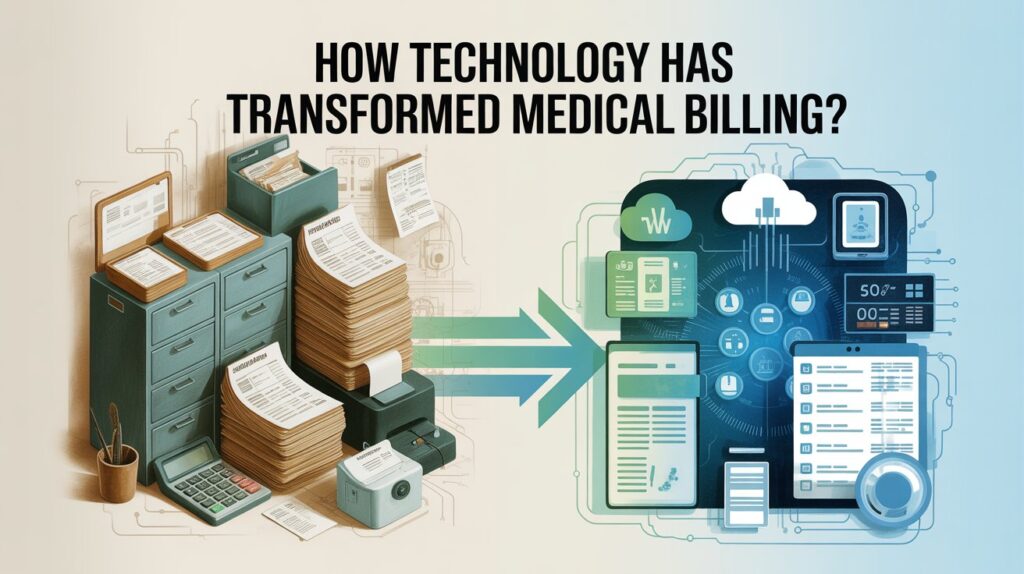
Common Problems in Old Medical Billing Systems
Old medical billing systems had many problems that made work hard for clinics, hospitals, and billing staff. Even though computers and software were already in use, the systems were not smart or flexible. These problems affected payments, staff time, and patient satisfaction.
One big problem was manual data entry . Billing staff had to enter the same patient information many times. Patient name, date of birth, insurance details, and treatment codes were often typed again and again in different systems. This wasted time and increased the chance of mistakes. Even a small typing error could cause a claim to be rejected.
Another common issue was claim denials . Old systems did not help much in checking errors before sending claims. They did not warn staff about missing information or wrong codes. Because of this, many claims were rejected by insurance companies. When a claim was denied, staff had to review it, fix the problem, and send it again. This delayed payments and increased workload.
Old billing systems were also slow . Many systems took a long time to load data or process claims. Staff had to wait for screens to open or reports to generate. When the system was slow, productivity dropped. Billing teams could not complete enough work in one day.
System crashes were another serious problem. Older software was not stable. Sometimes the system would freeze or stop working without warning. When this happened, staff could not access billing data. In some cases, data was lost. This created stress and fear, especially near billing deadlines.
Poor system integration was also very common. Billing software often did not connect well with electronic medical records, scheduling systems, or insurance portals. Because of this, information did not flow smoothly. Staff had to switch between systems and copy information manually. This made the process confusing and tiring.
Reporting and tracking were weak in old systems. Many systems only showed basic information. Billing managers could not clearly see which claims were unpaid, which patients owed money, or which insurance companies caused the most delays. Without clear reports, it was hard to improve billing performance.
Another problem was limited updates . Medical billing rules and codes change often. Old systems were slow to update these changes. Sometimes staff had to update codes manually or wait for long software updates. If updates were missed, claims were sent with old codes and got rejected.
Security was also a concern. Old systems did not have strong data protection. Patient billing data was stored on local computers or servers with weak security. This increased the risk of data loss or unauthorised access. Backups were not always regular, and recovery was difficult.
Training was another challenge. Old billing systems were not user-friendly. Screens were confusing, and instructions were unclear. New staff needed a long time to learn the system. Even experienced staff made mistakes because the system design was poor.
Patient billing experience also suffered. Patients received paper bills that were hard to understand. There were few online payment options. If patients had questions, they had to call the clinic and wait. This caused frustration for patients and increased calls for staff.
Small clinics faced more pressure from these problems. They had fewer billing staff, so even small issues caused big delays. Many small practices could not afford better systems, so they continued using outdated software.
All these problems showed that old medical billing systems were not built for speed, accuracy, or growth. These challenges pushed the healthcare industry to look for better solutions, which led to improved billing systems over time.
How Billing Systems Improved Over Time
Over the last ten years, billing systems slowly improved to meet the real needs of medical practices. Earlier systems could only handle basic medical billing tasks, but newer systems became more reliable, faster, and easier to use. Software updates helped practices manage insurance billing with fewer errors and less manual work.
Claim submission became smoother because billing systems started checking information before sending claims. This reduced claim rejections and helped practices receive payments faster. Billing software also improved how patient information, treatment details, and medical codes were handled, which increased billing accuracy. Over time, systems became better at managing the full billing workflow, from charge entry to payment posting and follow ups.
Practices gained better control over revenue cycle management because billing data became clearer and easier to track. Reporting tools improved and allowed practices to see unpaid claims, delayed payments, and overall billing performance in one place.
Another important improvement was system stability, as newer billing platforms crashed less and handled large amounts of data more safely. Billing records became easier to store, search, and update, which saved time for billing staff. As billing systems evolved, they also became more secure, helping practices protect patient billing data and meet compliance rules. Software providers began releasing regular updates to keep billing rules and insurance requirements current, which reduced the risk of denied claims. Integration also improved, allowing billing systems to work better with medical records and scheduling tools, which reduced repeated data entry.
These changes helped billing teams work more confidently and reduced daily stress. Practices of all sizes benefited because billing tasks became more organized, more accurate, and less time consuming. Over time, billing systems stopped being simple tools and became essential systems that supported financial stability, steady cash flow, and long term growth for medical practices.
How Better Software Improved Billing Speed
As billing software became better, billing speed improved in a natural and steady way for medical practices. Older software could handle billing tasks, but it worked slowly and required many manual steps. Over time, newer billing software reduced these extra steps and made daily billing work faster. Tasks that once took hours could be completed in less time because the software handled them more smoothly. Claim creation, insurance billing, and payment posting all became quicker as systems improved their processing power and internal flow.
Billing staff no longer had to wait for screens to load or systems to respond, which saved time throughout the day. Faster software also helped practices submit claims on time, reducing delays and improving cash flow. As software performance improved, billing teams could handle more claims without feeling rushed or overwhelmed. System updates focused on speed optimisation, helping billing platforms process large volumes of billing data without slowing down.
Automation also played a role by reducing repeated data entry and speeding up billing workflows. Better software allowed claims to move through the billing process with fewer interruptions, which helped practices receive payments sooner. Billing follow ups became faster because staff could quickly check claim status and take action without switching between systems. Reporting tools also improved in speed, allowing practices to review billing performance and outstanding payments without long wait times.
Faster billing software reduced daily stress for billing teams and allowed them to focus on accuracy instead of delays. Over time, improved software speed helped medical practices manage their billing operations more efficiently and maintain steady financial performance.
Use of Billing Software in Practices and Hospitals
As time passed, billing software became a normal and necessary tool for both small practices and large hospitals. In earlier years, some practices still depended on mixed systems, using software for some tasks and manual work for others. Over time, billing software became more trusted, more stable, and easier to use, so more practices fully adopted it for daily billing work. This shift helped practices manage medical billing in a more organized way and reduce delays in insurance billing and payments.
Billing software started supporting the full billing process instead of just one part. Practices could use one system for charge entry, claim submission, payment posting, denial tracking, and patient billing. This reduced confusion and helped billing staff work faster. Hospitals also benefited because billing software could handle a large number of claims without slowing down. As systems improved, they became strong enough to support high billing volume while keeping data accurate.
Another reason billing software became widely used was better training and simpler design. Earlier systems were hard to learn, but newer software focused on basic screens, clear buttons, and easy steps. This helped new billing staff learn faster and reduced mistakes.
Practices did not need long training periods, which saved time and money.
Billing software also helped practices stay more organized. Patient billing records were stored in one place and could be accessed quickly. Billing staff could search claims, check
payment status, and review billing history without going through paper files. This improved daily workflow and reduced stress for billing teams.
Insurance billing also became easier with billing software. Claims could be sent electronically, tracked inside the system, and followed up quickly if needed. This helped practices reduce unpaid claims and improve cash flow. Over time, billing software became a key part of financial stability for medical practices and hospitals.
Below is a simple table showing how billing software helped practices and hospitals compared to older methods:
| Area of Billing Work | Before Billing Software | With Billing Software |
| Claim submission | Manual or slow systems | Faster electronic claims |
| Billing accuracy | More human errors | Fewer errors with checks |
| Payment tracking | Hard to follow | Easy to track payments |
| Billing records | Paper files or mixed systems | Central digital records |
| Staff workload | High and stressful | More balanced and organized |
| Reporting | Limited and slow | Clear and quick reports |
Billing software also made teamwork easier inside practices. Billing staff could leave notes, update claim status, and share information within the system. This reduced emails and phone calls between teams. Managers could review billing performance and identify problems early, which helped improve results.
For hospitals, billing software supported multiple departments and services in one system. This helped manage complex billing needs and large patient volumes. Practices of all sizes gained better control over their billing operations and could focus more on patient care instead of billing problems.
Over time, the use of billing software became a standard part of healthcare operations. It helped practices work faster, reduce errors, improve insurance billing, and maintain steady revenue. This wide adoption prepared the healthcare industry for even more advanced billing tools in the years that followed.
Electronic Medical Records and Billing Connection
Over the last decade, electronic medical records, or EMRs, became a central part of billing in medical practices. Before EMRs, practices kept patient information in paper files, and billing staff had to enter data manually into billing systems. This caused repeated work, mistakes, and slower claim processing. With EMRs, patient records, visit notes, treatment details, and diagnosis codes could be stored digitally and shared directly with billing systems. This connection made billing faster, more accurate, and less stressful for staff.
Practices no longer had to retype patient information or hunt for old files, and insurance claims became easier to submit correctly.
The link between EMRs and billing systems also helped staff check insurance eligibility, treatment codes, and claim requirements automatically. This reduced rejected claims and saved time. Staff could see patient details, insurance coverage, and billing history in one place, which improved workflow and efficiency. Practices could now manage large numbers of patients without increasing errors or workload.
Electronic medical records also made reporting easier. Billing staff could quickly generate reports about unpaid claims, pending payments, or treatment trends. Practice managers could see financial health clearly and make better decisions. The combination of EMRs and billing systems improved accountability and reduced errors caused by missing or wrong information.
EMRs also supported compliance. Billing systems connected to EMRs could check coding and insurance rules automatically, ensuring claims followed federal and state regulations. This reduced risks of audits and fines for practices. Patient privacy improved too, because EMRs allowed controlled access to billing and medical information. Only authorized staff could see sensitive data.
The integration of EMRs and billing systems helped practices of all sizes. Small practices could handle more patients with limited staff, while hospitals could manage complex billing for multiple departments efficiently. Overall, this connection saved time, reduced mistakes, improved payments, and supported smooth operations.
Here is a simple example table showing how EMRs improved billing for practices:
| Feature | Before EMRs | After EMRs |
| Patient data entry | Manual, repeated | Automatic, once only |
| Claim accuracy | More errors | Fewer errors |
| Billing speed | Slow | Faster processing |
| Insurance eligibility check | Manual | Automated |
| Reporting | Limited | Clear and quick |
| Compliance checks | Manual | System-guided |
| Staff workload | High | Reduced |
By linking electronic medical records with billing systems, practices could focus more on patient care and less on paperwork. This improvement formed the foundation for automation, cloud-based systems, and smarter billing tools in the following years.
How Automation Reduced Billing Errors
Automation has been one of the biggest improvements in medical billing over the last decade. Before automation, billing staff had to check every claim manually, enter data repeatedly, and correct mistakes one by one. This process took a lot of time and still allowed errors to happen. Even small mistakes, like a wrong code or missing patient information, could cause claim rejections, delayed payments, and extra work. Automation changed all of that for practices.
With automated billing tools, many repetitive tasks are now done by the software itself. For example, patient information, treatment codes, and insurance details can be automatically transferred from electronic medical records to billing systems. This reduces repeated data entry and prevents common human mistakes. The software can also check for errors before a claim is submitted, flagging missing information, incorrect codes, or formatting issues. This helps practices send accurate claims the first time.
Automation also helps with insurance billing. Practices no longer need to manually verify each patient’s coverage for every visit. Automated systems can check insurance eligibility and coverage limits in real time. They can alert staff if a patient’s insurance has changed or if a service is not covered, which reduces rejected claims and improves cash flow.
Another important improvement is automated claim tracking. Instead of manually following up on unpaid or rejected claims, the software can track each claim and notify staff when action is needed. This keeps billing workflows smooth and confirms claims move quickly from submission to payment. Practices can now handle more patients without increasing errors or workload.
Automation also supports compliance. Billing software can be programmed to follow federal, state, and insurance rules automatically. This reduces the risk of audits and fines because the system checks coding, documentation, and submission standards. It also helps practices stay up-to-date with changing regulations without relying solely on staff knowledge.
Reporting and analytics have improved with automation too. Automated systems can generate detailed reports on pending claims, denied claims, revenue trends, and billing performance. Practice managers can quickly identify problem areas and make informed decisions. This improves financial planning and confirms steady revenue.
Automation has helped both small and large practices. Small practices with fewer staff can handle billing more efficiently, while large hospitals can manage complex billing for multiple departments. Staff can now focus on tasks that need human attention, like patient communication or complex claim review, rather than repetitive work.
Overall, automation has reduced errors, saved time, improved billing speed, and strengthened financial stability for practices. It laid the foundation for more advanced technology in medical billing, such as artificial intelligence, predictive analytics, and cloud-based solutions that continue to improve accuracy and efficiency.
Online Insurance Claim Submission
Online insurance claim submission has completely changed how medical practices handle billing. Before online claims, practices had to fill out paper forms, mail them, or manually enter information into insurance portals. This process was slow, often taking days or weeks, and mistakes were easy to make. A small error could cause claim rejection, delaying payment and adding extra work for staff. With the rise of online claim submission, practices can now send claims electronically, making the process faster, more accurate, and easier to manage.
Electronic claims allow billing systems to connect directly with insurance companies. When a claim is submitted online, the software automatically checks for common errors, verifies patient details, and confirms codes match the treatment provided. This reduces rejected claims and the need for repeated corrections. Practices can also see the status of each claim in real time. Staff no longer need to call insurance companies or wait for paper responses, which saves time and reduces stress.
Online claim submission also improves cash flow. Payments are received faster because claims move through the insurance process more efficiently. Practices can track which claims are pending, approved, or denied, and take quick action when needed. Automated alerts notify staff about issues with specific claims, helping practices resolve problems without delay.
Another advantage is better reporting. Practices can generate reports on claim submissions, denials, and approvals, helping managers identify patterns and improve billing performance. This visibility also helps small practices plan for staffing and financial needs while ensuring larger practices can manage complex workflows across multiple departments.
Online claims also help ensure compliance. Systems can follow federal and state insurance rules automatically, reducing the risk of audits and fines. They can also log submission history, making it easy to track what was sent and when. This record-keeping protects practices in case of disputes or insurance reviews.
Online insurance claim submission has made medical billing faster, more accurate, and more efficient. Practices of all sizes now benefit from reduced errors, improved payment speed, and better management of billing workflows. It has become an essential tool that supports financial stability and helps staff focus on patient care instead of paperwork.
How Cloud Systems Changed Medical Billing
Cloud systems have had a major impact on medical billing in practices. Before cloud technology, billing data was stored on office computers or local servers. This created problems if a computer crashed, files were lost, or staff needed to work from a different location. Cloud systems moved billing data to secure online servers, allowing staff to access information anytime, from anywhere, using just a computer or tablet. This flexibility changed how practices manage medical billing and improved overall efficiency.
Cloud-based billing systems also improved collaboration. Multiple staff members can work on the same billing system at the same time without creating duplicates or errors. This is especially useful for larger practices and hospitals with multiple locations. Teams can update patient billing records, track claims, and post payments in real time. Managers can see billing progress instantly and make decisions faster because data is updated automatically.
Another benefit of cloud systems is data security and backup . Cloud platforms provide secure storage with automatic backups, reducing the risk of losing billing information. Access controls allow practices to decide who can see or edit sensitive patient and billing data. This improves compliance with federal and state privacy regulations and reduces the risk of breaches or accidental data loss.
Cloud systems also support integration with other tools. Billing systems can now connect with electronic medical records, insurance portals, scheduling software, and reporting tools seamlessly. This reduces repeated data entry, minimizes errors, and makes workflows smoother. Automation and cloud technology together allow practices to handle more patients without increasing staff workload.
Reporting and analytics have also improved. Cloud systems can generate real-time reports on unpaid claims, denied claims, billing performance, and trends. Practices can identify problem areas quickly and take corrective action. These insights help improve revenue management and streamline operations.
Smaller practices benefit from cloud billing because they don’t need expensive local servers or IT teams. Large hospitals benefit because cloud systems can handle high volumes of billing data efficiently. Updates and software maintenance are handled by the cloud provider, so practices always have the latest features and security without extra effort.
Cloud systems changed medical billing by making it more flexible, secure, collaborative, and efficient. Practices can now access their billing data anytime, work together easily, stay compliant, and manage operations more effectively, which lays the foundation for smarter, technology-driven billing in the future.
Better Data Safety and Patient Privacy
Have you ever worried about your personal information being stolen? Do you wonder how your medical bills stay safe?
Medical billing today is not only about sending bills or getting payments. It is also about keeping patient information safe. Practices handle very sensitive details like Social Security numbers, addresses, insurance info, and medical history. Ten years ago, many practices kept records on paper or local computers. This made it easy to lose, steal, or damage the data. Mistakes could lead to lost payments, legal problems, or fines. Technology has changed all this. Today, billing systems help practices protect patient data and follow rules for privacy.
Modern billing software uses strong security tools to protect information. One example is encryption , which turns data into a secret code. Even if someone tries to steal it, they cannot read it. Billing software also uses strong passwords and two-factor authentication , so only authorized staff can see or edit information. Practices can control who can access patient billing records. This stops unauthorized access and keeps data safe.
Automatic backups are another important tool. Before, if a computer crashed, all billing information could be lost. Now, software stores copies of data safely in the cloud. Even if a device fails, practices can restore records quickly. This keeps claims, patient records, and payments safe without extra effort.
Secure communication is also part of modern billing. Practices can send bills or reminders electronically without sending them through unsafe email or paper mail. Every access to billing records is logged, so managers know who looked at the data or made changes. This helps staff stay accountable and reduces mistakes.
Compliance with rules like HIPAA is easier now. Billing software guides staff to follow privacy laws. The system gives alerts if a step could break the rules. Regular updates make sure the software stays current with changing regulations. This helps practices avoid fines and protects patients.
Here is a simple table showing how modern billing systems protect data compared to older methods:
| Feature | Before | Now with Modern Billing Software |
| Data storage | Paper files or local computers | Secure cloud storage |
| Data access | Anyone with physical access could see files | Only authorized staff with passwords and permissions |
| Data loss risk | High (computer crash, fire, mistakes) | Low (automatic backups, restore options) |
| Communication | Paper mail, unsafe email | Secure electronic messaging and billing |
| Compliance | Manual, easy to miss rules | Automatic alerts and HIPAA compliance support |
| Audit tracking | Limited | Full logs of who accessed or changed data |
Both small practices and large hospitals benefit from these improvements. Small practices can safely handle patient information without hiring extra IT staff. Large hospitals can manage data for thousands of patients across multiple locations without worrying about privacy or mistakes.
In short, modern billing systems make patient information safe, reduce human mistakes, and confirm practices follow privacy rules. Patients can feel confident their personal and billing data is protected, and practices can focus on work without fear of data loss or violations.
Technology has made safety and privacy a key part of medical billing today.
Easy Billing Reports for Practices and Staff
Medical billing is not only about sending claims and receiving payments. Practices also need to know how their billing is working. They need clear reports to see which claims are paid, which are pending, and where mistakes happen. Ten years ago, reports were slow, confusing, or very basic. Billing staff had to make reports manually, which took time and caused errors. Today, modern billing systems, especially with AI, make reporting faster, easier, and more accurate for practices of all sizes.
AI in billing software can automatically organize data and generate clear reports for staff. It can track unpaid claims, rejected claims, and approved payments in real time. Practices no longer have to check each claim manually to know what is happening. AI can also highlight patterns, like which insurance companies delay payments most or which codes cause frequent rejections. This helps practices fix problems quickly and avoid repeated mistakes.
Automated and AI-powered reports can be customized for different staff roles. For example, billing teams can see detailed claim status, while managers can view summaries of revenue, denials, and payment trends. This makes it easier for everyone to understand the practice’s financial health. Staff can also set alerts, so AI notifies them if something unusual happens, like a claim stuck for too long or a sudden increase in rejected claims.
AI can also predict future billing problems. For instance, it can identify claims likely to be rejected before submission, saving practices time and preventing delays. Some systems even suggest corrections or code updates automatically. This reduces human errors and improves the accuracy of billing reports.
Another advantage of AI-powered reports is speed. Reports that used to take hours or even days can now be generated in minutes. Staff can focus more on solving problems and less on compiling data. This also helps practices handle more patients without needing extra staff.
AI also helps practices comply with rules while creating reports. It can check for coding accuracy, insurance regulations, and documentation standards. Practices no longer have to worry about audits because AI confirms the reports meet legal and insurance requirements.
Even small practices benefit a lot from AI in billing reports. They get insights that used to require a large team of staff. Large hospitals can use AI to monitor thousands of claims at once and identify trends across departments. Overall, AI has made billing reporting smarter, faster, and safer.
Remote Medical Billing and Work From Home
Today, medical billing is no longer limited to the office. Practices can now do billing from anywhere because of cloud systems, secure software, and AI tools. Ten years ago, billing staff had to be in the office to access records and submit claims. If someone was sick or traveling, work slowed down. Remote billing has completely changed this. Staff can log in from home, another office, or even a tablet while traveling. This makes billing more flexible and confirms claims are submitted on time.
AI plays a big role in remote billing. AI can automatically check claims for errors, verify insurance details, and flag problems before a staff member even looks at the claim. This is very useful for remote staff because they do not have supervisors next to them all the time.
AI helps prevent mistakes and keeps workflows smooth, even when people work from different locations.
Cloud-based billing software stores all patient and billing data securely online. Staff can access it safely using strong passwords and two-factor authentication. AI also monitors access to detect unusual activity, so even when people work from home, patient information stays protected. This combination of cloud and AI makes remote billing safe and reliable.
Remote billing also improves collaboration. Staff can share notes, update claim statuses, and communicate within the system. AI can automatically organize tasks, prioritize claims, and suggest which tasks need attention first. Practices no longer have delays caused by staff being in different locations. Everyone sees the same up-to-date information.
Remote billing with AI also speeds up reporting. Staff can generate billing reports, track unpaid claims, and review denials in real time. AI can highlight patterns and trends, helping practices make decisions quickly. Managers can oversee billing operations from anywhere without needing to be in the office.
Even small practices benefit because AI and remote billing allow fewer staff to manage many claims efficiently. Large hospitals benefit because remote access lets multiple departments work together without delays. Overall, remote medical billing, powered by cloud systems and AI, improves accuracy, efficiency, and flexibility.
Practices today can work smarter, process claims faster, reduce errors, and keep patient data safe, all while allowing staff to work from home or anywhere.
How Technology Helped Small Practices
Small medical practices face many challenges with billing. They often have fewer staff, limited budgets, and many tasks to handle every day. Ten years ago, small practices struggled to keep up with billing, insurance claims, and payments because older systems were slow, hard to use, and full of mistakes. Technology has changed this completely, making billing faster, more accurate, and easier for small practices.
Billing software today helps small practices automate many tasks. Charge entry, claim submission, payment posting, and denial tracking can all be done with minimal manual effort. AI is an important part of this change. AI can automatically check claims for errors, suggest corrections, and even predict which claims may be rejected. This saves small practices time and prevents lost payments. Staff no longer spend hours fixing mistakes or retyping information.
Here are some ways technology and AI help small practices:
- Automatically check claims for errors before submission
- Suggest corrections for wrong codes or missing information
- Track unpaid claims and pending payments in real time
- Predict which claims are likely to be rejected
- Generate clear billing reports for staff and managers
- Organize patient billing data automatically
- Alert staff about unusual activity or mistakes
- Help follow insurance rules and compliance standards
- Allow staff to work from home or anywhere safely
- Save time so staff can focus on patient care
Cloud systems are also very useful for small practices. They allow billing staff to work from anywhere and access patient records safely. Cloud systems also store backups automatically, so small practices do not risk losing important billing data. AI monitors the data for unusual activity and alerts staff if something looks wrong, keeping patient information safe.
Billing reports have also become easier. AI-powered systems generate clear reports that show unpaid claims, pending payments, and patterns in denied claims. Even a practice with one or two staff members can understand what is happening in billing and make quick decisions to improve revenue. AI can also highlight trends over time, helping small practices plan their finances better.
Another benefit for small practices is compliance. Billing software with AI helps staff follow rules automatically, reducing the risk of fines or audits. AI checks coding, insurance requirements, and documentation standards, which is very helpful for practices that do not have a large compliance team.
Small practices also save money with technology. Less time is spent on manual billing work, fewer mistakes are made, and staff can handle more patients efficiently. This allows practices to grow without hiring many extra staff. AI, cloud systems, and modern billing software together make small practices more competitive and capable.
Technology has transformed billing for small practices. Tasks that once took hours can now be done in minutes. Payments are faster, errors are fewer, and staff can focus more on patient care. AI confirms accuracy, cloud systems provide flexibility, and modern software keeps the practice organized and secure. Today, small practices can run their billing operations almost as efficiently as large hospitals, thanks to technology.
Future of Medical Billing with AI and Technology : 2026 & Beyond
The future of medical billing is very exciting because technology is getting smarter every year. Practices will not just send claims and track payments, they will have AI and advanced software helping in almost every step. Today, AI already helps with checking claims, predicting rejected claims, and organizing data. In the future, AI will do even more to make billing faster, easier, and safer. Practices of all sizes will benefit.
One major change in the future will be fully automated billing workflows . Right now, AI can suggest corrections and predict claim rejections. In the future, it can handle entire billing processes automatically. Staff will still manage exceptions and special cases, but routine claims can be completed by AI in minutes. This will reduce human errors, save time, and let practices focus on patients instead of paperwork.
Another important trend is advanced reporting and analytics . AI will analyze billing data continuously and show clear reports on revenue, unpaid claims, trends in denials, and insurance patterns. Practices can see what is happening in real time and make quick decisions. They will no longer have to wait for weekly or monthly reports. This will improve cash flow and make practices more efficient.
AI will also improve predictive billing . It can forecast which claims may have problems, which patients may need billing reminders, and which insurance companies take longer to pay. Practices can plan ahead and reduce delays in payments. AI can also suggest which staff member should handle a specific claim to improve speed and accuracy.
Here are some ways AI and technology will help practices in the future:
- Fully automate routine claims from start to finish
- Check every claim automatically for errors
- Predict rejected claims before sending
- Organize patient billing data securely
- Generate real-time reports for staff and managers
- Track unpaid claims and follow-ups automatically
- Suggest corrections for coding and documentation
- Help practices follow insurance rules and HIPAA compliance
- Alert staff about unusual patterns or problems
- Reduce workload and stress for billing teams
Cloud technology will continue to play a big role. Practices will no longer need large local servers or complex IT systems. All billing data will be stored securely in the cloud, with AI monitoring for safety. Staff will be able to work from home, another office, or even while traveling. Large hospitals with many departments can also use the cloud to manage high volumes of claims without errors.
Security and privacy will improve even more. AI will monitor for suspicious activity, detect potential fraud, and prevent unauthorized access. Encryption and secure access will continue to keep patient billing data safe. Practices will follow all regulations automatically, and AI will remind staff about compliance steps when needed.
Patient experience will also improve with AI. Practices can provide clear, accurate bills and send reminders automatically. AI can answer common billing questions, reducing phone calls and emails. Patients will get bills faster and understand charges better. This will improve satisfaction and trust.
Billing staff will also benefit. With AI handling repetitive work, staff can focus on more important tasks. They can work on complex claims, help patients, and manage practice finances. This will reduce stress and make billing jobs more efficient and enjoyable.
Here is a simple table showing the difference between today’s billing and the future with AI and technology:
| Area | Today | Future with AI and Technology |
| Claim checking | Staff checks manually or AI suggests | Fully automatic AI checking with corrections |
| Claim submission | Staff submits claims | AI submits routine claims automatically |
| Predicting issues | Staff notices problems after rejection | AI predicts rejected claims before submission |
| Reports | Weekly or monthly reports | Real-time, detailed reports generated automatically |
| Patient communication | Phone calls and emails | AI generates clear bills, reminders, and answers questions |
| Security | Cloud and passwords | AI monitors for fraud and suspicious activity continuously |
| Staff workload | High for manual tasks | Lower, staff focus on exceptions and complex claims |
| Compliance | Staff checks rules | AI confirms HIPAA and insurance compliance automatically |
| Cash flow | Can be delayed | AI optimizes billing and follow-up to improve payments |
| Data access | Office or cloud | Anywhere, anytime, secure access with AI monitoring |
AI will also help small practices compete with larger hospitals. Even a practice with only a few staff members can manage thousands of claims efficiently with AI support. Large hospitals can manage millions of claims across multiple locations while reducing errors and improving payment speed. Cloud systems, AI, and automation will make billing faster, easier, and smarter for everyone.
Here are some examples of how AI will improve billing step by step in the future :
- AI checks patient data automatically for accuracy
- Suggests missing information before sending a claim
- Automatically chooses correct insurance codes
- Submits claims directly to insurance without staff effort
- Tracks claim status and sends alerts for unpaid or rejected claims
- Creates instant reports on revenue and denials
- Predicts delays and helps staff prioritize tasks
- Monitors compliance with HIPAA and insurance rules
- Detects potential fraud or suspicious activity
- Helps staff focus on complex billing or patient communication
AI will also help practices learn from data. Systems can analyze past claims and provide advice. For example, it can suggest which insurance companies approve claims faster or which codes cause more denials. Staff can use this information to improve billing practices and reduce repeated mistakes.
Another major change will be integration with other technology . AI and billing software will work with electronic medical records, appointment systems, patient portals, and financial tools. This will reduce repeated data entry, improve accuracy, and make workflows smoother. Staff will spend less time moving data between systems and more time helping patients and managing the practice.
Overall, the future of medical billing is bright because of AI and technology. Practices will spend less time on manual work, make fewer errors, improve revenue, and provide better service to patients. AI will monitor, predict, and optimize almost every step of billing. Cloud systems will make access easier and safer. Small practices and large hospitals alike will benefit from smarter, faster, and more secure billing.
Technology will also make billing predictable and reliable . Practices will no longer worry about delayed claims or lost payments. AI will continuously learn and improve, making billing better every day. Staff will feel less stressed, patients will understand their bills, and the practice will run smoothly.
In conclusion, AI and technology will change medical billing completely. They will make it faster, smarter, safer, and easier . Practices that adopt AI and cloud systems now will be ready for the future. Small practices will work like big hospitals, and hospitals will manage millions of claims efficiently. Reports will be clear, errors will be fewer, compliance will be automatic, and staff can focus on patient care. The future of medical billing is not just digital, it is intelligent, automated, and guided by AI.