
CPT Code 99213: Complete Guide to E/M Coding & Patient Visits
Introduction to CPT Codes: Understanding Medical Coding Basics
CPT stands for Current Procedural Terminology . These codes are numbers that describe medical services and procedures. Every service a doctor or nurse gives can have a CPT code.
Think of it like a label or name for medical work . For example:
- If a doctor checks your blood pressure, there is a code for
- If you get a flu shot, there is a code for that
These codes make communication clear and simple between Healthcare Practices and insurance companies.
Why CPT Codes Are Important
CPT codes are important for many reasons. Here are the main ones:
- Insurance Payment – Insurance companies use CPT codes to decide how much to pay a doctor or clinic. If the code is wrong, payment may be delayed or denied.
- Medical Records – CPT codes help keep track of what happened during your Doctors can look back and see exactly what care you received.
- Research and Statistics – Hospitals and clinics use CPT codes to study health trends. They can see how many people get certain treatments or procedures.
- Legal Proof – CPT codes can show what was done for This can be important if there is a question about your care.
Who Uses CPT Codes?
Many people use CPT codes every day. Some of the main users are:
- Doctors and Nurses – They use CPT codes to record the service they gave to
- Insurance Companies – They read the codes to decide how much to
- Medical Billers and Coders – These are professionals who make sure the codes are correct.
- Hospitals and Clinics – They track all services using CPT codes for records and
How CPT Codes Work
CPT codes are usually 5-digit numbers . Each number has a special meaning. 99213 – This code is for a normal doctor visit where the doctor spends time with a patient and checks their health.
- 90471 – This code is for giving a vaccine to a patient.
Doctors and coders choose the best code that matches the service . If the service does not fit a code, they may use a “miscellaneous” code, but this is rare.
Types of CPT Codes
CPT codes are divided into three main types:
- Category I Codes – These are the most They cover standard medical services like office visits, surgeries, and tests.
- Category II Codes – These are optional codes. They track quality of care . For example,a code can show that a doctor counseled a patient about quitting
- Category III Codes – These are temporary codes for new or experimental services . They are not permanent.
How CPT Codes Help Patients
Even though CPT codes are mainly for doctors and insurance companies, they help patients too:
- Clear Billing – Patients can see exactly what they are being charged
- Better Care – Doctors can track what services you got over
- Avoid Confusion – Using the right code reduces mistakes on your
The Difference Between CPT Codes and ICD Codes
You may also hear about ICD codes . They are different from CPT codes:
- CPT codes – Tell what the doctor did (procedure or service).
- ICD codes – Tell why the doctor did it (diagnosis or medical problem).
For example:
- If you have a cold, the ICD code shows “cold” as the
- The CPT code shows “doctor visit” as the service
Both codes are used together for billing and records.
Common CPT Code Mistakes
Sometimes mistakes happen with CPT codes. Here are common errors:
- Wrong Code – Using the wrong number for a service can cause problems with
- Missing Code – Forgetting to add a code can delay
- Duplicate Code – Using the same code twice by mistake can lead to billing
- Incomplete Documentation – If the doctor does not write enough notes, the code may not match the service.
Correct coding is very important. That is why trained medical coders check everything carefully.
How CPT Codes Are Updated
CPT codes are not the same forever. Every year, the American Medical Association (AMA) updates them. Updates may include:
- Addingnew codes for new medical procedures .
- Removingold codes that are no longer
- Changingthe description of some codes for
Doctors, hospitals, and coders must stay up to date with these changes to avoid errors.
Learning CPT Codes
If you want to work in healthcare, learning CPT codes is very helpful. Some ways to learn include:
- Online Courses – Many websites teach basic CPT
- Books and Guides – AMA publishes guides and books about
- Practice in Clinics – Working with real medical records helps you learn
- Certification Programs – Some coders become certified
Learning CPT codes takes time, but it is very useful. Example: How a CPT Code Works in Real Life Let’s see an example:
- A patient visits the doctor for a
- The doctor examines the patient and gives
- The doctor or coder assigns CPT code 99213 for the
- The insurance company checks the code and pays the
- The patient gets a bill with the code showing the
This shows how a code helps everyone understand what happened.
What is CPT Code 99213? A Simple Overview
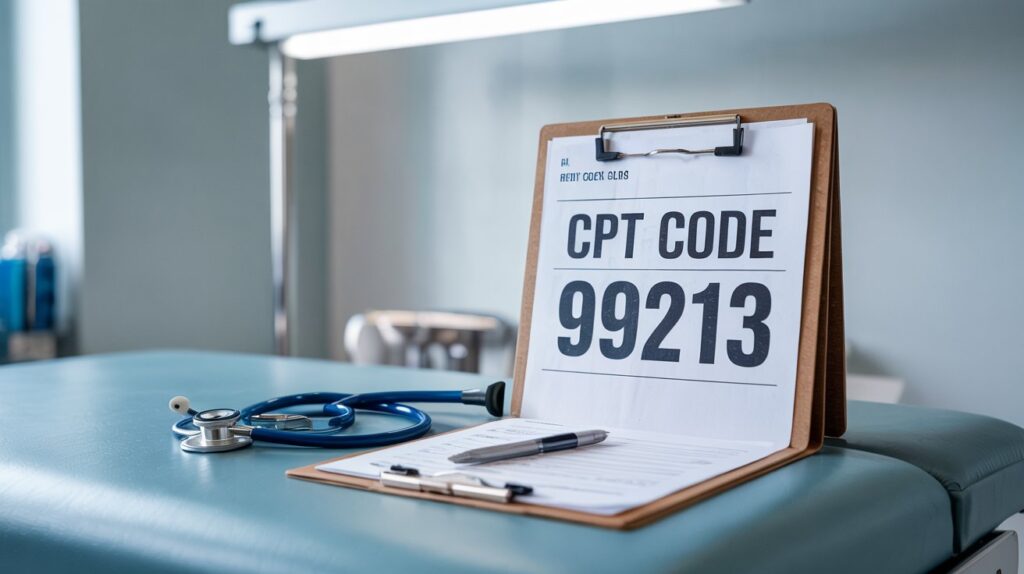
CPT Code 99213 is one of the most common medical billing codes. It is used by doctors to describe a standard office visit for an established patient . An established patient is someone who has visited the doctor before. This code is used when the doctor spends a moderate amount of time with the patient and checks their health, talks about problems, and gives advice or treatment.
The main idea of 99213 is to show that the visit is more than a very short checkup , but it is not a long or complex visit. The doctor may ask questions, examine the patient, review medicines, and discuss health problems. This code helps insurance companies understand the type of care given.
Doctors use 99213 when the visit includes at least two of these three parts : the doctor talks about the medical history, does a physical exam, and makes medical decisions about the patient’s care. If two or three of these are done at a moderate level, 99213 is the right code.
Many types of patients can use 99213. For example, adults with chronic health problems like high blood pressure, diabetes, or asthma often have visits coded as 99213. Sometimes children with ongoing problems like asthma or allergies also have visits coded as 99213.
This code is flexible and can be used for many health issues.
CPT Code 99213 is also related to time spent during the visit. If the doctor spends about 15 minutes face-to-face with the patient , it usually fits the 99213 code. The time can be more
or less, but 15 minutes is a common guideline. Insurance companies may use time as a guide when they check if the code is correct.
Doctors and medical coders must be careful when using 99213. If the visit is too simple , another code like 99212 may be better. If the visit is more complex or longer , the doctor may need to use 99214. Choosing the correct code is very important to get proper insurance payment and to follow medical rules.
Using 99213 correctly also means writing good notes. The doctor should document what was done during the visit , including the patient’s history, examination, and plan. If the notes are complete, the code is easier to justify. Incomplete notes can cause insurance problems or audits.
Insurance companies and clinics like 99213 because it is clear and standard . It helps them know that the visit was more than a quick checkup but not very complex. It also helps doctors get paid fairly for the work they do.
Overall, CPT Code 99213 is a key code in healthcare. It is simple to use if the doctor understands the rules. It applies to many common visits, helps track patient care, and ensures correct billing. Learning about 99213 is the first step to understanding many other medical billing codes and proper usage guidelines.
Who Uses CPT 99213 and Why It Matters
CPT 99213 is an important medical billing code, and many people in healthcare use it every day. It is not just a number for doctors. Hospitals, insurance companies, medical coders, and even patients benefit from it. Understanding who uses 99213 and why it matters helps you see why proper coding is so important.
Doctors are the main users of CPT 99213. They use it to show what happened during a visit with an established patient . An established patient is someone who has already been to the office before. When a patient comes for a regular checkup or for a problem that needs attention, the doctor examines them, asks questions, and gives advice. The doctor decides if 99213 is the right code based on what they did during the visit.
Medical coders are another group that uses CPT 99213. Coders are trained professionals who check medical records and choose the correct CPT code for every service. They make sure the code matches what the doctor did. If a doctor writes that they spent 15 minutes reviewing the patient’s history, checking their symptoms, and making a treatment plan, the coder may choose 99213. Coders are very important because insurance companies depend on accurate coding to pay doctors and clinics.
Insurance companies also use CPT 99213. When the clinic sends a bill, it includes CPT codes like 99213. The insurance company looks at the code to decide how much to pay . If the code is correct, the insurance pays the right amount. If it is wrong or incomplete, the payment may be delayed or denied. Insurance companies use these codes to make sure the care matches the cost.
Hospitals and clinics track CPT 99213 for reporting and planning. They keep records of how many patients come in for certain services. For example, a clinic may check how many patients visited for 99213 visits in a month. This helps the clinic plan staff and resources . It also helps hospitals understand which services are used the most, so they can improve care.
Patients benefit from CPT 99213 even though they do not choose the code. The code ensures that the service they get is recorded correctly . When the insurance company sees 99213, they know the patient received a standard office visit for an established patient. This makes billing clear and transparent . Patients can see exactly what they are paying for and why.
Medical educators and students also use CPT 99213 in learning. Students studying healthcare, medical billing, or coding learn about this code because it is very common . They practice how to read medical records, choose codes, and understand how insurance works. Knowing 99213 well helps students prepare for real-world medical coding jobs.
CPT 99213 is used in many types of visits. For example, patients with chronic illnesses like diabetes, high blood pressure, or asthma often have visits coded as 99213. Adults with ongoing health problems may see their doctor for checkups, medication reviews, or follow-up visits. Children with conditions like allergies or asthma may also have visits coded as 99213. The code is flexible because it can cover many common office visits that are more than a quick checkup but not very complex.
Time is an important factor when using 99213. Usually, the doctor spends about 15 minutes with the patient during the visit. This time is counted as face-to-face with the patient and includes reviewing history, doing a physical exam, and making decisions about care.
Insurance companies may use this time to verify that 99213 is the right code. If the visit is shorter, a different code may be used. If it is longer and more complex, a higher code like 99214 may be needed.
Proper documentation is also important for CPT 99213. Doctors must write down what they did during the visit. This includes the patient’s history, any exams performed, and the plan for treatment. Medical coders check these notes to assign the correct code. Accurate notes help avoid problems with insurance and audits. Incomplete or missing documentation can make it hard to justify 99213 and may result in denied claims.
CPT 99213 is used across many healthcare settings. It can be used in private clinics, hospitals, urgent care centers, and telehealth visits . Doctors and coders need to understand the rules for each setting because documentation requirements may vary slightly. For example, a telehealth visit may have different rules, but 99213 can still be used if the visit meets the same criteria.
Using 99213 correctly matters for many reasons. First, it ensures doctors are paid fairly for the work they do. If the wrong code is used, they may get less payment or have to spend time fixing the bill. Second, it keeps medical records accurate , which helps future care.
Third, it avoids problems with insurance audits or legal issues. Correct coding also shows that the clinic or doctor is professional and follows medical rules.
Even though 99213 is simple, mistakes can happen. Sometimes doctors choose the wrong code because they do not understand the rules or are busy. Coders may also make mistakes if documentation is unclear. Common mistakes include using a code for a simpler visit (99212) or for a more complex visit (99214), missing codes, or writing incomplete notes. Correct coding reduces these mistakes and improves patient care and billing.
CPT 99213 also matters for data and research . Hospitals and clinics track this code to see how many patients are treated for certain problems. Insurance companies use the data to study costs and patterns. Public health researchers may use 99213 data to understand trends in chronic illnesses or preventive care. The code helps healthcare organizations make decisions about staffing, resources, and patient education.
In short, CPT 99213 is used by doctors, medical coders, insurance companies, hospitals, patients, students, and researchers. It matters because it ensures accurate billing, proper payment, complete medical records, and clear communication in healthcare. Learning who uses 99213 and why helps everyone understand how healthcare works and why proper coding is so important.
Doctors, coders, and clinics must stay updated with CPT rules because 99213 may change slightly every year. The American Medical Association updates codes regularly, and healthcare providers must follow these updates to avoid mistakes. Keeping up with rules helps doctors and coders use 99213 correctly for every patient visit.
Patients may not know about CPT 99213, but it helps them too. It ensures that their visits are recorded correctly, that insurance pays properly, and that the clinic has a clear history of their care . This makes healthcare smoother for everyone.
Overall, CPT 99213 is a key part of medical coding. It is simple but very useful. Many people use it every day, and it matters for billing, care, and research. Understanding who uses 99213 and why it matters is an important step before learning how to use the code correctly in real visits.
Key Components of a 99213 Patient Visit
A 99213 visit is one of the most common office visits in healthcare. This code is used when a doctor sees an established patient for a regular checkup, follow-up, or moderate health problem. To use 99213 correctly, the visit must have certain key components. These components help doctors, coders, and insurance companies understand what happened during the visit.
There are three main components that doctors consider for a 99213 visit. These are history, examination, and medical decision making . Usually, a 99213 visit requires two out of these three components at a moderate level. Let’s explain each part in simple words.
The first component is history . This means the doctor asks the patient about their medical condition. The doctor may ask about current problems, past illnesses, medicines, and family health history. For example, if a patient has diabetes, the doctor may ask about blood sugar levels, diet, and any recent symptoms. This helps the doctor understand the patient’s health.
The second component is examination . The doctor looks at the patient and checks their body. This can include measuring blood pressure, listening to the heart and lungs, checking the throat, or examining joints. The examination should be moderate in complexity for 99213. It is not a very simple checkup like taking only vital signs, and it is not a full complex exam that would require 99214 or higher.
The third component is medical decision making . This is when the doctor decides what to do for the patient. The doctor may choose to give advice, order tests, adjust medicines, or schedule follow-up visits. The decisions must be moderate for a 99213 visit. If the decisions are very simple, 99212 may be used. If the decisions are more complex, 99214 or higher is used.
Time is another factor for 99213. Typically, the doctor spends about 15 minutes
face-to-face with the patient . The time can be slightly shorter or longer, but 15 minutes is the common guideline. During this time, the doctor may do some history taking, examination, and medical decision making. Insurance companies may check time as a factor when reviewing claims.
| Component | Description | Example |
| History | Patient’s medical history is reviewed | Ask about diabetes, blood pressure, medicines |
| Examination | Doctor examines the patient moderately | Listen to heart and lungs, check joints, measure BP |
| Medical Decision Making | Doctor decides treatment or plan | Adjust medicine, order lab test, give advice |
| Time | Face-to-face time with patient | About 15 minutes |
This table shows clearly what is needed for a 99213 visit. Each component is important. Missing any component may affect which code is used.
Documentation is also very important. Doctors must write notes about each visit. Notes should include what was asked, what was examined, and what decisions were made. Clear
notes help coders select the correct code and help insurance companies understand the care provided.
Many doctors also check chronic conditions during 99213 visits. Patients with diabetes, high blood pressure, asthma, or heart disease often have visits coded as 99213. These visits may include checking vitals, reviewing lab results, and adjusting medicines. Chronic conditions often require moderate history, examination, and decision making, which fits 99213 well.
Preventive care can also be part of a 99213 visit. The doctor may give advice about diet, exercise, vaccines, or screenings. Even though preventive care is not a full complex exam, giving advice and checking the patient’s condition can be part of 99213.
Sometimes doctors combine visits. For example, a patient may have a follow-up for diabetes and also a minor infection . The doctor may document both issues. Coders check the notes to ensure that the main visit fits 99213. If the visit becomes very complex, another code may be more appropriate.
Medical coders play a big role in reviewing 99213 visits. They read the doctor’s notes, check the history, examination, and decision making, and assign the right code. Coders make sure that the documentation supports the use of 99213. If the documentation is unclear, they may ask the doctor for more details.
Insurance companies rely on these components to approve payment . When they receive a 99213 claim, they check that the visit included at least two of the three main components at a moderate level. They may also review the face-to-face time. If everything matches, the claim is approved quickly. If not, it may be delayed or denied.
Using 99213 correctly has many benefits. Doctors get paid correctly for their work. Patients have clear records of their visits. Coders and billing staff can avoid mistakes. Insurance companies can process claims faster. Overall, it makes the healthcare system work smoothly.
Doctors, coders, and staff must also stay updated with CPT guidelines. The American Medical Association updates codes every year. New rules or clarifications may change how a 99213 visit is documented. Clinics often provide training to make sure everyone follows the correct procedures.
Even though 99213 is simple, mistakes happen. Sometimes doctors may under-document a visit. For example, they may write only that they talked to the patient without noting the examination or decisions. Coders cannot use 99213 unless the documentation shows at least two of the three components at a moderate level. Correct documentation is very important.
Telehealth visits can also use 99213. If the doctor meets the patient via video call, the same rules apply. The doctor must still take history, perform a virtual examination, and make medical decisions. Face-to-face time is counted even though it is virtual. Insurance companies accept 99213 for telehealth if the documentation matches the requirements.
Many clinics track 99213 visits for data analysis . They count how many patients had visits coded as 99213 each month. This helps plan staffing, schedule appointments, and improve care. It also helps clinics identify trends in patient needs and common health problems.
Uunderstanding the key components of a 99213 patient visit is very important. The three main parts,history, examination, and medical decision making,plus the approximate 15 minutes of face-to-face time, define a typical 99213 visit. Proper documentation, accurate coding, and following guidelines ensure correct billing, proper payment, and good patient care.
Step-by-Step Guide to Documenting a 99213 CPT Code
Documenting a 99213 encounter is very important. Good documentation helps doctors get paid, helps coders select the correct code, and ensures patients have clear records. A 99213 encounter usually involves a moderate-level office visit for an established patient. In this guide, we will explain step by step how to document it properly so anyone can understand.
The first step is to record the patient’s identification and visit reason . This includes the patient’s name, date of birth, and why they came to see the doctor. For example, the patient may come for a follow-up visit for high blood pressure or a checkup for diabetes. Writing down the reason for the visit is important because it shows why the doctor is providing care. Insurance companies also need this information to approve the claim.
Next, document the history of present illness . The doctor asks questions about symptoms, duration, and any changes since the last visit. For example, if the patient has diabetes, the doctor may ask about blood sugar levels, diet, and medications. If the patient has high blood pressure, the doctor may ask if they feel dizzy or have headaches. Writing this clearly is very important for coders to justify the use of 99213.
After that, document the past medical history, family history, and social history . This includes past illnesses, surgeries, or hospital visits. It also includes family history of conditions like heart disease or diabetes. Social history may include habits like smoking, alcohol use, or exercise. These details help the doctor understand the patient’s health better and make decisions. They also make the documentation complete for 99213 coding.
The next step is the physical examination . The doctor should write down what was checked during the visit. A 99213 visit usually requires a moderate examination . This can include checking the heart, lungs, blood pressure, throat, joints, or skin. The doctor should document the key findings. For example, “Heart rate normal, lungs clear, no swelling in legs.” Writing a detailed but simple note helps coders see that the exam meets 99213 requirements.
Then, document medical decision making . This is one of the most important parts of a 99213 encounter. The doctor should write down what they decided to do for the patient. For example, adjusting medication, ordering a lab test, giving advice about diet or exercise, or scheduling a follow-up. The decision should match a moderate level of complexity . Coders use this information to confirm that 99213 is the correct code.
After recording the medical decision making, include time spent during the encounter if it is relevant. A 99213 visit usually takes about 15 minutes face-to-face. If the doctor spends more time discussing complex issues, they may document the total time. This helps justify the use of 99213 for insurance and billing.
Next, document patient instructions and follow-up plans . This includes advice given to the patient, such as taking medicine at a certain time, following a diet, exercising, or returning for another visit. Clear instructions are important for patient safety. They also show that the visit was complete and thorough, which supports 99213 coding.
It is also important to include any tests or procedures performed during the visit. For example, if the doctor checked blood pressure or performed a simple test like a strep test, it should be documented. Even small tests or procedures help show the complexity of the visit. Coders review these details when assigning CPT codes.
Documentation should be organized and easy to read . Doctors can use templates or electronic health records (EHRs) to make notes clear. Templates often have sections for history, examination, and medical decision making. Using templates helps ensure nothing is missed and makes it easier for coders to review the encounter.
| Step | What to Document | Example |
| Patient Info | Name, DOB, reason for visit | John Doe, 55, follow-up for high blood pressure |
| History | Current symptoms, duration | Headache for 3 days, mild dizziness |
| Past/Family/Social History | Past illnesses, family conditions, habits | Hypertension, father had heart disease, exercises 3 times/week |
| Physical Exam | Key exam findings | BP 140/85, heart normal, lungs clear, no swelling |
| Medical Decision Making | Treatment or plan | Adjust medication, recommend diet changes, follow-up in 1 month |
| Time | Duration of face-to-face visit | 15 minutes |
| Patient Instructions | Advice or follow-up | Take medication daily, low salt diet, return in 4 weeks |
| Tests/Procedures | Any performed | Blood pressure measurement, lab order for cholesterol |
This table shows all the important elements for a 99213 encounter. Following each step helps ensure proper coding, clear communication, and accurate billing.
Documentation must be accurate and honest . Exaggerating or underreporting information can cause billing problems or audits. Doctors should only write what actually happened during the visit. Coders rely on these notes to assign the correct code. If documentation is incomplete, insurance may deny the claim.
Telehealth encounters can also be documented in the same way. Even if the doctor sees the patient through a video call, the steps are the same. Record patient information, history, exam findings (as possible), medical decisions, time spent, instructions, and any tests or orders. Insurance companies accept 99213 for telehealth if the documentation shows a moderate-level visit.
Finally, it is important to review the documentation before submission . Doctors or coders should check for missing information, typos, or unclear notes. Correcting errors ensures the claim is approved quickly and avoids delays. Accurate documentation also helps future visits because doctors can see the patient’s previous care.
Using this step-by-step guide helps doctors, coders, and clinics use 99213 correctly . Patients benefit because their care is clearly recorded. Insurance companies benefit because claims are correct and easier to process. Healthcare systems benefit because documentation is consistent, organized, and accurate.
Documenting a 99213 encounter involves several key steps. Start with patient information and reason for the visit. Include history, past/family/social history, physical examination, medical decision making, and time spent. Add patient instructions and any tests or procedures performed. Use clear, organized notes and review them before submission.
Following these steps ensures proper coding, correct billing, and good patient care.
Time vs Complexity: How 99213 Is Evaluated
CPT 99213 is a common medical billing code, but using it correctly depends on time spent with the patient and the complexity of the visit . Doctors, coders, and insurance companies need to understand both of these factors to make sure the code is used properly.
Time is often used to evaluate a 99213 visit. A typical 99213 visit takes about 15 minutes face-to-face with the patient. This includes talking about the patient’s health history, doing a moderate examination, and making medical decisions. Face-to-face time is important because insurance companies sometimes use it to check whether the code is correct. If a visit is too short, a different code like 99212 may be used. If a visit is longer or more complex, a higher code like 99214 may be needed.
Complexity is another key factor. Complexity is measured by medical decision making . This includes the number of problems addressed, the amount of data reviewed, and the risk of complications or treatment. For 99213, the complexity is usually moderate . This means the doctor addresses more than a simple problem but less than a very complex one. For example, adjusting a patient’s blood pressure medicine is moderate. Treating multiple serious problems at once may be complex and require 99214.
Doctors often balance time and complexity when documenting a 99213 visit. Sometimes a visit may take more than 15 minutes, but the complexity is still moderate. Other times, a doctor may spend 15 minutes but deal with multiple problems, which increases complexity. The code should reflect the overall level of service rather than just time alone.
Insurance companies use guidelines to evaluate 99213. They check both the time reported and the notes about complexity . If the visit meets the moderate level of decision making or face-to-face time, 99213 is accepted. If documentation does not match, the claim may be denied or questioned. Proper documentation of both time and complexity is important to avoid delays.
| CPT Code | Typical Time (minutes) | Complexity Level | Example of Visit |
| 99212 | 10 | Straightforward | Minor follow-up, simple exam |
| 99213 | 15 | Moderate | Chronic condition follow-up, moderate exam |
| 99214 | 25 | High | Multiple chronic conditions, complex exam |
| 99215 | 40 | Very High | Serious illness, complex decision making |
This table helps doctors, coders, and insurance staff understand which code fits best depending on time and complexity. For 99213, moderate complexity and about 15 minutes are the main guidelines.
Time includes all face-to-face activity with the patient. This means talking about symptoms, reviewing labs or test results, checking medications, and performing examinations. It does not include time spent outside the room or after the patient leaves. Only the direct time with the patient is counted for 99213.
Complexity is measured by three things: problems addressed, data reviewed, and risk of treatment . Problems addressed include the number and severity of issues. For example, adjusting blood pressure and checking mild headaches is moderate. Reviewing lab results or imaging tests counts as data reviewed. Risk includes whether the treatment could cause complications or requires close monitoring. Moderate risk fits 99213.
Sometimes doctors spend more time but lower complexity . For example, a patient may have a long conversation about lifestyle or diet, but no serious problems. This may still qualify as 99213 if the documentation shows moderate history, exam, and decision making. Coders look at all notes to decide if the code matches.
Other times, a visit is short but more complex . A patient may have multiple chronic illnesses or new symptoms that require decisions. Even if the face-to-face time is 12–13 minutes, the moderate complexity may still justify 99213. Coders consider both factors to select the correct code.
Documentation is very important in evaluating time and complexity. Doctors must write clearly about how long the visit took and what decisions were made. Notes should include the patient’s history, examination, tests reviewed, treatment plan, and follow-up instructions. Without clear notes, insurance companies may question whether 99213 is correct.
Telehealth visits also use time and complexity for 99213. Even though the doctor meets the patient online, face-to-face time is counted. The same rules for history, examination, and medical decision making apply. Proper documentation of time and complexity ensures correct coding and billing.
Here are some examples of moderate complexity that fit 99213: adjusting medications for high blood pressure, checking diabetes control, reviewing lab results, treating a mild infection, or providing advice about exercise or diet. These examples show the type of care that is typical for 99213.
Doctors and coders must avoid common mistakes when using time and complexity. One mistake is using 99213 for a very short visit without enough documentation. Another mistake is using a higher code like 99214 when the visit was moderate. Accurate notes about time spent and complexity help prevent errors.
Some clinics use time tracking in electronic health records. Doctors enter the start and end time of each patient visit. This helps coders calculate the correct code based on face-to-face time. Tracking time also helps in case insurance companies audit the claim.
Understanding how time and complexity work together is important for patients too. Patients benefit when visits are coded correctly because insurance pays the correct amount, and the clinic has an accurate record of care. This reduces confusion, avoids denied claims, and ensures patients get proper follow-up.
Using 99213 correctly supports the entire healthcare system . Doctors are paid fairly, coders can assign accurate codes, insurance companies process claims quickly, and patients receive proper documentation. Time and complexity are the two main factors that define whether a visit fits 99213.
Evaluating 99213 depends on both time and complexity. Typical time is about 15 minutes face-to-face with the patient. Complexity is moderate, meaning the doctor addresses a moderate number of problems, reviews data, and manages moderate risk. Documentation must show both time and complexity clearly. Using these guidelines ensures proper coding, accurate billing, and better patient care.
Common Medical Conditions for 99213 Billing
CPT 99213 is used for many common medical visits. This code is for a moderate-level office visit with an established patient. Many patients have chronic illnesses or ongoing health problems that require follow-up care. Understanding which medical conditions are often billed with 99213 helps doctors, coders, and clinics use this code correctly.
One of the most common conditions for 99213 visits is high blood pressure , also called hypertension. Patients with high blood pressure need regular monitoring. During a 99213 visit, the doctor checks blood pressure, reviews medications, talks about diet and exercise, and may adjust treatment if needed. The visit is usually about 15 minutes and includes moderate history, examination, and medical decision making, which fits 99213 well.
Another common condition is diabetes . Diabetes requires ongoing care, including monitoring blood sugar, reviewing lab tests, adjusting insulin or other medications, and giving advice about diet and lifestyle. A 99213 visit may include checking blood sugar logs, discussing symptoms, examining the patient, and making treatment decisions. This makes diabetes visits a good fit for 99213 coding.
Asthma and other respiratory conditions are also common for 99213 visits. The doctor may ask about breathing problems, check lung function, review medications like inhalers, and give advice for preventing attacks. The examination may include listening to the lungs and checking oxygen levels. This type of visit often meets the moderate level of complexity required for 99213.
Allergies are another condition where 99213 is used. Patients may visit for follow-up on seasonal allergies, skin reactions, or food sensitivities. The doctor may ask about symptoms, review medications, perform a physical check, and adjust treatment. These visits are usually moderate in complexity and fit well with 99213.
Minor infections like ear infections, sinus infections, or urinary tract infections are sometimes billed as 99213. The doctor examines the patient, reviews symptoms, prescribes medication if needed, and gives follow-up instructions. Moderate history, examination, and medical decision making are present, which makes 99213 the correct code.
Patients with chronic pain conditions such as arthritis or back pain also often have 99213 visits. The doctor asks about pain levels, reviews previous treatments, examines joints or the back, and may adjust medication or recommend physical therapy. These visits require moderate evaluation and decision making, making 99213 appropriate.
| Medical Condition | Example of Visit Activities |
| High Blood Pressure | Check BP, review medications, advise diet |
| Diabetes | Review blood sugar logs, adjust medications, discuss diet |
| Asthma | Check lungs, review inhaler use, adjust treatment |
| Allergies | Review symptoms, adjust medications, advice for prevention |
| Minor Infections | Examine symptoms, prescribe medication, follow-up advice |
| Chronic Pain | Assess pain, examine affected areas, adjust treatment plan |
This table shows that 99213 is versatile. It can cover many common outpatient visits that are more than a simple checkup but not very complex.
Preventive care is sometimes part of a 99213 visit. The doctor may give advice about vaccines, diet, exercise, or screenings. Even if preventive care is simple, the visit may still meet the criteria for 99213 if moderate history, examination, and decision making are included.
Follow-up visits after surgery or treatment are often billed as 99213 if the patient is recovering well but still needs evaluation. The doctor may check healing, review medications, and provide instructions. These visits usually take about 15 minutes and include moderate evaluation, which fits 99213.
Mental health follow-ups for conditions like anxiety or depression may also be coded as 99213. The doctor or nurse practitioner asks about mood, stress, sleep, and medications. They may adjust treatment and provide advice. Moderate complexity in decision making and history makes 99213 appropriate for these visits.
Multiple minor conditions can also be included in a single 99213 visit. For example, a patient may have high blood pressure, mild back pain, and seasonal allergies. The doctor reviews each condition, examines the patient, and makes decisions. The overall visit is moderate in complexity, which is suitable for 99213.
Doctors must document all activities clearly for 99213 billing. Notes should include history, examination, and medical decision making for each condition addressed. Insurance companies use these notes to verify that the code is correct. Incomplete documentation can result in denied claims or requests for additional information.
Telehealth visits can include these common conditions as well. For example, the doctor may review blood sugar logs, discuss symptoms of asthma, or give advice for allergies through video call. If the visit meets the moderate-level criteria, 99213 can be used for telehealth.
Time spent face-to-face virtually is counted the same as in-person visits.
Using 99213 correctly for these conditions benefits everyone. Doctors get paid fairly, patients have clear records, coders can assign accurate codes, and insurance companies can process claims efficiently. Accurate documentation also helps track patient outcomes and ensures follow-up care is properly scheduled.
CPT 99213 is used not only for chronic or minor illnesses but also for routine follow-ups and preventive care . Common examples include checking blood pressure, monitoring
diabetes, adjusting asthma treatment, reviewing allergies, managing minor infections, and addressing chronic pain. This makes it one of the most frequently used CPT codes in outpatient care.
Many medical conditions fit 99213 billing. High blood pressure, diabetes, asthma, allergies, minor infections, chronic pain, preventive care, mental health follow-ups, and multiple minor conditions are all common examples. Proper documentation of history, examination, and medical decision making ensures the code is used correctly. Doctors, coders, patients, and insurance companies all benefit when 99213 is applied accurately, making healthcare more organized and efficient.
Insurance and Reimbursement Rules for 99213
CPT 99213 is a very common code used for outpatient visits, and insurance companies rely on it to approve payments. Understanding insurance and reimbursement rules is very important for doctors, coders, and clinics. Using 99213 correctly ensures doctors are paid fairly and claims are processed quickly.
Insurance companies require that a 99213 visit includes moderate-level history, examination, and medical decision making . These visits are usually about 15 minutes face-to-face with the patient. If these criteria are met and clearly documented, the claim is more likely to be approved. If documentation is missing or incomplete, the insurance company may reject the claim or request more information.
Different types of insurance may have slightly different rules for 99213. For example, private insurance plans may follow the American Medical Association (AMA) guidelines strictly.
Medicare also follows these guidelines but may have additional rules for documentation, time, or telehealth visits. It is important for clinics to know the requirements for each insurance type.
Before submitting a claim, doctors and coders must ensure the documentation shows all required components . This includes the patient’s history, the physical examination, and the medical decisions made. Notes should also include the time spent and any instructions given to the patient. Insurance companies check these details to verify that the visit meets the criteria for 99213.
Reimbursement for 99213 depends on the type of insurance and the region. The payment is usually moderate , reflecting the moderate complexity of the visit. It is higher than a very simple visit coded as 99212, but lower than a complex visit coded as 99214. Accurate documentation helps ensure the correct reimbursement.
Some insurance plans may require additional details for approval. For example, they may ask for lab results, test orders, or notes about chronic conditions. This is to confirm that the visit required moderate evaluation and decision making. Doctors and coders should provide complete information to avoid delays in payment.
Telehealth visits have special rules for insurance reimbursement. Many insurance companies now accept 99213 for telehealth if the documentation shows a face-to-face visit,
even if it is virtual. The doctor must record history, examination findings (as possible), and medical decisions. Time spent during the video visit should also be documented. Following these rules ensures proper reimbursement for telehealth 99213 visits.
Insurance companies may audit claims for 99213 to make sure doctors and clinics are using the code correctly. Audits check the documentation for history, examination, and decision making. They also check the time spent. If documentation is incomplete or does not meet moderate-level requirements, the insurance company may deny payment. Proper documentation prevents problems during audits.
Patients may also see 99213 listed on their insurance statements. This code shows that the visit was a standard office visit for an established patient. It helps patients understand what services they received and what they are being charged for. Clear documentation and coding make patient statements easier to read and avoid confusion.
Billing staff must ensure that 99213 is submitted correctly. The claim should include the patient’s insurance information, CPT code, date of service, and all documentation supporting the visit. Errors in submission can delay payment or cause a denial. Reviewing claims carefully before sending them to the insurance company is very important.
Reimbursement may also depend on payer contracts . Some insurance companies have agreements with clinics that determine the payment rate for each CPT code. For 99213, the rate may vary based on the contract. Clinics must know these rates to plan billing and revenue accurately.
If an insurance claim is denied, the clinic can submit an appeal . The appeal should include all documentation showing that the visit met the requirements for 99213. This may include notes about the patient’s history, examination, medical decision making, time spent, and instructions given. Successful appeals help recover payment and maintain clinic revenue.
It is important for doctors and coders to stay updated on insurance rules . Guidelines may change over time, and new rules for telehealth or chronic care management may affect 99213 reimbursement. Clinics often provide training to staff to ensure claims are submitted correctly and follow the latest guidelines.
Using 99213 correctly benefits the entire healthcare system . Doctors receive fair payment for their work, coders can assign accurate codes, insurance companies process claims efficiently, and patients have clear records of their care. Proper use of 99213 ensures transparency and reduces errors.
Some insurance companies may require pre-authorization for certain procedures or follow-up visits, even when 99213 is used. Doctors should be aware of these requirements
to avoid denied claims. Pre-authorization helps confirm that the visit or treatment is medically necessary and meets insurance criteria.
Documentation should always be honest and accurate . Exaggerating the visit or underreporting complexity can cause serious problems with insurance audits. Coders rely on the notes to assign the correct code. If a 99213 visit is documented properly, it meets insurance standards and ensures reimbursement is received on time.
Reimbursement for 99213 is usually sufficient to cover the doctor’s time and clinic resources for a moderate-level visit. Accurate coding reduces the risk of denied claims, repeated submissions, and delayed payments. Clinics that follow guidelines carefully have smoother billing processes and better financial management.
In addition to payment, insurance companies may use 99213 data for quality reporting and performance tracking . Clinics may report how many 99213 visits were done for chronic conditions, preventive care, or follow-up visits. This information helps improve patient care, plan resources, and comply with government reporting requirements.
For patients, seeing 99213 on an insurance statement shows that the visit was standard, appropriate, and moderate in complexity . It is a reassurance that the care they received was documented and billed correctly. Proper coding also helps patients avoid unexpected charges or confusion about what services were provided.
Overall, understanding insurance and reimbursement rules for 99213 is crucial. Doctors, coders, and billing staff must document all required components, follow payer guidelines, track time, and submit accurate claims. This ensures correct payment, smooth processing, and compliance with rules. Patients benefit from clear records and proper billing.
Using 99213 correctly supports fair payment, efficient insurance processing, accurate patient records, and better healthcare quality. Doctors, coders, and clinics should stay updated on insurance rules, document visits completely, and submit claims carefully to avoid denials or delays.
Common Documentation Mistakes and How to Avoid Them
Proper documentation is very important when using CPT 99213. Doctors, coders, and billing staff must record every patient visit clearly. Mistakes in documentation can cause denied insurance claims , delayed payments, and confusion for patients. Understanding common documentation mistakes and how to avoid them helps clinics, doctors, and patients.
One common mistake is incomplete history . Doctors may forget to write the patient’s current symptoms, past medical history, or family and social history. A 99213 visit requires a moderate-level history for accurate coding. Missing this information can make the insurance company question the claim. To avoid this mistake, doctors should follow a step-by-step checklist for history. They can include patient complaints, symptom duration, past illnesses, surgeries, and family health history. Using templates in electronic health records (EHR) helps ensure that no part of the history is skipped.
Another common mistake is insufficient documentation of the physical examination . Sometimes doctors write only very brief notes like “exam done” or “checked patient.” Insurance companies and coders need to see what was actually examined . For 99213, a moderate-level exam should be documented. This can include checking the heart, lungs, blood pressure, joints, or skin. To avoid this mistake, doctors should record findings for each system examined , even if the exam is short. Using a structured format in EHR can make this easier and reduce errors in medical coding.
A third mistake is missing or unclear medical decision making . Medical decision making is the most important part of a 99213 visit. Doctors must write what they decided about treatment, medications, lab tests, or follow-up care. Vague notes like “treatment adjusted” or “plan discussed” are not enough. Coders cannot use 99213 without clear decision-making documentation. To avoid this mistake, doctors should explain each decision clearly , including why it was made and what action was taken. This helps coders assign the correct CPT 99213 code and ensures insurance claim approval.
Time-related mistakes are also common. Some doctors forget to record the face-to-face time spent with the patient. A 99213 visit typically lasts about 15 minutes. If time is not documented, coders and insurance companies may question the claim. To prevent this mistake, doctors should note start and end times for the visit, or at least record the total face-to-face time. This is especially important for telehealth visits, where documenting time can justify CPT 99213 coding.
Another frequent error is mixing up codes . Some doctors or coders accidentally use CPT 99212 for a visit that meets 99213 requirements, or 99214 for a moderate visit. Using the wrong code can cause denied claims or reduce reimbursement. To avoid this, clinics should train staff regularly on CPT codes, including examples of visits for each code. Clear documentation of history, exam, and medical decision making ensures the right code is used.
Not documenting patient instructions or follow-up is another mistake. Patients need to know what to do after the visit. Insurance companies also look for documentation of instructions when approving claims. Doctors should record instructions about medications, lifestyle changes, diet, exercise, or the date of the next visit. Missing these notes can make the visit appear incomplete for CPT 99213 coding. Using checklists or templates can help include all patient instructions.
Telehealth documentation errors have become common with virtual visits. Some doctors forget to record that the visit was face-to-face online, the patient’s symptoms, examination findings possible through video, and medical decisions. Properly documenting telehealth visits ensures that CPT 99213 can be billed correctly and that insurance claims are approved. Clinics should update their EHR templates to include telehealth fields for history, exam, decisions, time, and follow-up instructions.
Another mistake is copy-pasting previous visit notes without updating them. This can create inaccurate or incomplete records. Coders and insurance companies may reject claims if they detect copy-paste errors. To avoid this mistake, doctors should write new notes for each visit , updating the patient’s history, exam, and treatment plan accurately. This ensures correct medical coding and supports reimbursement.
Sometimes lab tests, imaging, or other data reviewed during a 99213 visit are not documented. Even if the doctor reviewed results or ordered tests, it must be recorded in the notes. Missing this documentation can make the visit seem simpler than it was, causing a coder to choose a lower-level code like 99212. To avoid this, doctors should note any data reviewed , including lab results, imaging, or other test results, and include the clinical decision based on that data.
Documentation mistakes can also occur due to unclear abbreviations or medical jargon . Insurance companies may not understand abbreviations or short notes, causing claim delays. Doctors should write clearly , using simple, standard terms when possible. This helps coders assign CPT 99213 correctly and prevents insurance problems.
Late documentation is another issue. Writing notes days after the patient visit can lead to missing details or mistakes. Immediate documentation ensures accuracy and compliance. Doctors should write or update notes during or immediately after the visit to capture all details clearly.
Audits and reviews are more common when documentation mistakes happen. Insurance companies or government programs may request records to verify claims. If documentation is incomplete or inaccurate, audits can result in denied reimbursement, fines, or extra work. Avoiding documentation mistakes protects the clinic and ensures compliance with regulations.
To summarize, common documentation mistakes include:
- Incompletehistory
- Insufficientphysical exam notes
- Missingor unclear medical decision making
- Notrecording time spent
- Usingwrong CPT codes
- Missingpatient instructions or follow-up plans
- Telehealthdocumentation errors
- Copy-pastingprevious notes without updating
- Notdocumenting lab tests or other data
- Usingunclear abbreviations or jargon
- Latedocumentation
To avoid these mistakes, doctors and clinics should:
- Use checklists or templates in EHR systems
- Record all components : history, examination, and medical decision making
- Document face-to-face time clearly
- Write patient instructions and follow-up plans
- Use clear language , avoiding unclear abbreviations
- Updatenotes immediately after the visit
- Provide staff training on CPT 99213 coding and documentation rules
- Review telehealth documentation to include all required elements
- Recordany data reviewed , like labs, imaging, or other results
Following these practices ensures that CPT 99213 is documented correctly, medical coding is accurate, and insurance claims are approved without delays. Correct documentation also improves patient care, reduces billing errors, and supports clinic efficiency.
Avoiding common documentation mistakes is critical for 99213 visits. Accurate, clear, and complete notes support correct medical coding, proper billing, insurance reimbursement, and high-quality patient care . Using checklists, templates, and staff
training ensures that each patient visit is documented properly, protecting both the clinic and the patient.
Auditing and Compliance for CPT 99213
Auditing and compliance are very important in healthcare. For CPT 99213, audits ensure that medical coding, documentation, and billing are correct. Doctors, coders, and billing staff must follow rules so insurance claims are approved and clinics stay in compliance with regulations. Understanding how auditing and compliance work helps everyone avoid mistakes.
An audit is when insurance companies, government agencies, or internal clinic staff review patient records. They check if the CPT 99213 code was used correctly. Auditors look at documentation to see if the visit included moderate-level history, physical examination, and medical decision making . They also check if the time spent with the patient is reasonable. Proper documentation is key to passing an audit.
Compliance means following all rules and regulations for billing and coding. For CPT 99213, this means documenting each visit correctly, using the right code, and submitting claims honestly. Clinics must follow AMA CPT guidelines, insurance rules, and federal regulations . Compliance protects the clinic from denied claims, fines, or legal issues.
One common reason for audits is incorrect documentation . If the doctor’s notes are incomplete or missing details about history, examination, or medical decision making, auditors may question the CPT 99213 code. For example, if a patient visit is documented as 99213 but only a simple exam was done, the insurance company may deny the claim.
Clinics must ensure documentation matches the moderate complexity criteria for 99213.
Another reason for audits is time discrepancies . CPT 99213 typically requires about 15 minutes face-to-face with the patient . If the recorded time does not match the usual duration for a moderate visit, auditors may investigate. Doctors should record the start and end time of the visit or total time spent to avoid issues. This is especially important for telehealth visits, where face-to-face time may be virtual.
Insurance companies may perform random audits to check accuracy. They may request patient charts, lab results, examination notes, and treatment plans. If documentation supports CPT 99213, the claim is approved. If not, the claim may be denied or reduced. Accurate notes and clear medical coding help clinics pass audits efficiently.
Internal audits are also common in clinics. Many clinics review CPT 99213 visits internally to make sure staff follows proper documentation and billing rules. Internal audits help identify mistakes before claims are submitted. They also provide training opportunities for doctors, coders, and billing staff to improve compliance.
Auditors also check medical decision making . They evaluate whether the doctor addressed multiple problems, reviewed relevant data, and assessed risk appropriately. For
99213, the complexity should be moderate . If decisions were simple or very complex, auditors may suggest a different code. Clear documentation of every decision is essential to comply with audit standards.
Common audit findings for 99213 include incomplete history, missing examination notes, unclear medical decision making, missing time documentation, and lack of patient instructions. To avoid these findings, clinics should implement standard templates, checklists, and electronic health record tools that guide doctors through each required component of 99213 visits.
Compliance also involves staying updated . CPT codes and insurance rules can change every year. Doctors, coders, and billing staff must review updates from the American Medical Association (AMA), Medicare, and private insurers . Clinics often provide yearly training to ensure staff is aware of changes that may affect 99213 coding and billing.
Telehealth compliance is another important area. CPT 99213 can be billed for telehealth visits if documentation shows face-to-face interaction, patient history, examination (as possible), medical decision making, and time spent. Insurance companies now widely accept telehealth 99213 claims, but accurate documentation is critical for compliance and audit readiness.
Audits also check insurance claim accuracy . Submitting a claim with CPT 99213 requires that documentation supports moderate-level care. Insurance companies compare the claim to patient notes to verify services. Any mismatch may result in claim denial or request for additional information. Proper documentation reduces claim denials and delays.
Another compliance point is avoiding copy-paste errors . Some doctors copy previous visit notes without updating them. Auditors may see repeated text and question whether the visit met 99213 requirements. Each visit should have fresh, accurate notes documenting the patient’s current condition, examination, and medical decisions.
Training and staff awareness are essential for audit readiness. Doctors, coders, and billing staff should know the requirements for CPT 99213. They should understand moderate complexity, face-to-face time, and proper documentation . Training helps prevent errors, ensures compliance, and improves audit outcomes.
Auditors may also review patient follow-up instructions . A complete 99213 visit should include advice, medication instructions, lifestyle recommendations, and a plan for follow-up visits. Clear instructions show that the visit was comprehensive, which supports CPT 99213 coding. Missing follow-up details can trigger audit questions.
Risk management is also part of compliance. Incorrect CPT coding or poor documentation can lead to audits, claim denials, or even legal issues. Proper use of CPT 99213 ensures that the clinic is protected, claims are processed correctly, and patients receive documented care.
Some clinics use audit software or EHR tools to help with CPT 99213 compliance. These tools flag missing documentation, check time, and verify coding. This helps clinics catch mistakes before claims are submitted and improves audit readiness.
Proper auditing and compliance also improve patient care . Accurate documentation ensures that future doctors can see what was done, what decisions were made, and what follow-up is needed. Patients benefit from safe, organized, and well-documented care.
In conclusion, auditing and compliance for CPT 99213 are very important. Clinics must document history, examination, and medical decision making , record face-to-face time, provide patient instructions, and submit accurate insurance claims. Internal audits, external audits, staff training, and updated knowledge all help ensure compliance. Proper auditing protects the clinic, supports accurate billing, and improves patient care..
Telehealth Visits and CPT 99213
Telehealth has become very common in healthcare. Patients can meet with doctors through video calls or phone calls instead of visiting the clinic. CPT 99213 can be used for telehealth visits if the visit meets the requirements for a moderate-level office visit. Telehealth is convenient, safe, and allows doctors to monitor patients without in-person visits.
During a telehealth visit, the doctor collects the patient’s history , asks about symptoms, and may review previous test results. Even though the patient is not physically in the office, the doctor can still examine some things through video. For example, they can check skin conditions, observe breathing, or see if swelling is present. These activities meet the moderate complexity standard for CPT 99213.
Telehealth visits can be used for many common conditions, such as diabetes, high blood pressure, asthma, allergies, minor infections, and chronic pain . Patients can discuss medication adjustments, symptoms, lifestyle changes, and follow-up care. Proper documentation ensures that CPT 99213 can be billed accurately and insurance claims are approved.
Patient information must be documented clearly. This includes the patient’s name, date of birth, reason for the visit, and any current or past health problems. Accurate patient information is essential for medical coding and billing. Without it, the claim may be denied or delayed.
Documenting patient history during telehealth is very important. For example, if a patient has diabetes, the doctor can ask about blood sugar logs, diet, exercise, and medication use. For asthma, the doctor may ask about inhaler use and breathing patterns. Recording this information in the notes supports CPT 99213 coding and ensures insurance reimbursement.
Physical examination may be limited in telehealth, but doctors can still observe certain things. For example, they can watch the patient walk, observe skin or joint conditions, or see if the patient is breathing normally. Even limited examinations count as moderate-level evaluation if they are documented clearly.
Recording tests and procedures is important. Telehealth visits may include reviewing lab results, imaging reports, or other test results. For example, a doctor may review recent blood pressure readings, glucose logs, or cholesterol results. Documenting these reviews supports the CPT 99213 code.
Time spent is another key factor. A typical 99213 visit lasts about 15 minutes. For telehealth, doctors should document the time spent face-to-face online. Recording start and end time or total minutes helps coders justify the code and ensures insurance approval.
Providing patient instructions and follow-up care is crucial in telehealth visits. Doctors should document advice about medications, diet, exercise, lifestyle changes, and when the patient should schedule the next visit. This shows that the visit was moderate in complexity and meets CPT 99213 requirements.
| Telehealth Visit Component | Example Documentation |
| Patient Information | Name, date of birth, reason for visit |
| Patient History | Symptoms, past illnesses, medications, lifestyle habits |
| Physical Examination | Observed breathing, skin condition, movement, swelling |
| Tests Reviewed | Blood pressure logs, lab results, imaging reports |
| Time Spent | 15 minutes face-to-face video consultation |
| Patient Instructions | Medication adjustments, diet, exercise, follow-up visit |
Beginners in medical coding should remember to document everything clearly . Even if the exam is limited because the visit is virtual, every action must be recorded. This ensures CPT 99213 is billed correctly and supports insurance claims.
Common mistakes in telehealth coding include not documenting patient information, missing history details, not recording observed examination findings, forgetting test reviews, and not documenting time spent or patient instructions. Using checklists or EHR templates can help avoid these mistakes.
Insurance companies now widely accept CPT 99213 for telehealth visits. However, documentation must show that the visit meets moderate complexity requirements . If notes
are incomplete or unclear, the claim may be denied. Accurate telehealth documentation helps ensure insurance approval and reduces delays.
Telehealth visits can also be used for follow-up care for chronic conditions, minor illnesses, and preventive care. For example, a patient with high blood pressure may have a video visit to review home blood pressure logs, discuss medication adjustments, and receive follow-up instructions. This is perfectly suitable for CPT 99213 coding.
Telehealth technology may include secure video platforms, electronic health records, and online communication tools. Doctors should make sure they record the visit properly in the patient’s EHR. All required components for CPT 99213, patient information, history, exam findings, tests, time, and instructions, should be documented.
Documentation should be clear, simple, and complete . Avoid using unclear abbreviations or vague statements. Insurance companies and coders must understand the notes to approve the CPT 99213 claim. Clear documentation also helps in future patient visits and continuity of care.
Beginners should review previous visits before a telehealth appointment. This helps track chronic conditions, check previous lab results, and provide consistent follow-up care.
Reviewing prior notes ensures that CPT 99213 is coded correctly and that patient care continues properly.
Tips for beginners coding CPT 99213 for telehealth:
- Useclear patient information and visit reason
- Documenthistory thoroughly, including chronic conditions and current symptoms
- Recordobservable examination findings
- Includeany test reviews or lab results discussed
- Recordface-to-face time spent on the visit
- Documentpatient instructions and follow-up care
- UseEHR templates or checklists to avoid mistakes
- Reviewprevious visits to maintain continuity of care
CPT 99213 can be used for telehealth visits if documentation shows moderate-level evaluation. Clear notes, accurate patient information, complete history, observable exam findings, test reviews, recorded time, and patient instructions are all necessary. Telehealth allows patients to receive care safely and conveniently while supporting accurate billing and insurance claims. Proper telehealth documentation ensures CPT 99213 is coded correctly, insurance claims are approved, and patient care continues efficiently.
How CPT 99213 Helps Small Clinics Manage Daily Patient Visits
Small clinics see many patients every day. Doctors and nurses need a simple way to record visits, bill insurance, and track patient care . CPT 99213 is one of the most useful codes for small clinics because it covers moderate-level visits for patients who need more than a quick checkup but less than a complex evaluation.
In small clinics, doctors often see patients for common health problems like colds, minor infections, follow-ups for diabetes, high blood pressure, or routine medication checks. CPT 99213 helps doctors document the visit properly so the clinic can bill insurance correctly and keep accurate patient records.
Using CPT 99213 also saves time for the clinic staff . Instead of deciding between too-simple or too-complex codes, staff can confidently use 99213 when the visit meets moderate-level requirements. This makes billing faster and reduces mistakes.
Documentation is simple for 99213 in a small clinic setting. Doctors write down the patient’s history, do a basic exam, record any tests or lab results reviewed, and give instructions for follow-up. This short but clear note is enough to support insurance claims.
CPT 99213 also helps track patient visits over time . Small clinics can see how many follow-ups each patient has, how chronic conditions are managed, and whether patients are improving. This helps clinics plan appointments and manage resources efficiently.
For example, a patient with high blood pressure might visit the clinic every month. During the visit, the doctor checks blood pressure, reviews medication, and advises on diet. Using 99213 ensures that each visit is coded correctly, paid by insurance, and documented for future reference .
Small clinics also benefit because CPT 99213 is accepted by most insurance companies . This reduces claim denials and helps the clinic maintain stable revenue. Proper coding also supports audits and keeps the clinic compliant with insurance rules.
Using CPT 99213 in daily clinic operations improves workflow . Front desk staff know which code to use, nurses know what details to record, and doctors can focus on patient care. It creates a consistent system for documenting and billing moderate-level visits.
Tips for small clinics using 99213
- Keep templates for common visits like follow-ups, chronic care, and minor
- Record patient history, exam findings, tests, and instructions
- Track time spent on each visit to support
- Reviewprevious visits to maintain continuity of care .
- Trainstaff to recognize which visits qualify as moderate-level 99213
CPT 99213 is also useful for telehealth visits in small clinics. Doctors can see patients remotely, record history, note observable findings, and give follow-up instructions. This ensures that remote care is documented and billed properly.
CPT 99213 helps small clinics manage daily patient visits efficiently. It supports proper documentation, accurate billing, and insurance approval while saving time for staff. Clinics can track patient care, maintain compliance, and provide consistent follow-up for chronic and common conditions. Using 99213 properly makes daily operations smoother and improves patient care at small clinics.
Understanding CPT 99213 Write-Offs and How They Happen
A write-off happens when a clinic or doctor does not get paid the full amount for a patient visit. This can happen even if the service was done correctly. For CPT 99213, write-offs usually occur because of insurance rules, billing errors, or patient responsibility .
Understanding why write-offs happen helps clinics reduce lost revenue and sometimes writeoff recovery.
One reason for a write-off is insurance contract agreements . Many insurance companies have a set amount they will pay for a CPT 99213 visit. If the clinic charges more than the allowed amount, the extra is written off. For example, if the clinic charges $120 but the insurance allows $100, $20 is a write-off. This is normal and expected in medical billing.
Another reason is claim denial . If an insurance company denies a CPT 99213 claim, the clinic may not get paid. Denials can happen for many reasons, such as missing documentation, wrong CPT code, or incomplete patient information. When the claim is denied and cannot be appealed, the unpaid amount becomes a write-off.
Patient responsibility can also cause write-offs. Some patients have copay, deductible, or coinsurance . If the patient cannot pay, the clinic may write off that amount. For example, if a patient owes $30 for a 99213 visit but cannot pay, the clinic may record it as a write-off.
Billing errors are another cause. If the claim is submitted with incorrect CPT codes, wrong patient info, or missing notes , the insurance may reduce or deny payment. If the clinic cannot correct the claim, the unpaid amount may become a write-off.
| Reason for Write-Off | Example | Tip to Reduce |
| Insurance contract limits | Charge $120, insurance allows $100 | Know allowed amounts before billing |
| Claim denial | Missing documentation or wrong code | Check notes, use correct CPT 99213, appeal denied claims |
| Patient responsibility | Copay or deductible not paid | Collect payments at visit, set up payment plans |
| Billing errors | Wrong patient info or missing documentation | Double-check claim before submission |
How clinics can reduce write-offs for CPT 99213
- Verify insurance coverage before the Know how much the insurance will pay for 99213.
- Document properly . Complete notes with history, exam, tests, and follow-up instructions help avoid denials.
- Collect copays and deductibles during the visit whenever This reduces unpaid amounts.
- Review claims carefully . Check for errors before submitting to
- Follow up on denials . Appeal denied claims when possible to recover
Write-offs are a normal part of running a clinic , but careful documentation, correct coding, and efficient billing can reduce the amount clinics have to write off. CPT 99213 write-offs usually happen because of rules, patient responsibility, or mistakes, not because the service was done incorrectly.
Understanding CPT 99213 write-offs helps clinics manage revenue and reduce losses. By documenting accurately, using correct codes, verifying insurance, and following up on denied claims, clinics can minimize write-offs and keep their practice financially healthy.
Wrapping Up
Understanding CPT 99213 is very important for doctors, clinics, and staff. This code is used for office visits when the patient is already established with the clinic. Using the code correctly helps make sure the billing is done properly, the clinic receives correct payment, and the patient gets the care they need. Every visit should be recorded carefully so that the notes match what happened during the appointment. Accurate documentation is key to smooth billing and avoiding denied claims.
Doctors and staff should write down everything about the visit clearly. This includes the patient’s history , like why they came in, their symptoms, and any past health problems. The documentation should also include what the doctor checked during the exam. For example, if the patient has high blood pressure, the doctor may check their heart, blood pressure, and other related systems. Writing these details clearly shows the insurance company that the visit included moderate-level care, which is what CPT 99213 represents.
Any tests or lab results reviewed during the visit should also be documented. If the doctor looks at previous blood tests, imaging, or specialist reports, this needs to be written in the
patient chart. Even if no new test is ordered, noting that past results were reviewed helps show the complexity of the visit. This step is very important because insurance companies use this information to verify the claim. If the documentation is missing or unclear, the claim could be denied, which means the clinic may lose payment.
Instructions given to the patient are also a big part of the visit. CPT 99213 requires moderate-level management, so the doctor often explains what the patient should do at home. This may include changes to medicine, diet advice, exercises, or lifestyle instructions. For example, the doctor may tell a patient to take their medication at a certain time, eat less salt, exercise more, or check blood sugar at home. Writing these instructions clearly is important for both patient care and billing. If instructions are missing, the insurance may not approve the claim.
The plan for the next visit or follow-up care must also be recorded. This may include scheduling another appointment, ordering additional tests, or referring the patient to a specialist. Writing down the follow-up plan shows that the visit included planning and management, not just a simple check. It also helps the clinic track patient care and make sure the patient receives continuous treatment. Clear follow-up notes are important for both proper billing and good patient care.
It is very important for doctors and staff to keep learning about coding rules . The rules for CPT 99213 can change over time. Doctors should stay updated on guidelines from the American Medical Association (AMA) and insurance companies. Some insurers have special rules for telehealth, chronic care, or visits that include minor procedures. Learning about these rules helps the clinic avoid denied claims and write-offs. Regular training for staff and coders ensures that everyone knows how to use CPT 99213 correctly.
Technology can make using CPT 99213 easier and more accurate. Electronic Health Records (EHRs) are helpful because they guide the doctor to fill in all required sections. EHRs often have templates that remind doctors to record the history, examination, lab or test review, instructions, and follow-up. This reduces mistakes and ensures all necessary details are documented. Coding software can also suggest the correct code based on the notes entered. Using technology correctly saves time, reduces errors, and improves the chance that the insurance will approve the claim.