
CPT Code 93458 Explained: Cardiac Catheterization Billing Guide
What CPT Code 93458 Means?
CPT code 93458 is used when a cardiologist performs an invasive diagnostic test to evaluate the blood flow in the coronary arteries of the heart. It is reported when the doctor places a thin tube, called a catheter, into a blood vessel and uses fluoroscopy, which is live X-ray imaging, to look inside the heart and its coronary arteries. This test helps the doctor see whether the heart arteries are blocked or narrowed. When this procedure is performed, the billing team uses CPT 93458 to tell the insurance company exactly what was done.
CPT 93458 is a medical billing code that shows the doctor performed a complete diagnostic evaluation that includes left heart catheterization, coronary angiography, and left ventriculography. It confirms that selective images of the coronary arteries were taken to evaluate for coronary artery disease and to help determine whether the patient may need medication, stent placement, or heart surgery.
This code is not used for simple or non-invasive heart tests. It applies only to a specialized procedure called diagnostic cardiac catheterization. During this test, a small tube is inserted into a blood vessel in the arm or leg and carefully guided to the heart. Contrast dye is injected through the catheter, and the doctor takes live X-ray images to see how blood flows through the heart arteries and whether any blockages are present.
CPT 93458 is used when the doctor performs left heart catheterization and selective imaging of the coronary arteries during the same procedure. The left side of the heart is critical because it pumps oxygen-rich blood to the entire body. If this part of the heart is weak or if the arteries are blocked, the patient may experience chest pain, shortness of breath, or a heart attack.
This code also includes left ventriculography, which is a test that shows how well the left ventricle pumps blood. It allows the doctor to see whether the heart muscle is strong or weakened. Because of this, CPT 93458 does not only evaluate the arteries—it also measures how well the heart is functioning.
From a billing perspective, CPT 93458 is very important. If this code is used incorrectly or without proper documentation, the insurance company may deny the claim. A denial means the doctor or medical practice may not receive payment. For this reason, billing teams must clearly understand when CPT 93458 is allowed and when it is not.
Many people think this code is just for a heart scan, but that is not correct. CPT 93458 represents a full diagnostic heart catheterization, including artery imaging and heart pump evaluation. Because the procedure is invasive and complex, it generally has higher reimbursement than basic or non-invasive heart test codes.
CPT 93458 should only be used when all required components are performed during the same visit. If the doctor only measures heart pressures or only evaluates heart function without coronary imaging, this code should not be reported. Using CPT 93458 without meeting all requirements can lead to serious billing and compliance issues.
When the doctor bills only for the professional interpretation of the test, modifier 26 is added to CPT 93458. This shows that the doctor reviewed and interpreted the images. The hospital or facility bills separately for the equipment and technical portion of the procedure.
In some cases, CPT 93458 is billed along with other heart treatment codes, such as stent placement codes. However, if the diagnostic study is not medically necessary or is performed only to guide treatment, the insurance company may deny it as bundled. Correct documentation and proper modifier use are critical to avoid these denials.
For medical billing professionals, CPT 93458 is one of the most important cardiology codes. It is commonly used for patients with suspected or known heart disease. Accurate coding and documentation are required to ensure proper payment.
CPT 93458 tells the insurance company that the doctor entered the heart with a catheter, imaged the coronary arteries, evaluated how the heart pumps, and used that information to make a medical decision. Because of its complexity and value, this code must always be used carefully and correctly.
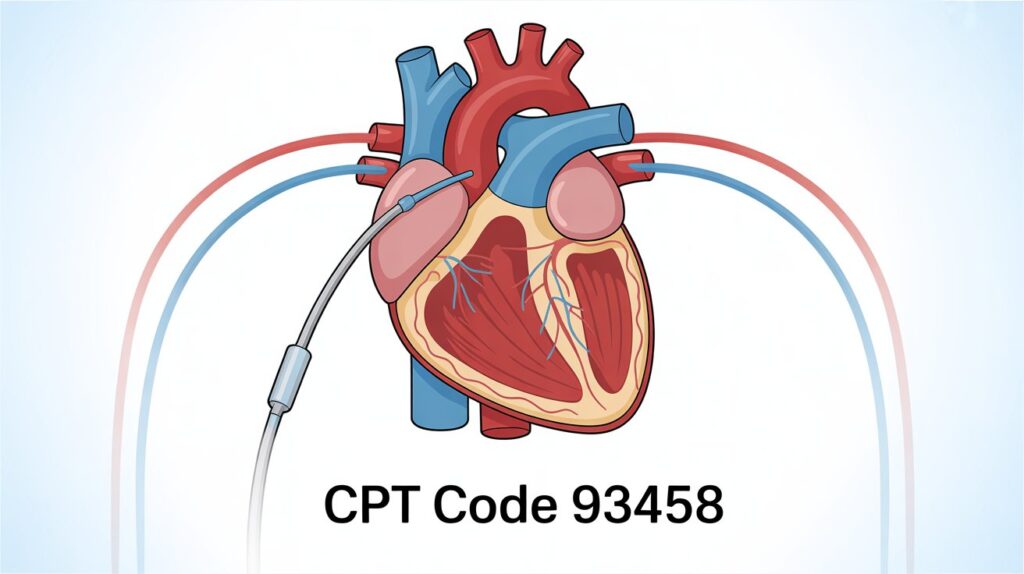
What Happens During a Cardiac Catheterization
What is cardiac catheterization? Why does the doctor put a tube in the body? Why is this test so important for heart patients?
Cardiac catheterization is a special heart test. It is done when the doctor wants to see inside the heart. It is not done from outside like normal scans. The doctor puts a very thin tube into a blood vessel. This tube is called a catheter. It usually goes in from the arm or from the leg. The tube slowly moves up to the heart.
When the tube reaches the heart, the doctor puts a special liquid inside. This liquid is called dye. This dye helps the heart blood vessels show clearly on X ray screen. The doctor can see live pictures of the heart on a big screen. This shows if the heart arteries are open or blocked.
If the blood flow is slow or blocked, the doctor can see it right away. This helps the doctor know why the patient has chest pain, breathing problem, or heart attack signs.
During this test, the doctor also checks the left side of the heart. This side pumps blood to the whole body. If this part is weak, the patient can feel very tired and short of breath. The test shows how well the heart muscle is working.
The doctor also checks the pressure inside the heart. This tells if the heart is under stress. High pressure can mean heart disease or valve problem.
The patient is awake during this test. The doctor gives medicine so the patient feels relaxed and no pain. The area where the tube goes in is made numb. Most patients only feel little pressure, not pain.
The whole test usually takes about 30 minutes to one hour. After the test, the tube is removed. The doctor puts pressure on the place to stop bleeding. The patient must lie down for some time.
Cardiac catheterization is done to find heart block, weak heart, valve problems, and blood flow issues. It helps the doctor decide if the patient needs medicine, stent, or surgery.
This is why CPT code 93458 is used. It tells the insurance that this full heart test was done. It includes heart pictures, heart pump test, and doctor reading.
Without this test, many heart problems cannot be seen clearly. That is why this test is very important for heart care and billing.
When Doctors Use CPT Code 93458?
Doctors use CPT code 93458 when they do a full heart catheter test. This code is not for small or simple heart checks. It is used when the doctor needs to look deep inside the heart to find real problems.
This code is used when a patient has chest pain. Chest pain can mean the heart is not getting enough blood. The doctor cannot guess this. The doctor must see the heart arteries. So the doctor does a heart cath test and uses CPT 93458 to bill it.
This code is also used when a patient feels very tired or short of breath. These signs can mean the heart is weak. The doctor checks how the left side of the heart is pumping. This is included in CPT 93458.
Doctors also use this code when a patient had a heart attack before. They need to see if there are still blocks in the heart arteries. They use CPT 93458 to do this full test.
If a patient has an abnormal heart scan or stress test, the doctor may need a heart cath to confirm the problem. In this case, CPT 93458 is used.
This code is also used before heart surgery. The doctor must know the exact condition of the heart and blood vessels. The heart cath gives clear information. CPT 93458 is used to bill this work.
Doctors do not use CPT 93458 for every heart patient. They only use it when they need full inside heart pictures and heart pump check.
If the doctor only checks pressure or only looks at one small part, this code is not used. This is why good documentation is needed.
CPT 93458 is used when the doctor does coronary angiography, left heart cath, and heart pump imaging in one visit. All three must be done.
If even one part is missing, another code should be used. Using CPT 93458 when not allowed can cause claim denial.
That is why doctors and billing teams must work together. The doctor must write clearly what was done. The billing team must pick the right code.
Using CPT 93458 at the right time helps the practice get paid and helps avoid billing problems.
What Parts of the Heart Are Checked in CPT 93458?
When CPT 93458 is used, the doctor checks very important parts of the heart. This is not just one small check. It is a full inside heart look. This is why this code is special and very important.
First, the doctor checks the main heart blood vessels. These are called coronary arteries. These arteries bring blood to the heart muscle. If these arteries are blocked, the heart cannot get enough blood. This can cause chest pain or heart attack. CPT 93458 includes pictures of these arteries.
The doctor puts dye into these arteries. The dye shows on the X ray screen. The doctor can see if the blood is flowing well or not. If there is a narrow area or block, it is easy to see.
Second, the doctor checks the left side of the heart. This side is called the left ventricle. This part pumps blood to the whole body. If this part is weak, the whole body suffers. The doctor needs to know how strong this pump is.
CPT 93458 includes a test called ventriculography. This test shows how the left ventricle moves and pumps. The doctor can see if the heart muscle is moving well or not. If part of the heart is not moving, it may be damaged.
Third, As part of left heart catheterization, the doctor may measure pressure within the left side of the heart to help assess cardiac function. High pressure can mean heart failure or valve problems.
So CPT 93458 looks at three main things. It looks at heart arteries. It looks at the heart pump. It looks at heart pressure. All three are very important for heart care.
This is why CPT 93458 gives a full picture of the heart. It is not just a scan. It is a deep inside test.
Doctors use this code when they need full and clear heart information. Billing teams must know that this code means all these parts were checked.
If even one of these parts is not checked, then CPT 93458 should not be used. Correct coding depends on what heart parts were tested.
Tests and Images Included in CPT 93458
CPT 93458 is used when many heart tests are done together in one visit. This code is not for one small image. It is for a full group of heart tests that show how the heart and its blood vessels are working. These tests help the doctor see inside the heart and find real problems. All these tests are done at the same time when CPT 93458 is used.
Coronary Artery Imaging
This is the main test in CPT 93458. The doctor puts dye into the heart blood vessels. These blood vessels are called coronary arteries. The dye helps the doctor see these vessels on the
screen. The doctor checks if the blood is flowing well or if there is a block. This shows if the patient has heart disease.
Left Heart Catheterization
In this test, the thin tube goes into the left side of the heart. This side is very important because it pumps blood to the whole body. The doctor uses the tube to check inside the heart. This helps the doctor know if the heart is working well.
Left Ventriculography
This test shows how the left side of the heart moves and pumps. The doctor puts dye inside the heart chamber. The X ray shows how strong the heart muscle is. If the heart muscle is weak or damaged, the doctor can see it clearly.
Heart Pressure Check
During left heart catheterization, the doctor may measure pressure inside the left side of the heart. This information helps the doctor understand how well the heart is working and whether there may be heart or valve problems.
Live X Ray Imaging
All these tests are seen on a live X ray screen. The doctor watches the heart in real time. This helps the doctor make fast and correct decisions. These images are also saved for records and billing.
Image Reading by the Doctor
The doctor does not only take pictures. The doctor also reads and studies these pictures. This is called interpretation. When modifier 26 is used with CPT 93458, it means the doctor did this reading work.
Report and Findings
After the test, the doctor writes a full report. This report tells what was seen in the heart. It says if there are blocks, weak heart muscle, or other problems. This report is needed for billing and for patient care.
All these tests together make CPT 93458 a complete heart check. That is why this code is used only when all these things are done in one visit.
Difference Between CPT 93458 and Other Heart Cath Codes
Many heart cath codes look the same, but they are not the same. Using the wrong code can cause claim denial and lost money. CPT 93458 is used only when the doctor does a full left heart cath with heart artery images and heart pump images. Other codes are used when only part of this work is done.
| CPT Code | What the Doctor Checks | Heart Arteries | Heart Pump Image | Left Heart Check | When It Is Used |
| 93458 | Full left heart cath with images | Yes | Yes | Yes | When doctor checks arteries, heart pump, and left heart |
| 93454 | Heart arteries only | Yes | No | No | When doctor only looks at heart blood vessels |
| 93452 | Left heart pressure only | No | No | Yes | When doctor only checks heart pressure |
| 93453 | Right and left heart pressure | No | No | Yes | When both sides pressure are checked |
| 93456 | Heart arteries and bypass grafts | Yes | No | No | When patient had bypass surgery before |
CPT 93458 is the most complete code in this group. It includes heart artery images, heart pump images, and left heart catheter work. Other codes do not include all these things.
If the doctor does not do heart pump imaging, then CPT 93458 should not be used. If the doctor only looks at heart arteries, then CPT 93454 is used instead.
This is why good doctor notes are very important. The billing team must read the report and see what tests were done. Then the correct code is chosen.
Using CPT 93458 when not allowed can cause denial. Using a lower code when 93458 is needed can cause low payment.
What Is Left Heart Catheterization in CPT 93458
Left heart catheterization is a very important part of CPT 93458. This test helps the doctor see how the main pumping side of the heart is working. The left side of the heart sends blood to the whole body. If this side is weak or blocked, the patient can feel chest pain, tiredness, and breathing problems.
In this test, the doctor puts a thin tube into a blood vessel. The tube goes to the left side of the heart. This is done with care and using live X ray. The doctor watches the tube move on the screen until it reaches the correct place inside the heart.
Once the tube is in the left side of the heart, the doctor can check many things. The doctor checks the pressure inside the heart. This shows how hard the heart is working. If the pressure is high, it can mean heart failure or valve problems.
The doctor also puts dye into the heart through the tube. This dye shows how blood moves inside the heart. The doctor can see if the heart is pumping well or if some part is not moving.
Left heart catheterization is not just one small test. It gives deep inside heart information. It helps the doctor know if the heart muscle is strong, weak, or damaged.
In CPT 93458, this test is always included. If the doctor does not do left heart cath, then CPT 93458 should not be used.
This test also helps the doctor decide what treatment the patient needs. If the heart is weak, the patient may need medicine. If there are blocks, the patient may need a stent or surgery.
From billing side, this test is very important. It proves that a full heart cath was done. The doctor must write this clearly in the report.
If the report does not show left heart catheterization, insurance can deny CPT 93458. That is why correct notes and correct coding are needed for payment.
What Is Left Ventriculography in CPT 93458
Left ventriculography is a test that shows how strong the heart pump is. It is a very important part of CPT 93458. The left ventricle is the main pumping chamber of the heart. It pushes blood to the whole body. If this part is weak, the person can feel tired, short of breath, and may have heart failure.
In this test, the doctor puts dye into the left ventricle through the catheter. Then the doctor takes live X ray pictures. These pictures show how the heart muscle moves and how well it pumps blood. The doctor can see if the heart is normal or if there is damage.
This test is included in CPT 93458. If this test is not done, then CPT 93458 should not be used.
| Test Name | What It Checks | Why It Is Important | Included in CPT 93458 |
| Left ventriculography | How the heart pump moves | Shows if heart is strong or weak | Yes |
| Coronary angiography | Heart blood vessels | Shows if arteries are blocked | Yes |
| Left heart pressure check | Pressure inside heart | Shows heart stress | Yes |
| Right heart pressure check | Pressure on right side | Not part of this code | No |
This table shows that CPT 93458 includes left ventriculography. This means the doctor must do this test for this code to be correct.
If the doctor only checks heart arteries but does not check the heart pump, then a different code should be used.
From billing side, left ventriculography proves that a full heart test was done. It helps support higher payment.
This is why doctor notes must clearly say that left ventriculography was performed. If it is missing, insurance can deny the claim.
Correct use of CPT 93458 depends on this test being done and written in the report.
What Is Coronary Angiography in CPT 93458
Coronary angiography is the main test used in CPT 93458. This test shows the heart blood vessels. These blood vessels are called coronary arteries. They bring blood and oxygen to the heart muscle. If these vessels are blocked, the heart cannot work well. This can cause chest pain and heart attack.
In this test, the doctor puts a special dye into the heart arteries. The dye flows inside the vessels. The doctor uses X ray to see the dye move. This makes the blood vessels visible on the screen.
This test helps the doctor see if the arteries are open or blocked. It also shows how bad the block is. This helps the doctor decide the next step of care.
Coronary angiography in CPT 93458 includes many important things such as
- Seeing all major heart blood vessels
- Finding narrow or blocked areas
- Checking blood flow to the heart muscle
- Helping plan stent or surgery
- Saving image records for medical notes
This test is always part of CPT 93458. If the doctor does not do this test, then CPT 93458 should not be used.
From billing view, this test proves that heart arteries were checked. It supports higher payment and correct coding.
The doctor must write clearly that coronary angiography was done. The images must also be saved. This helps avoid claim denial.
Coronary angiography is the heart of CPT 93458. Without it, this code is not correct.
When CPT 93458 Should Not Be Used
CPT 93458 is a very strong heart code. But it should not be used all the time. If it is used when the full heart test is not done, the insurance company can deny the claim. This can cause loss of money and problems for the practice.
This code should only be used when the doctor does all parts of the test. This includes heart artery images, left heart cath, and heart pump images. If even one part is missing, CPT 93458 is wrong.
If the doctor only checks heart blood vessels and does not check the heart pump, then CPT 93458 should not be used. In this case, another code is used.
If the doctor only checks pressure in the heart and does not take heart artery images, CPT 93458 is also wrong.
This code should also not be used if the doctor does a right heart cath only. CPT 93458 is only for the left side of the heart with artery images.
If the doctor does not inject dye into the heart pump area, then left ventriculography was not done. Without this, CPT 93458 cannot be billed.
Sometimes doctors do a stent or balloon treatment. In these cases, CPT 93458 may need special modifiers or may be bundled. If coded wrong, insurance can deny it.
This is why doctor notes must be very clear. The billing team must read the full report before using this code.
Using CPT 93458 when it is not allowed is a common billing mistake. It causes claim rejection and delay in payment.
Correct coding protects the practice and helps get full and fast payment.
Common Billing Errors with CPT 93458
Many claims for CPT 93458 get denied because of small billing mistakes. This code is strong but also very strict. If one rule is broken, the insurance company can reject the claim. That is why billing teams must be very careful when using this code.
| Billing Error | What It Means | Why It Causes Denial |
| Using 93458 without heart pump test | Left ventriculography was not done | Code needs this test to be valid |
| No coronary images in report | Heart arteries were not checked | 93458 needs artery imaging |
| Missing doctor notes | No clear proof of the test | Insurance cannot verify the work |
| Wrong modifier | Modifier 26 or 59 not used when needed | Claim gets bundled or rejected |
| Using with wrong stent code | Codes not matched correctly | Insurance thinks it is double billing |
These errors happen when the doctor and billing team do not work together. The doctor must write clear notes. The billing team must read them carefully.
One small mistake can cause weeks of delay in payment. Sometimes the claim is fully denied.
That is why CPT 93458 needs special attention. It should always match what was done in the heart test.
Correct coding helps the practice get full money without stress.
Why CPT 93458 Gets Denied or Bundled
CPT 93458 is a high value heart code, but it is also one of the most denied codes. Many insurance companies bundle this code with other heart treatment codes if it is not used correctly. This means they think this service is already included in another code and they do not want to pay again. Below are the main reasons why this happens.
No Proof of Heart Pump Test
If the doctor did not clearly write that left ventriculography was done, the payer may deny CPT 93458.
Missing Coronary Images
If the report does not show heart artery images, the code is seen as incomplete.
Wrong Modifier Used
If modifier 26, 59, or XU is not used when needed, the code can be bundled.
Bundled with Stent Code
When a stent code is billed, CPT 93458 may be bundled if not separated with the right modifier.
Incomplete Doctor Notes
If the doctor notes are short or unclear, insurance cannot verify the work.
No Medical Need Written
If the doctor did not write why the test was needed, the claim may be denied.
Using CPT 93458 with Wrong Cath Code
If another heart cath code is used with 93458, it can cause conflict.
Wrong Place of Service
If the place of service is wrong, the code may not match the claim.
No Diagnosis Support
If the diagnosis code does not match a heart problem, insurance may deny it.
Billing Both Technical and Doctor Parts
If modifier 26 is not used correctly, the payer may think it is double billing.
These issues are common but can be avoided with good documentation and correct billing rules.
Important Modifiers Used with CPT 93458
CPT 93458 often needs modifiers to make sure insurance pays correctly. These small codes tell the insurance company exactly what part of the procedure is being billed. Using the wrong modifier can cause claim denial or bundling.
Here are the main modifiers used with CPT 93458:
- Modifier 26 – This shows the doctor’s professional work only. It is used when the doctor interprets images or does the heart test, but the hospital bills for the equipment and facility.
- Modifier 59 – This shows that the procedure is separate from other procedures. For example, if a stent is placed at the same time, 59 can help CPT 93458 not get bundled.
- Modifier XU – This is used to show that the procedure is done on a separate artery or area that is not normally included. Some insurance companies like BCBS accept XU to prevent bundling.
- Place of Service Modifiers – Sometimes the place where the test is done matters. The modifier tells the payer if the service is done in a hospital, outpatient lab, or other facility.
- Diagnosis Link Modifiers – These confirm CPT 93458 is linked to the right diagnosis like chest pain or coronary artery disease. Without correct diagnosis, insurance may deny the claim.
Using these modifiers correctly is very important. If used wrong, insurance can deny the claim or say it is already included with another code.
Billing teams must read the doctor’s notes carefully to choose the right modifier. They also check what other procedures were done at the same time to avoid mistakes.
Correct use of modifiers helps practices get full and fast payment while avoiding denials. It also makes the claim clean and easy to approve.
How Correct Coding of CPT 93458 Improves Payments
Using CPT 93458 correctly is very important for a practice. If it is coded right, the practice gets paid faster and fully. Wrong coding can cause denials, delays, or lower payment. Correct coding shows insurance exactly what the doctor did during the heart test.
Here are the main ways correct coding improves payments:
- Full Reimbursement – When CPT 93458 is coded with all tests included (artery images, left heart cath, and ventriculography), insurance pays the full amount.
- Avoid Denials – If the code is used correctly with the right modifiers and diagnosis, insurance does not deny the claim.
- Clear Documentation – Accurate coding requires clear doctor notes. When the claim matches the report, it passes insurance review easily.
- Correct Modifiers – Using modifiers like 26, 59, or XU prevents bundling and confirms separate payment for professional services.
- Saves Time – Correct coding reduces back-and-forth with insurance. Fewer denials mean less resubmission work for the billing team.
- Supports Audits – Insurance may check claims for accuracy. Proper coding proves the service was done correctly and reduces audit risk.
- Improves Cash Flow – Practices get money faster when claims are coded correctly. This helps pay staff and run the office smoothly.
- Avoids Underpayment – Using a lower code or missing parts of CPT 93458 can lead to less payment. Correct coding prevents this.
- Builds Trust with Insurance – Clean and accurate claims make the insurance company trust the practice. This reduces future scrutiny.
- Supports Patient Care – When billing is smooth, the doctor and staff can focus on patients instead of paperwork.
Correct coding of CPT 93458 is not just about getting paid. It also protects the practice from mistakes, audits, and delays. Using proper codes, modifiers, and documentation confirms the practice runs efficiently and gets the revenue it deserves.
Improve Revenue with Certified Cardiology Billing Services
Do you know that billing heart tests is not easy? Some heart codes, like CPT 93458, are very difficult. Many doctors and clinics make mistakes when they bill insurance. If the code is used wrong, insurance may deny the claim. This means the practice will not get paid.
MZ Medical Billing LLC is here to help. We make sure the billing is correct. We make sure the practice gets paid full and fast. We have experience with complicated heart codes like CPT 93458. We also know all the rules of insurance.
We start by reading the doctor’s notes very carefully . We check everything the doctor did in the heart test. We look if the doctor did:
- Coronary artery imaging – this shows the heart blood vessels.
- Left heart catheterization – this checks the left side of the heart.
- Left ventriculography – this checks how the heart pumps blood.
- Heart pressure measurements – this shows if the heart is under stress.
If any of these tests is missing, we do not use CPT 93458. We use the correct alternate code. This is very important. Using the wrong code can make insurance deny the claim. With us, the claim is always correct .
Next, we make sure the modifiers are correct . Modifiers are small codes that tell insurance exactly what part of the test is billed. For CPT 93458, common modifiers are:
- 26 – shows the doctor’s professional work only.
- 59 – shows that the procedure is separate from other procedures.
- XU – shows that the test is done on a separate artery or area.
Using these modifiers correctly is very important. Many clinics make mistakes with modifiers. If the wrong modifier is used, insurance may think the test is already included in another code and may not pay. We make sure this does not happen.
We also check diagnosis codes . Insurance needs a reason why the heart test was done. Common reasons are: chest pain, coronary artery disease, or heart failure. If the diagnosis does not match the test, insurance can deny the claim. We make sure CPT 93458 is always linked to the right diagnosis.
After checking notes, modifiers, and diagnosis, we prepare the claim . We make sure all information is correct. The claim shows insurance exactly what the doctor did and why it was done. This makes insurance approve the claim faster.
Sometimes, insurance still denies or bundles CPT 93458. When this happens, we review the problem carefully . We check why insurance denied the claim. Then, we correct the claim and resubmit it . Many practices lose money because they do not follow up. With us, the practice gets the full payment.
We also make reports for the practice . These reports show which claims were submitted, which claims were paid, and which claims were denied. This helps the clinic see what is working and what is not. The practice can then prevent future mistakes.
Using MZ Medical Billing LLC also saves time and reduces stress . Doctors and staff do not have to learn complicated billing rules. They do not have to spend hours fixing denials. We do all the hard work. The practice can focus on patients, not on paperwork.
We also increase cash flow for the practice. When claims are correct, insurance pays faster. The practice gets money on time. This helps pay staff, buy equipment, and run the clinic smoothly.
With us, the practice also avoids underpayment . Sometimes, clinics use a smaller code or miss part of CPT 93458. Insurance then pays less than it should. We make sure the full code is used when allowed. This gives maximum revenue.
We also help the clinic during audits . Insurance companies sometimes check claims for accuracy. If claims are wrong, the practice can face problems. With us, all claims are correct and clean. This reduces audit risk.
Using MZ Medical Billing LLC builds trust with insurance . Insurance sees that claims are clean and correct. They are more likely to approve future claims quickly.
We also improve patient care indirectly . When billing is smooth, doctors and staff can spend more time with patients. They do not have to worry about denied claims or lost payments.
We handle all parts of CPT 93458 . This includes the technical part (equipment, dye, X-ray) and the professional part (doctor interpretation). We make sure the right modifiers are used so both parts are billed correctly.
We train our staff to stay updated . Billing rules change often. New rules come from insurance companies and the government. We make sure we follow the latest rules. This keeps the practice safe and payments correct.
We also handle multiple insurance types . Some patients have private insurance, some have Medicare or Medicaid. Each insurance has different rules. We know how to handle them all.
This reduces delays and increases payment chances.
We help prevent mistakes before they happen. Many claims fail because small details are missed. We double-check everything. This saves the practice time, money, and stress.
We are proud to help practices get the most revenue from CPT 93458. Many practices try to do this alone and lose money. With us, the practice gets paid for all tests that were done.
Finally, MZ Medical Billing LLC gives peace of mind. Practices know that complicated heart codes like CPT 93458 are billed correctly every time. They do not worry about denials, delays, or audits.
Using us means:
- Full and fast payment for CPT 93458
- Correct use of modifiers and diagnosis codes
- Clear documentation and claim submission
- Follow-up on denied or bundled claims
- Detailed reports for the practice
- Reduced stress for doctors and staff
- Increased revenue and cash flow
- Protection from audits and mistakes
With MZ Medical Billing LLC , practices can focus on patient care while we handle all complex billing rules. We make sure CPT 93458 and other heart codes are billed properly every time. This helps the clinic run smoothly, earn more, and avoid payment problems.