Skip to main content
Medical billing uses special codes called modifiers to give extra information about services provided to patients. Two important modifiers that healthcare providers and medical billing staff need to understand are JW and JZ. These modifiers relate to drug wastage, which means medication that gets thrown away and cannot be used.
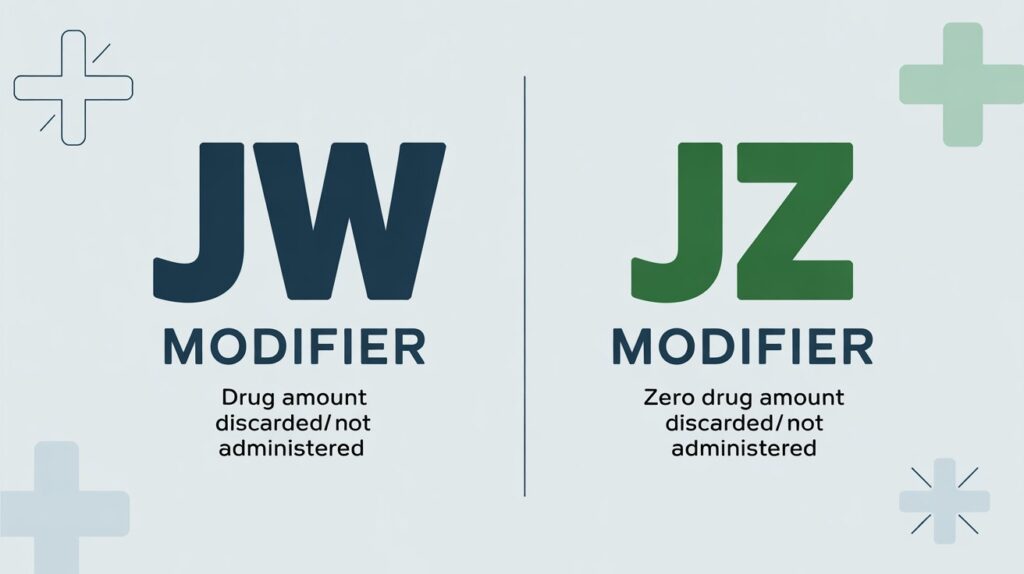
The JW modifier tells insurance companies that some medication was wasted during a patient’s treatment. The JZ modifier tells insurance companies that no medication was wasted. Both modifiers became required by Medicare in recent years to track drug waste and prevent billing fraud. Understanding when to use each modifier is very important for accurate billing and compliance.
Healthcare providers who give injectable medications, infusion therapies, or any single-use medications must know these modifiers. Medical billing staff must understand how to apply them correctly on claims. Even patients benefit from knowing about these modifiers because they affect how much medication is billed and paid for. This complete guide explains everything about JW and JZ modifiers in simple, clear language.
What Are JW and JZ Modifiers
Understanding Medical Billing Modifiers
Modifiers are two-character codes added to procedure codes on medical claims. They provide additional details about the service that was performed. Modifiers help insurance companies understand exactly what happened during a patient’s visit or treatment.
There are many different modifiers in medical billing. Some tell about the location of a service on the body. Others explain timing, like services done on the same day. Some describe who performed the service. The JW and JZ modifiers are specifically about medication waste.
Medicare created these modifiers to increase transparency in how medications are billed. Before these modifiers existed, it was harder to track how much medication was actually used versus how much was wasted. The modifiers help identify patterns and reduce improper payments.
What JW Modifier Means
The JW modifier stands for “drug amount discarded/not administered to any patient.” This modifier is used when a healthcare provider must throw away part of a single-dose medication container because the patient needs less than the full amount.
Single-dose vials and containers come in fixed sizes. Sometimes a patient needs 30mg of a medication, but the vial contains 50mg. The healthcare provider uses 30mg and must discard the remaining 20mg because single-dose containers cannot be saved for another patient due to sterility and safety concerns.
When JW modifier is added to the claim, it tells the insurance company that some medication was wasted. The claim shows how much was administered to the patient and how much was discarded. Both amounts can be billed and reimbursed when properly documented.
What JZ Modifier Means
The JZ modifier stands for “zero drug amount discarded/not administered to any patient.” This modifier is used when a healthcare provider uses the entire contents of a medication container with nothing left over to throw away.
If a patient needs exactly 50mg of medication and the vial contains exactly 50mg, there is zero waste. Or if a patient needs 60mg and the healthcare provider uses a 60mg vial, there is zero waste. The JZ modifier reports this to the insurance company.
The JZ modifier essentially says “we did not waste any medication during this patient’s treatment.” It provides transparency and shows the healthcare provider is being honest about medication usage.
Why These Modifiers Exist
Medicare implemented mandatory JW and JZ modifier reporting to combat fraud and waste in the healthcare system. Before these modifiers, some providers might bill for medication that was never actually purchased or used. Others might bill full vials for multiple patients when only one vial was used.
The modifiers create accountability. When providers must report waste or no waste, it becomes easier to audit and verify that billing matches actual medication usage. Medicare can analyze patterns and identify unusual billing that might indicate problems.
These modifiers also help Medicare understand true medication costs. By tracking waste across the entire Medicare system, they can identify which medications are frequently wasted and potentially work with manufacturers on better packaging sizes.
When to Use JW Modifier
Single-Dose Medication Situations
The JW modifier applies specifically to single-dose or single-use medication containers. These are vials, syringes, or other containers intended for one patient only. Once opened and used for one patient, any remaining medication must be discarded for safety and infection control reasons.
Common single-dose medications that might generate waste include:
- Chemotherapy drugs that come in fixed-dose vials
- Biologic medications for autoimmune conditions
- Injectable medications given in infusion centers
- Expensive specialty drugs with limited vial sizes
- Vaccines in single-dose prefilled syringes
- Contrast agents used during imaging procedures
If you open a single-dose container and do not use all of it, you must use the JW modifier when billing for that medication.
Calculating the Wasted Amount
When using JW modifier, you must calculate exactly how much medication was wasted. This requires simple math based on the vial size and the dose administered.
Example: A patient needs 75mg of medication. The drug comes in 100mg single-dose vials. The healthcare provider administers 75mg and must discard 25mg.
On the claim, you would bill:
- One line with the drug code for 75mg (amount administered) with no modifier
- One line with the drug code for 25mg (amount discarded) with JW modifier
Both lines bill to the insurance company. The documentation must clearly show the vial size, amount given, and amount wasted.
Documentation Requirements for JW
Proper documentation is absolutely required when using JW modifier. The medical record must contain specific information about the medication waste. Without this documentation, claims can be denied or audited later with demands for repayment.
Required documentation includes:
- The drug name and strength
- The total amount in the vial or container
- The dose actually administered to the patient
- The amount discarded and wasted
- Why the waste occurred (single-dose vial with patient needing less than full amount)
- Who discarded the medication and when
- Witness signature if required by facility policy
Example documentation: “Pembrolizumab 100mg single-dose vial opened. Patient
weight-based dose calculated at 180mg. Two vials used. First vial: 100mg administered, 0mg discarded. Second vial: 80mg administered, 20mg discarded and wasted per facility protocol. Witnessed by RN Jane Smith.”
This level of detail supports the JW modifier and protects against audits.
Multiple Vials and JW Modifier
Sometimes a patient’s dose requires multiple vials. JW modifier might apply to some vials but not others.
Example: A patient needs 240mg of medication. The drug comes in 100mg single-dose vials. The healthcare provider must use three vials.
Vial 1: 100mg administered, 0mg wasted Vial 2: 100mg administered, 0mg wasted Vial 3: 40mg administered, 60mg wasted
On the claim:
- Bill 240mg administered with no modifier
- Bill 60mg discarded with JW modifier
Only the wasted portion from the partial vial gets the JW modifier. The fully used vials do not need JW because there was no waste from those vials.
Common Medications Requiring JW
Certain medication categories frequently require JW modifier because of how they are packaged and dosed:
| Medication Type | Why JW Often Needed | Example |
| Chemotherapy drugs | Weight-based dosing rarely matches vial sizes exactly | Cisplatin, carboplatin, docetaxel |
| Biologic injections | High cost per vial, patient doses vary | Infliximab, rituximab, pembrolizumab |
| Ophthalmology injections | Small doses needed, vials contain more | Ranibizumab, aflibercept |
| Contrast agents | Patient-specific volumes needed | Gadolinium-based agents |
| Anesthesia drugs | Dose based on patient weight and procedure length | Propofol in single-use vials |
| Some antibiotics | IV formulations in fixed vial sizes | Vancomycin in certain presentations |
Healthcare providers working with these medications should expect to use JW modifier regularly.
When to Use JZ Modifier
Zero Waste Situations
The JZ modifier applies when absolutely no medication is wasted. The patient receives exactly what the container holds, or multiple containers are used with no remainder.
Common zero waste situations include:
- The patient’s dose matches the vial size exactly
- Multi-dose vials are used where remaining medication can be saved for future use
- Oral medications where the patient takes the exact pills prescribed
- Topical medications where the entire tube or container is dispensed
- Injectable medications where the dose matches available vial combinations
If you open medication containers and use every bit with nothing thrown away, use the JZ modifier.
Exact Dose Matching
Sometimes a patient’s required dose perfectly matches what is available in vials. This creates zero waste naturally.
Example: A patient needs 100mg of medication. The drug comes in 100mg single-dose vials. The healthcare provider administers the entire 100mg from one vial. Nothing is left over. Zero waste occurs.
On the claim, bill the drug code for 100mg with JZ modifier. This tells the insurance company the entire vial was used with no waste.
Multi-Dose Vials and JZ
Multi-dose vials are designed to be used for multiple patients or multiple doses over time. They contain preservatives that allow them to remain sterile after the first use. When multi-dose vials are used, there is typically no waste because remaining medication is saved.
Example: A multi-dose vial of insulin contains 1000 units. A patient receives 30 units. The remaining 970 units stay in the vial for future use by this patient or other patients. No medication is wasted.
When billing for medications from multi-dose vials, use JZ modifier because zero waste occurred. The unused portion was not discarded but rather saved for appropriate future use.
Oral and Topical Medications
Medications that patients take by mouth or apply to their skin typically generate zero waste. Pills are counted and dispensed in exact quantities. Creams and ointments are provided in tubes or containers that the patient uses over time.
For oral medications: A patient is prescribed 30 tablets. The pharmacy dispenses exactly 30 tablets. Zero waste. Use JZ modifier if billing these medications in certain settings like Medicare Part B injectable drug situations.
For topical medications: A patient receives a 45-gram tube of cream. They will use the entire tube over the treatment period. Zero waste. Use JZ modifier when applicable.
However, these modifiers are most relevant for injectable and infused medications rather than typical retail pharmacy dispensing.
Using Full Vial Combinations
Healthcare providers can sometimes combine vials cleverly to create zero waste even when individual vials would create waste.
Example: A patient needs 180mg of medication. The drug comes in 100mg vials only. Using two vials would mean administering 100mg from the first vial (no waste) and 80mg from the second vial (20mg waste requiring JW modifier).
But if the drug also comes in 50mg vials, the healthcare provider could use one 100mg vial and one 50mg vial plus one 30mg vial if available, or find a combination that uses full vials. If they can match exactly with available vial sizes, JZ modifier applies instead of JW.
This requires having various vial sizes available and doing calculations before preparing the medication.
When JZ is Not Needed
JZ modifier is not needed for every medication. It specifically applies to Medicare Part B drugs and certain other situations where waste reporting is required. Regular pharmacy dispensing of oral medications, over-the-counter products, and most retail pharmacy situations do not require JZ modifier.
Check Medicare guidelines and specific payer requirements to determine when JZ modifier must be used. Generally, if a medication situation would require JW when waste occurs, it requires JZ when waste does not occur.
Key Differences Between JW and JZ Modifiers
The Core Distinction
The fundamental difference between JW and JZ modifiers is simple: JW means there was waste, JZ means there was zero waste. They are opposites. You use one or the other, never both on the same line item.
JW modifier reports medication that was thrown away and not given to any patient. JZ modifier reports that no medication was thrown away because everything was used. Both modifiers provide transparency to insurance companies about medication usage.
Usage Rules Comparison
Understanding when each modifier applies helps healthcare providers and medical billing staff use them correctly. Here is a direct comparison:
| Aspect | JW Modifier | JZ Modifier |
| Meaning | Drug amount discarded/not administered | Zero drug amount discarded |
| When Used | Some medication was wasted | No medication was wasted |
| Applies To | Single-dose containers with partial use | Exact dose matching or multi-dose vials |
| Billing | Waste amount billed separately with JW | Total amount billed with JZ |
| Documentation | Must document amount wasted and why | Must document that no waste occurred |
| Common With | Weight-based dosing, expensive biologics | Exact vial matches, multi-dose products |
| Required By | Medicare for Part B drugs | Medicare for Part B drugs |
Billing Presentation Differences
How these modifiers appear on claims differs based on whether waste occurred. For JW modifier claims, you create two separate line items:
- Line 1: Drug code + units administered (no modifier)
- Line 2: Drug code + units discarded (JW modifier) Example: 75mg administered, 25mg wasted from 100mg vial
- Line 1: J9999 75 units (no modifier)
- Line 2: J9999 25 units (JW modifier)
For JZ modifier claims, you create one line item:
- Line 1: Drug code + total units (JZ modifier) Example: 100mg administered, 0mg wasted from 100mg vial
- Line 1: J9999 100 units (JZ modifier)
The difference in line item presentation reflects whether waste occurred.
Documentation Differences
Both modifiers require documentation, but the specifics differ slightly. JW documentation must include:
- Vial size and total contents
- Amount given to patient
- Amount discarded and wasted
- Reason for waste (single-dose vial, patient dose requirement)
- Witness or verification of waste disposal
- Date and time of administration and waste JZ documentation must include:
- Vial size and total contents
- Amount given to patient (which equals vial contents)
- Statement that zero waste occurred
- Reason for zero waste (exact dose match, multi-dose vial, full vial combination)
- Date and time of administration
Both require clear documentation in the medical record that supports the modifier used.
Financial Impact Differences
JW modifier allows billing for wasted medication, which increases the total claim amount. The healthcare provider gets reimbursed for the wasted portion even though it was not administered to the patient.
Example: Patient needs 75mg, vial contains 100mg, drug costs $100 per mg.
- Without JW: Bill only 75mg = $7,500 reimbursement
- With JW: Bill 75mg administered + 25mg wasted = $10,000 reimbursement
The $2,500 difference represents reimbursement for unavoidable waste from single-dose vial.
JZ modifier does not change the billing amount because there is no waste to bill. The healthcare provider bills exactly what was administered.
Example: Patient needs 100mg, vial contains 100mg, drug costs $100 per mg.
- With JZ: Bill 100mg = $10,000 reimbursement
- No additional waste amount because nothing was discarded
The financial impact of using correct modifiers is significant for expensive medications.
Compliance and Audit Differences
Both modifiers face scrutiny during audits, but for different reasons. JW modifier audits focus on:
- Was waste actually necessary or could it have been avoided?
- Is the documented waste amount accurate?
- Are there patterns of excessive waste that suggest billing fraud?
- Do multiple patients show waste from the same vial (impossible with single-dose)?
- Does the medical record support the waste claim?
JZ modifier audits focus on:
- Was zero waste truly achieved or is the provider hiding waste?
- For multi-dose vials, are appropriate records kept of remaining medication?
- Are providers correctly identifying when JZ versus JW should apply?
- Is documentation sufficient to prove zero waste occurred?
Auditors look for honesty and accuracy with both modifiers.
Medicare Requirements for JW and JZ Modifiers
When Medicare Mandates These Modifiers
Medicare began requiring JW modifier in 2017 for Part B drugs. The requirement expanded to include JZ modifier in 2023. These modifiers are mandatory, not optional, when billing certain medications to Medicare.
The requirement applies to:
- Medicare Part B drugs billed with J-codes or C-codes
- Drugs furnished incident to a physician service
- Drugs administered in physician offices, hospital outpatient departments, and ambulatory surgical centers
- Specific high-cost drugs identified by Medicare The requirement does not apply to:
- Medicare Part D drugs (retail pharmacy medications)
- Drugs with oral administration routes in most cases
- Drugs administered in inpatient hospital settings under Part A
- Vaccines in many situations (different billing rules apply)
Healthcare providers billing Medicare for injectable drugs must check whether JW or JZ modifier is required for each medication.
Part B Drug Coverage
Medicare Part B covers certain medications that are administered by healthcare providers rather than taken at home. These are typically injectable drugs, infusion drugs, and certain specialty medications.
Common Part B drugs include:
- Chemotherapy medications given in oncology clinics
- Infusion therapies for autoimmune diseases
- Injectable osteoporosis medications
- Eye injection medications for macular degeneration
- Some vaccines and immunizations
- IV antibiotics administered in outpatient settings
- Biologic drugs requiring administration by healthcare providers
When these medications are billed to Medicare Part B, JW or JZ modifier must be included to indicate whether waste occurred.
J-Codes and C-Codes
Medicare uses specific HCPCS codes for drugs. J-codes are the most common and represent injectable drugs and certain specialty medications. C-codes are used in hospital outpatient settings for some drugs and biologics.
J-codes range from J0120 to J9999 and each represents a specific drug and dosage unit. For example:
- J9035: Bevacizumab per 10mg
- J1745: Infliximab per 10mg
- J2505: Pegfilgrastim per 6mg
When billing J-codes or C-codes to Medicare, JW or JZ modifier must be added to indicate waste status.
The modifier goes on the drug line, not on the administration code. Administration codes like 96413 for chemotherapy infusion do not get JW or JZ modifiers.
Penalty for Non-Compliance
Medicare considers JW and JZ modifiers mandatory for applicable drugs. Failing to use them can result in several consequences:
Claim Denials: Medicare may reject claims that should have a JW or JZ modifier but do not. The claim will not be paid until corrected and resubmitted with the appropriate modifier.
Delayed Payment: Even if initially paid, claims without required modifiers may be flagged for review, delaying payment while Medicare investigates.
Audit Risk: Practices that consistently fail to use required modifiers may be selected for audit. Medicare reviews medical records to verify billing accuracy.
Recoupment: If an audit finds that waste should have been reported but was not, Medicare may demand repayment of amounts paid for medications. They might determine that billing was fraudulent if waste was hidden.
Penalties and Fines: Systematic failure to use required modifiers, especially if deemed intentional to hide waste or overbill, can result in significant financial penalties, exclusion from Medicare, and even criminal charges in extreme cases.
Compliance with JW and JZ modifier requirements protects healthcare providers from these serious consequences.
How to Check Modifier Requirements
Medicare regularly updates which drugs require JW and JZ modifiers. Healthcare providers and medical billing staff should check current requirements regularly.
Resources for checking requirements:
- Medicare Learning Network (MLN): CMS publishes articles and fact sheets about drug billing requirements
- Local Coverage Determinations (LCDs): Medicare Administrative Contractors publish specific coverage policies for their regions
- Medicare Part B Drug Average Sales Price (ASP) Files: Updated quarterly, these files list covered drugs and may indicate modifier requirements
- Medicare Claims Processing Manual: Chapter 17 covers drugs and biologicals and includes modifier guidance
- CMS Website: The official CMS.gov website has searchable resources on billing requirements
When in doubt about whether a specific drug requires JW or JZ modifier, contact your Medicare Administrative Contractor (MAC) for clarification before billing.
Effective Dates and Updates
Medicare modifier requirements change over time. JW modifier became required in January 2017 for drugs with discarded amounts. JZ modifier became required in January 2023 to report zero waste.
Healthcare providers must stay current with these changes. When new requirements take effect, update your billing systems, train staff, and modify documentation templates to comply.
Subscribe to Medicare updates through:
- MLN Connects newsletter (free email subscription from CMS)
- Medicare Administrative Contractor listservs
- Professional organization bulletins (like MGMA, HBMA, AAPC)
- Practice management system vendor updates
Staying informed prevents billing errors and compliance problems.
Commercial Insurance and JW/JZ Modifiers
Do Private Insurers Require These Modifiers
Commercial insurance companies have varied policies on JW and JZ modifiers. Unlike Medicare where these modifiers are mandatory, private insurers may or may not require them.
Some commercial insurers:
- Follow Medicare rules exactly and require JW/JZ modifiers for the same drugs
- Require JW modifier for waste but do not require JZ modifier
- Accept the modifiers but do not mandate them
- Ignore the modifiers completely in their claims processing
Because policies vary, medical billing staff must check each commercial payer’s requirements individually.
Checking Payer-Specific Policies
Before billing commercial insurance with JW or JZ modifiers, verify the payer’s policy. Contact the insurance company or check their provider manual.
Questions to ask:
- Do you require JW modifier when drug waste occurs?
- Do you require JZ modifier when no drug waste occurs?
- Which drugs or drug categories require these modifiers?
- How should waste be documented and reported?
- Will claims be denied if required modifiers are missing?
- Is there a specific amount threshold for waste reporting?
Document the answers and keep them in your payer policy files. Update this information annually or when you receive policy change notifications.
Billing Without Payer Requirement
If a commercial payer does not require JW or JZ modifiers, you have options:
Option 1: Use the modifiers anyway for consistency and transparency. This creates uniform billing practices across all payers and provides good documentation of medication usage.
Option 2: Omit the modifiers when billing payers who do not require them. This reduces complexity and follows each payer’s specific preferences.
Option 3: Use JW modifier when waste occurs (to get reimbursed for waste) but skip JZ modifier when no waste occurs (since it does not affect payment).
Most billing experts recommend using the modifiers consistently for all payers when dealing with injectable drugs. This simplifies training, reduces errors, and creates a clear audit trail.
Reimbursement Differences
Medicare reimburses for wasted medication when JW modifier is used correctly. Commercial insurers may or may not reimburse for waste.
Some commercial payers:
- Reimburse waste just like Medicare when JW modifier is used
- Reimburse a percentage of waste but not the full amount
- Do not reimburse waste at all, only paying for administered amounts
- Require prior authorization before reimbursing waste for expensive drugs
These policies significantly impact revenue for practices using high-cost medications. A specialty oncology practice or rheumatology clinic might lose thousands of dollars per month if commercial payers do not reimburse waste.
Medical billing staff should track waste reimbursement by payer and factor this into contract negotiations and financial planning.
State Medicaid Programs
Medicaid programs operate at the state level and each state has different rules. Some state Medicaid programs follow Medicare rules for JW and JZ modifiers. Others have unique requirements.
Common variations in state Medicaid:
- Some states require prior authorization before billing waste
- Some states limit total waste that can be billed per patient per year
- Some states require both JW and JZ while others require only JW
- Some states use different modifier codes instead of JW and JZ
Healthcare providers serving Medicaid patients must learn their specific state’s requirements. Contact your state Medicaid program or check their provider manual for drug waste billing policies.
Documentation Best Practices
What Medical Records Must Show
Proper documentation is the foundation of compliant JW and JZ modifier usage. The medical record must contain specific information that supports the modifier on the claim.
For any medication that might require JW or JZ modifier, document:
Drug Information:
- Complete drug name (generic and brand if applicable)
- Strength or concentration
- NDC (National Drug Code) number
- Lot number of the vial or container used
- Expiration date
Container Information:
- Whether single-dose or multi-dose vial
- Total contents of the vial (total mg or units available)
- Number of vials used
Administration Information:
- Dose calculated for this patient
- Amount actually administered from each vial
- Route of administration
- Date and time of administration
- Name of person who administered the drug
Waste Information (if applicable):
- Amount discarded from each vial
- Reason for waste (single-dose vial, patient dose less than vial size)
- Method of disposal
- Who witnessed the waste disposal
- Date and time of disposal
Zero Waste Information (if applicable):
- Confirmation that entire vial contents were used
- Or confirmation that remaining medication from multi-dose vial was properly stored
- Statement that zero waste occurred
This comprehensive documentation supports whatever modifier is used on the claim.
Creating Documentation Templates
Healthcare providers and facilities should create standardized templates for documenting medication administration. Templates ensure consistency and completeness.
A good template includes:
Medication Administration Record
Patient Name:______ MRN:______
Date:______ Time:______
Drug Name:______
Strength:______
NDC:______ Lot:______ Exp Date:______
Vial Type: [ ] Single-Dose [ ] Multi-Dose
Vial Size:______ (total mg or units in vial)
Number of Vials Used:______
Patient Dose Ordered:______
Amount Administered:
Route:______
Waste Information:
[ ] No waste occurred (entire vial used or multi-dose vial retained)
[ ] Waste occurred:
Amount Discarded:______ Reason:
[ ] Single-dose vial, partial use required Disposal
Method:______
Witnessed By:______ Time:______
Administered By:______ Credentials:______
Signature:______
This template captures all elements needed to support JW or JZ modifier billing.
Electronic Health Record Configuration
Electronic health record (EHR) systems should be configured to prompt for waste documentation automatically. Many modern EHR systems include drug wastage tracking features.
Recommended EHR configurations:
Automatic Prompts: When a provider documents medication administration, the system should automatically ask about waste if the medication is a single-dose product.
Calculation Assistance: The system can calculate waste automatically by comparing vial size to administered dose.
Mandatory Fields: Make waste documentation fields required before the note can be signed, ensuring providers do not forget this step.
Interface to Billing: Configure the EHR to send waste information directly to the billing system, reducing manual data entry and errors.
Audit Reports: Run regular reports showing medications administered with missing waste documentation so staff can correct errors before billing.
Proper EHR setup supports accurate modifier use and reduces compliance risk.
Witness Requirements
Many facilities require a witness when medication is wasted and discarded. This is especially important for controlled substances and expensive medications.
Witness protocols typically include:
Who Can Witness: Usually another licensed healthcare provider such as a nurse, pharmacist, or physician. Some facilities allow trained medical assistants to witness for non-controlled substances.
What Witness Must Do:
- Visually observe the medication being discarded
- Verify the amount being discarded matches what is documented
- Sign the medical record confirming they witnessed the waste
- Document date and time of witnessing
When Witness is Required:
- All controlled substances (required by DEA regulations)
- Expensive medications over a certain cost threshold
- Chemotherapy and other hazardous drugs
- Any medication in high-abuse categories
Witness Documentation: “Witnessed by: RN Sarah Johnson, RN License #123456. I observed 25mg of Drug X discarded into appropriate waste container at 10:30am on 3/15/2024.”
Witness signatures strengthen documentation and reduce fraud risk.
Retention Requirements
Medical records supporting JW and JZ modifier claims must be retained for a specific period. Federal and state laws dictate minimum retention periods.
Medicare Requirements: Medicare requires retaining records for at least 6 years from the date of service or claim payment, whichever is later.
State Requirements: Some states require longer retention periods, up to 10 years or more. Follow the longest applicable requirement.
Best Practice: Many healthcare organizations retain records for 10 years to cover all potential requirements and statute of limitations periods for fraud investigations.
Records must be readily retrievable if requested during an audit. Electronic records should be backed up securely. Paper records should be stored in organized, secure locations.
Common Billing Mistakes with JW and JZ Modifiers
Using Both Modifiers on Same Line
A common error is adding both JW and JZ modifiers to the same claim line. This is impossible because a medication either had waste or did not have waste. It cannot be both.
Wrong: J9999 100 units, modifiers JW and JZ
Correct: J9999 100 units, modifier JZ (if no waste occurred)
Or: J9999 75 units (no modifier) + J9999 25 units modifier JW (if waste occurred)
Using both modifiers will cause claim rejection. The insurance company’s computer system cannot process contradictory information.
Forgetting to Bill Waste Amount
When waste occurs with a single-dose medication, some billing staff forget to bill the wasted amount. They only bill what was administered and omit the JW line entirely.
Wrong approach:
- Patient needs 75mg, vial contains 100mg, 25mg wasted
- Bill only: J9999 75 units (no modifier)
- Result: Practice loses reimbursement for 25mg waste Correct approach:
- Bill both: J9999 75 units + J9999 25 units JW modifier
- Result: Practice receives reimbursement for full 100mg including waste For expensive medications, forgetting the JW line means losing significant money.
Using JW for Multi-Dose Vials
JW modifier should not be used for multi-dose vials because medication remaining in multi-dose vials is not wasted. It is saved for future use.
Wrong: A multi-dose insulin vial contains 1000 units. Patient receives 30 units. Billing staff uses JW modifier for the remaining 970 units.
This is incorrect because the 970 units were not discarded. They remain in the vial for future patient use. JZ modifier is appropriate instead because zero waste occurred during this administration.
Correct: Bill 30 units with JZ modifier, indicating zero waste since remaining insulin is properly stored for future use.
Using Wrong Units
The units billed must match the HCPCS code definition. Each J-code specifies a unit size. Billing incorrect units causes claim denials.
Example: J9035 is bevacizumab per 10mg. If a patient receives 200mg, you bill 20 units (200mg
÷ 10mg per unit = 20 units).
Wrong: Billing 200 units for 200mg of bevacizumab Correct: Billing 20 units for 200mg of bevacizumab
When waste occurs, calculate waste units the same way. Patient receives 200mg, vial contains 220mg, waste is 20mg:
- Bill 20 units administered (200mg ÷ 10 per unit)
- Bill 2 units wasted with JW modifier (20mg ÷ 10 per unit) Using correct units is essential for accurate reimbursement.
Inadequate Documentation
Billing JW modifier without proper documentation in the medical record creates serious compliance risk. During audits, if the documentation does not support the waste claim, Medicare can demand repayment with interest and penalties.
Inadequate documentation examples:
- “Medication administered” (no mention of amount or waste)
- “Some medication discarded” (no specific quantity documented)
- “Usual waste” (vague, not specific to this encounter) Adequate documentation examples:
- “100mg vial opened. Patient received 75mg. 25mg discarded per protocol. Witnessed by RN J. Smith.”
- “Two 100mg vials used. First vial: 100mg administered, 0mg waste. Second vial: 40mg administered, 60mg discarded into sharps container at 2:15pm.”
Specific, detailed documentation is required.
Billing Waste That Could Be Avoided
Some waste is unavoidable due to vial sizes and patient dosing needs. Other waste might be avoidable through better planning or using different vial sizes.
Medicare expects healthcare providers to minimize waste when possible. Regularly billing waste that could have been prevented raises red flags.
Questionable practice: A drug comes in both 50mg and 100mg vials. A patient needs 50mg. The provider consistently uses 100mg vials and bills 50mg as waste with JW modifier.
Better practice: Use the 50mg vial when patient needs 50mg. This results in zero waste and JZ modifier instead.
Auditors look for patterns suggesting waste is being created unnecessarily to increase reimbursement. Use the most appropriate vial size available to minimize waste.
Not Using Modifiers When Required
Failing to use JW or JZ modifiers when Medicare requires them causes claim denials and payment delays.
If a drug requires modifier reporting and the claim is submitted without JW or JZ, Medicare’s system will reject it. The claim must be corrected and resubmitted, delaying payment by weeks or months.
Medical billing staff must maintain an updated list of which drugs require these modifiers and ensure they are added to every applicable claim.
This table shows common mistakes and corrections:
| Mistake | Why It’s Wrong | Correct Approach |
| Using JW and JZ together | Cannot have both waste and no waste | Use only one modifier per line |
| Only billing administered amount when waste occurred | Loses reimbursement for waste | Bill both administered amount and waste amount separately |
| Using JW for multi-dose vials | Multi-dose vials are not wasted | Use JZ for multi-dose vials |
| Wrong unit calculation | Does not match J-code definition | Calculate units based on J-code unit size |
| No documentation of waste | Cannot support JW modifier in audit | Document specific amounts wasted with witness |
| Billing avoidable waste | Suggests fraud or poor practice | Choose appropriate vial sizes to minimize waste |
| Omitting required modifiers | Causes claim denial | Always add JW or JZ when required by payer |
Specialty-Specific Considerations
Oncology and Chemotherapy
Oncology practices use JW and JZ modifiers extensively because chemotherapy drugs are often very expensive and dosed based on patient body surface area or weight. Exact doses rarely match vial sizes perfectly.
Common chemotherapy situations:
Weight-Based Dosing: A patient’s calculated dose based on their weight is 180mg. The drug comes in 100mg vials. Two vials are needed. The first 100mg vial is fully used (no waste). The second vial has 80mg administered and 20mg wasted (JW modifier on the 20mg).
Body Surface Area Dosing: Doses calculated by BSA also create specific amounts that rarely match vial sizes exactly. JW modifier is frequently used.
Combination Chemotherapy: Patients often receive multiple chemotherapy drugs in one visit. Each drug may have different waste situations. Some might need JW, others might need JZ.
High Cost Impact: Some chemotherapy drugs cost thousands of dollars per vial. Proper JW modifier use ensures practices get reimbursed for unavoidable waste. Missing JW on one vial of an expensive drug could mean losing $5,000 or more in reimbursement.
Oncology billing staff must be highly trained on JW and JZ modifiers. Documentation must be meticulous because audits are common for high-cost cancer drugs.
Rheumatology and Infusion Therapy
Rheumatology practices administer biologic medications for autoimmune conditions like rheumatoid arthritis, psoriasis, and inflammatory bowel disease. These biologics are extremely expensive and often require JW modifier.
Common rheumatology scenarios:
Infliximab (Remicade): Dosed at 5mg/kg. A 70kg patient needs 350mg. The drug comes in 100mg vials. Three full vials (300mg) are fully used. A fourth vial is opened for 50mg with 50mg wasted using JW modifier.
Rituximab: Often dosed at fixed amounts like 1000mg. If vials are 500mg, two full vials create zero waste (JZ modifier). If vials are 600mg, two vials means 200mg waste (JW modifier).
Tocilizumab: Weight-based dosing creates various amounts. Vial size may or may not match patient needs.
Multiple Infusions: Some patients receive multiple infusions during one visit. Each medication must be billed separately with appropriate modifiers.
Infusion centers must track waste carefully because the financial impact is enormous. A single infusion might involve $10,000 worth of medication. Proper modifier use ensures appropriate reimbursement.
Ophthalmology
Ophthalmology practices inject medications for conditions like macular degeneration and diabetic retinopathy. These injections involve very small volumes but expensive drugs.
Common ophthalmology scenarios:
Anti-VEGF Injections: Drugs like ranibizumab (Lucentiq) or aflibercept (Eylea) are injected into the eye in very small amounts, typically 0.05ml.
Vials contain more than this amount. For example, a vial might contain 0.1ml but only 0.05ml is injected. The remaining 0.05ml must be discarded (single-use vial for safety). JW modifier is used for the wasted portion.
Prepackaged Syringes: Some ophthalmology drugs come in single-use prefilled syringes with the exact dose needed. These generate zero waste and use JZ modifier.
Multiple Patients Same Day: Ophthalmologists often inject multiple patients on the same day. Each patient gets a fresh vial. Waste from Patient A’s vial cannot be used for Patient B due to single-dose rules.
Ophthalmology billing requires careful tracking of vial usage per patient. Documentation must show each patient received their own vial even though doses are small.
Hospital Outpatient Departments
Hospital outpatient departments bill differently than physician offices but still must use JW and JZ modifiers for Medicare Part B drugs.
Hospital-specific considerations:
340B Drug Pricing: Hospitals eligible for 340B pricing get discounts on medications. Medicare requires accurate waste reporting even for discounted drugs.
C-Codes: Hospitals sometimes use C-codes instead of J-codes for certain drugs. JW and JZ modifiers still apply to C-codes when waste reporting is required.
Revenue Cycle Systems: Hospital billing systems are complex. IT staff must configure systems to prompt for JW/JZ modifiers in outpatient medication billing.
Pharmacy Integration: Hospital pharmacies prepare medications. Communication between pharmacy and billing must ensure waste is accurately documented and reported.
Chargemaster Maintenance: Hospitals maintain a chargemaster listing all billable items. Each drug entry should include notes about when JW/JZ modifiers are required.
Hospital outpatient departments should have policies and procedures specifically addressing JW and JZ modifier use, with regular staff training.
Specialty Pharmacies
Specialty pharmacies that provide infusion services in patients’ homes or in pharmacy-based infusion suites must also understand JW and JZ modifiers.
Considerations:
Home Infusion: When specialty pharmacy nurses go to patients’ homes to administer IV medications, waste documentation must be thorough. Nurses should photograph wasted medication with the patient’s label visible if facility policy allows.
Buy and Bill: Specialty pharmacies often purchase expensive medications and bill insurance after administration. Proper JW modifier use is essential for financial viability.
Prior Authorization: Many specialty medications require prior authorization. Waste should be mentioned in authorization requests when applicable.
Medication Shipping: Medications shipped to patients’ homes for self-administration typically do not involve JW/JZ modifiers because the patient receives the entire vial to use over time.
Specialty pharmacies need strong policies on waste documentation since services occur outside traditional medical offices.
Training Healthcare Staff
Who Needs Training
Multiple staff members in a healthcare organization need training on JW and JZ modifiers:
Healthcare Providers: Physicians, nurse practitioners, and physician assistants who order and prescribe medications must understand that waste reporting is required. They should review documentation before signing to ensure waste is properly noted.
Nurses and Infusion Staff: Staff who actually administer medications must document waste accurately in real-time. They are the frontline for accurate waste reporting.
Pharmacists: Pharmacy staff who prepare medications should note vial sizes and potential waste situations. They can alert nursing staff about waste documentation needs.
Medical Billing Staff: Billing professionals must know when to add JW or JZ modifiers, how to calculate units, and how to check that documentation supports modifier use.
Coding Staff: Certified coders who review medical records and assign codes must verify appropriate modifier use before claim submission.
Compliance and Audit Staff: Internal auditors must know how to review JW and JZ modifier usage for accuracy and compliance.
Practice Managers: Managers need to understand the financial and compliance implications of these modifiers to establish appropriate policies.
Comprehensive training across all these roles creates a culture of compliance and accuracy.
Training Content
Effective training on JW and JZ modifiers should cover:
Basic Concepts:
- What JW modifier means (drug amount discarded)
- What JZ modifier means (zero drug amount discarded)
- Why these modifiers exist (fraud prevention, transparency, cost tracking)
- When they became required (JW in 2017, JZ in 2023)
Detailed Rules:
- Which medications require these modifiers
- How to determine if waste occurred
- How to calculate wasted amounts
- Single-dose versus multi-dose vials
- Documentation requirements
- Billing presentation on claims
Practical Examples:
- Real-world scenarios from your practice’s common medications
- Calculations showing how to bill administered and wasted amounts
- Sample documentation that meets requirements
- Sample documentation that would fail an audit
Compliance Topics:
- Audit risks and consequences of incorrect usage
- Fraud and abuse concerns
- Record retention requirements
- Reporting suspected fraud
Software and Systems:
- How your specific EHR system documents waste
- How your billing system adds modifiers
- Where to find information about which drugs require modifiers
- How to run reports to check modifier usage
Hands-on practice with real medication scenarios improves retention and understanding.
Ongoing Education
JW and JZ modifier requirements change over time. One-time training is not sufficient. Ongoing education keeps staff current.
Quarterly Updates: Hold brief refresher sessions every quarter reviewing any requirement changes, recent audit findings, and common errors identified in your practice.
New Employee Orientation: Include JW and JZ modifier training in onboarding for all clinical and billing staff.
Annual Comprehensive Training: Conduct detailed annual training covering all aspects of modifier use, changes from the past year, and upcoming changes.
Medication-Specific Training: When your practice begins using a new high-cost medication, provide specific training on that drug’s modifier requirements before the first patient is treated.
Audit Result Review: When internal or external audits identify modifier-related errors, share findings with all relevant staff and provide corrective training.
Newsletter and Email Updates: Send brief email reminders about modifier requirements, especially before holidays or long weekends when staff might forget details.
Consistent education maintains high compliance levels.
Assessing Competency
Healthcare organizations should verify that staff understand and correctly apply JW and JZ modifier requirements.
Written Tests: Administer brief tests covering modifier basics, calculation of waste units, and documentation requirements. Tests should include practical scenarios requiring staff to determine which modifier applies.
Documentation Review: Have staff complete mock documentation for medication administration scenarios, then review for accuracy and completeness.
Billing Exercises: Give billing staff sample scenarios and have them create claim lines with correct modifiers and units. Check their work for accuracy.
Observation: Observe nurses or infusion staff during actual medication administration to verify they document waste in real-time and correctly.
Audits: Conduct regular internal audits of random medication claims and review whether the correct modifier was used and documentation supports it.
Remediation: When staff fail competency assessments, provide additional training and retest until they demonstrate understanding.
Documented competency assessments protect the organization by showing good faith efforts to ensure compliance.
Auditing and Compliance
Internal Audit Procedures
Healthcare organizations should conduct regular internal audits of JW and JZ modifier usage. Internal audits identify errors before external auditors find them, allowing correction and preventing penalties.
Frequency: Conduct modifier-specific audits at least quarterly. High-risk specialties like oncology might audit monthly.
Sample Selection: Randomly select 20-30 claims per quarter that include injectable medications. Include a mix of drugs that commonly have waste and those that typically do not.
Review Elements:
- Is a modifier present on each claim (JW or JZ)?
- Does the medical record documentation support the modifier used?
- Are waste amounts calculated correctly?
- Is waste properly witnessed and documented?
- Do patterns suggest potential fraud or unnecessary waste?
Scoring: Determine an error rate. Calculate what percentage of reviewed claims had modifier errors. Target should be less than 5% error rate.
Corrective Action: When errors are found, determine root cause. Is it training deficiency, system issue, individual performance problem, or other? Implement corrections.
Trending: Track error rates over time. Are they improving or getting worse? Which medications have the highest error rates? Use this data to focus training and process improvement.
Documentation: Keep detailed records of all internal audits, findings, and corrective actions taken. This documentation proves compliance efforts if external audits occur.
What Auditors Look For
External auditors from Medicare, commercial insurers, or government agencies examine specific aspects of JW and JZ modifier usage.
Documentation Support: The number one audit focus is whether medical record documentation supports the modifier used. Auditors request complete records for selected dates of service and compare claims to records.
They verify:
- Is waste amount documented?
- Is the vial size noted?
- Was appropriate calculation performed?
- Is there witness signature if required?
Mathematical Accuracy: Auditors recalculate waste amounts independently. They check that vial size minus administered dose equals waste amount billed with JW modifier.
If the math does not work, the claim fails audit even if waste occurred.
Reasonable Clinical Judgment: Auditors assess whether waste was medically necessary or avoidable. If a provider consistently uses large vials when small vials are available, creating unnecessary waste, this raises fraud concerns.
Pattern Analysis: Auditors look across multiple claims for patterns:
- Does the provider bill waste on every single dose?
- Are waste amounts unreasonably high?
- Do multiple patients show identical waste patterns (suggesting fabricated data)?
- Is there unexplained variation in waste rates over time?
Compliance with Rules: Auditors verify the modifier is being used according to current Medicare guidelines. Using JW for multi-dose vials, using both JW and JZ on one line, or other rule violations result in claim denials.
Financial Impact: Higher-dollar claims receive more scrutiny. A $50 claim with wrong modifier might be overlooked, but a $10,000 claim with questionable waste will definitely be investigated.
Preparing for Audits
When notified of an audit, healthcare organizations should take these steps:
Assemble the Team: Bring together billing staff, coders, compliance officer, legal counsel if needed, and the healthcare providers whose services are being audited.
Review Audit Request: Carefully read what the auditor is requesting. Note deadlines, specific dates of service, specific patients, and documentation required.
Gather Records: Collect all medical records, billing documentation, pharmacy records, witness logs, and any other supporting materials for the audited claims.
Internal Review: Before sending anything to the auditor, review the records yourself. Identify any potential problems. If errors are found, consult legal counsel about how to address them.
Organize Documents: Create a clear, organized package of all requested information. Include a cover letter itemizing what is being provided. Make copies for your records before sending anything.
Meet Deadlines: Respond to audit requests on time. Late responses can result in automatic denials and create an adversarial relationship with auditors.
Professional Communication: Be cooperative and professional with auditors. Answer questions honestly. Provide requested information promptly. Do not be defensive or argumentative.
Track the Audit: Keep detailed notes of all communication with auditors, including dates, times, people involved, and topics discussed.
Learn from Results: When the audit is complete, review findings carefully. Even if results are favorable, identify any weaknesses and improve processes to prevent future issues.
Responding to Audit Findings
If an audit identifies errors with JW or JZ modifier usage, respond appropriately:
Understand the Findings: Make sure you fully comprehend what the auditor says was wrong. Ask for clarification if needed.
Determine Validity: Assess whether the auditor’s conclusions are correct. Sometimes auditors misunderstand clinical situations or documentation. If you believe findings are wrong, prepare to appeal.
Calculate Financial Impact: Determine how much money is at stake. What is the potential repayment amount? Are there penalties or interest?
Corrective Action Plan: Develop a written plan addressing how you will prevent these errors going forward. Include specific steps like additional training, system changes, policy updates, and increased monitoring.
Implement Immediately: Do not wait to implement corrections. Start immediately to show good faith and prevent ongoing violations.
Communicate: Keep auditors informed of your corrective actions. Provide updates on implementation progress.
Appeal if Appropriate: If audit findings are incorrect, file a formal appeal with supporting documentation. Engage legal counsel for significant financial exposures.
Prevent Reoccurrence: Use audit findings as a learning opportunity. Share lessons learned across the organization to prevent similar errors in other areas.
Technology Solutions
EHR Integration
Modern electronic health record systems can support JW and JZ modifier compliance through various features:
Automated Waste Calculation: When a nurse documents medication administration, the EHR can automatically calculate waste by comparing the dose administered to the vial size. The system prompts the nurse to confirm the calculated waste amount.
Mandatory Fields: Configure the system so the medication administration record cannot be completed without answering waste-related questions. This ensures waste documentation is never forgotten.
Drug Database Integration: Link to drug databases that contain vial size information. When a nurse selects a medication, vial size automatically populates, enabling accurate waste calculations.
Real-Time Alerts: If a nurse documents administration without noting waste when waste should have occurred, the system alerts them before the note is finalized.
Witness Workflow: Build workflows requiring witness signature when waste occurs. The system notifies a second nurse to come witness and sign electronically.
Reporting Tools: Generate reports showing all medications administered in a time period with waste status. This allows auditing before claims are submitted.
Billing Interface: EHR systems can pass waste information directly to billing systems, reducing manual entry and ensuring modifiers are applied correctly.
Proper EHR configuration reduces human error and improves compliance substantially.
Billing System Configuration
Practice management and billing systems should be configured to support accurate JW and JZ modifier usage:
Required Modifier Fields: When billing J-codes or C-codes that require modifiers, make the modifier field mandatory. The biller cannot proceed without selecting JW, JZ, or confirming no modifier is needed.
Smart Edits: Build edit checks that flag unusual situations:
- Both JW and JZ on same line (impossible)
- JW modifier without a corresponding waste quantity
- JZ modifier when waste quantity is documented
- Missing modifier when payer requires one
Calculation Assistance: Include calculators that help billing staff convert mg to units based on the specific J-code being billed.
Payer Rules: Maintain tables showing which payers require JW/JZ modifiers. System can auto-apply based on payer or alert biller when manual decision is needed.
Claim Scrubbing: Before claims are sent, run them through scrubbing software that checks for modifier-related errors.
Reports and Dashboards: Create reports showing:
- Percentage of injectable drug claims with JW or JZ modifiers
- Total waste amounts by drug
- Revenue from waste billing
- Claims denied for missing or incorrect modifiers These tools help billing staff work accurately and efficiently.
Pharmacy Management Systems
Hospital and clinic pharmacy systems play a role in waste tracking:
Dose Preparation Records: When pharmacists prepare medications, the system records vial size, dose prepared, and potential waste. This information can flow to the EHR and billing system.
Inventory Management: Track how many vials of each medication are used versus how many patient doses are prepared. Discrepancies might indicate waste not being properly documented or potential diversion issues.
Multi-Dose Vial Tracking: For multi-dose vials, track when opened, how much used each time, and when discarded per dating guidelines. This supports JZ modifier use and proves no waste occurred.
Communication to Clinical Teams: Pharmacy systems can alert nurses about expected waste when preparing medications. “This dose requires 75mg but vials are 100mg. Expect 25mg waste per vial.”
Integration with Billing: Pharmacy data can feed billing systems to ensure claims accurately reflect medications actually used.
Integration across pharmacy, clinical, and billing systems creates a seamless process supporting accurate modifier use.
Artificial Intelligence and Automation
Emerging technologies offer new possibilities for JW and JZ modifier compliance:
Predictive Analytics: AI can analyze historical data to predict which medications are likely to have waste and alert staff proactively.
Pattern Recognition: Machine learning can identify unusual billing patterns that might indicate errors or fraud, flagging them for human review.
Natural Language Processing: NLP can read free-text documentation and extract waste-related information, suggesting appropriate modifiers to billers.
Automated Auditing: AI tools can conduct continuous auditing, reviewing every claim for modifier compliance rather than just samples.
Education Targeting: Identify which staff members have the highest error rates and target training to them specifically.
While technology is helpful, human oversight remains essential. Automated systems should support, not replace, human judgment and expertise.
The Bottom Line on JW and JZ Modifiers
In conclusion, JW and JZ modifiers play a very serious role in medical billing. They are small codes, but they carry big responsibilities. One simple idea fits here: small details make a big difference. A missing or wrong modifier can cause payment loss, audits, or legal trouble. This is why every dose, every unit, and every note must be clear and correct, especially when costly medicines are used.
Proper use of these modifiers depends on teamwork and strong systems. Nurses must write clear treatment notes. Providers must follow the rules every time. Billing staff must review documents carefully before sending claims. Training, clear rules, and regular checks help stop errors early. When the process is followed step by step, problems stay small and easy to fix.
JW and JZ modifiers also protect trust in healthcare billing. Medicare and insurance companies expect honest and accurate claims. Using these modifiers correctly shows responsibility and care. One simple truth applies here: do it right the first time. When everyone follows the same process, providers get paid correctly, risks are reduced, and compliance becomes part of daily work, not a problem later.