Skip to main content
If you are picking a health plan and someone told you to look at a PPO, you probably have a lot of questions. What does PPO even mean? How is it different from other plans? Is it good for you?
PPO stands for Preferred Provider Organization. Basically, a PPO is a type of Medicare Advantage Plan (Part C) offered by a private insurance company. PPOs have networks of doctors, other health care providers, and hospitals. You pay less if you go to providers and facilities that belong to the plan’s network. You can generally go to out-of-network providers for covered services, but you will usually pay more.The biggest thing about a PPO is that you do not need a referral from your primary care doctor to see a specialist. You can just call and make an appointment on your own.
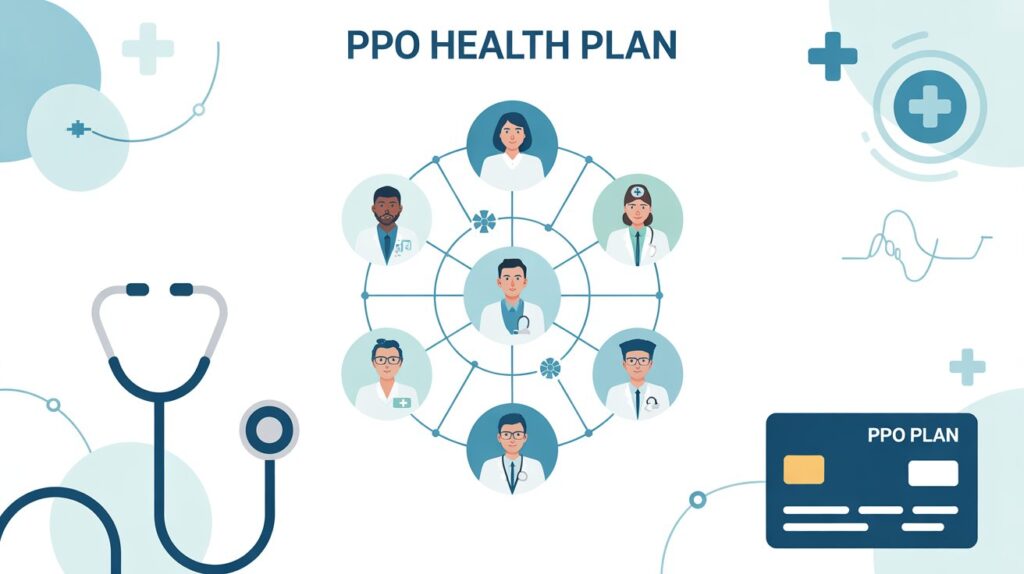
How a PPO Health Plan Actually Works
When you have a PPO plan, here is what happens step by step:
- You pay a monthly amount called a premium to keep your plan active
- When you go to a doctor, you usually pay a small amount called a copay
- After you pay a certain amount out of your own pocket (called a deductible ), the insurance company starts paying a share of your medical bills
- If you stay with doctors on the PPO network, your costs are lower
- If you go to a doctor not on the network, you pay a bigger share of the bill
PPOs vs. Other Health Insurance Options: HMO, EPO, and POS
Understanding how PPOs compare to other types of health insurance plans can help you pick the right option for your needs. While PPOs offer flexibility, HMO, EPO, and POS plans each have their own structure and their own set of rules. The way each plan handles things like doctor visits, specialist access, and out-of-network care is very different from one another. Once you understand how each one works on its own, picking the right plan becomes a lot easier.
What Each Plan Type Actually Means
Before you can compare these plans, you need to know what each one is. An HMO, which stands for Health Maintenance Organization, is a plan that focuses on keeping you healthy through a local network of doctors. An EPO, or Exclusive Provider Organization, only covers care inside its network, but it does not ask you to pick a primary care doctor the way an HMO does. A POS, or Point of Service plan, is like a mix between an HMO and a PPO. It gives you some freedom to go outside the network, but you still need a primary care doctor to manage your care. A PPO, as you already know, lets you see any doctor you want, inside or outside the network, without needing anyone’s permission first.
How These Plans Handle Your Primary Care Doctor
One of the biggest differences between all four plan types is whether or not you have to pick a primary care doctor. With an HMO, you must choose one. That doctor becomes the person who manages all your care and decides whether you can see someone else. A POS plan works the same way, you pick a primary care doctor and they coordinate everything for you. An EPO does not require you to pick one, but you still have to stay inside the network to get covered. A PPO is the only plan that does not ask you to choose a primary care doctor at all. You can go straight to whoever you want.
The Big Differences Between PPO and HMO
PPOs and HMOs are the two most common health plan types in the country, but they work in very different ways. The main thing that sets them apart is freedom. A PPO gives you the ability to go to any doctor you want, and you do not need a referral from anyone before seeing a specialist. An HMO keeps your care tighter , you stay with doctors in the network, and your primary care doctor has to refer you before you can see a specialist.
Because HMOs are more restricted, they tend to cost less each month. The insurance company does not have to pay as much because everything stays inside a smaller, controlled network.
PPOs cost more per month because they cover a wider range of doctors and also pay for out-of-network care, even if at a smaller rate.
| What You Want to Know | PPO | HMO |
| Do I have to pick a primary care doctor? | No | Yes |
| Can I see a specialist on my own? | Yes, no referral needed | No, you need a referral first |
| What happens if I see a doctor outside the network? | The plan still pays, but you pay more | You pay the full bill yourself |
| Which one costs less each month? | More expensive | Less expensive |
| Which one gives me more doctor choices? | Yes, bigger network | Smaller, more local network |
| Is it good for people who travel? | Yes | Not really |
| Does it cover care in other states? | Usually yes | Usually no |
| Which one is better if I have a chronic condition? | Yes, because you can see many specialists freely | Possible, but you have to go through your primary care doctor every time |
How EPO Plans Are Different From PPOs
At first glance, an EPO and a PPO can look very similar. Neither one requires you to pick a primary care doctor, and neither one asks for a referral before you see a specialist. But there is one big thing that separates them , an EPO will not pay for care outside of its network. If you go to a doctor who is not on the EPO list, you pay the entire bill yourself.
A PPO, on the other hand, will still cover some of that out-of-network bill, even if your share of the cost goes up. This is why PPOs cost more each month than EPOs. You are paying for that extra layer of flexibility.
| What You Want to Know | PPO | EPO |
| Do I need a referral to see a specialist? | No | No |
| Do I have to pick a primary care doctor? | No | No |
| What if I go to a doctor outside the network? | Plan pays a smaller share | I pay everything myself |
| Which one has a bigger network of doctors? | Usually bigger | Smaller than a PPO |
| Which one costs less each month? | More expensive | Less expensive than PPO |
| Is it covered in an emergency outside the network? | Yes | Yes |
| Which one is better if my doctors are all in one area? | Both work, but EPO saves money | Yes, EPO is a good fit |
| Which one is better if I might need a doctor in another city? | Yes, PPO is the safer pick | Risky, because out-of-network is not covered |
How POS Plans Compare to PPOs
A POS plan tries to give you the best of both worlds. Like an HMO, you have a primary care doctor who manages your care. But like a PPO, you can still go outside the network if you need to. The catch is that going out of network with a POS plan costs you more money, and in many cases you need your primary care doctor to give you a referral before you do it.
PPOs are still more flexible because you do not need anyone’s permission to go anywhere. POS plans sit somewhere in the middle , they are not as locked in as an HMO, but they are not as free as a PPO either.
| What You Want to Know | PPO | POS |
| Do I have to pick a primary care doctor? | No | Yes |
| Can I see a specialist without a referral? | Yes | Sometimes, depends on the plan |
| Can I go to a doctor outside the network? | Yes, at a higher cost | Yes, but usually need a referral first |
| Which one costs less each month? | More expensive | Less than PPO, more than HMO |
| Which one gives me more freedom? | More freedom | Some freedom, but with rules |
| Is it good for someone who wants to save money but still have options? | Not the cheapest | Yes, it is a good middle ground |
| Does my primary care doctor have to approve everything? | No | Yes, for specialists and out-of-network |
| Which one is better for families with mixed health needs? | Yes, because no rules on who you see | Can work, but referrals slow things down |
Which Plan Type Should You Actually Pick?
Choosing between a PPO, HMO, EPO, or POS comes down to two things , how much freedom you want and how much you are willing to pay for it. If you already have doctors you like and do not want to deal with referrals or restrictions, a PPO is the way to go. If you are healthy, do not travel much, and want to keep your monthly costs as low as possible, an HMO or EPO couldsave you a lot of money. If you want something in between , a little bit of flexibility without paying the full PPO price , a POS plan might be the right fit.
| Your Situation | Best Plan for You | Why |
| You have doctors you already like and do not want to switch | PPO | No referrals, see anyone you want |
| You want the lowest monthly cost and do not travel | HMO | Cheapest option, good local network |
| Your doctors are all in one area and you rarely go outside it | EPO | Saves money, no referral needed for specialists |
| You want some flexibility but also want to save money | POS | Middle ground between HMO and PPO |
| You travel a lot for work or personal reasons | PPO | Covers out-of-network care in other states |
| You have a family member who needs many different specialists | PPO | Easiest access to specialists with no extra steps |
| You are young and healthy and barely go to the doctor | HMO or EPO | Lower cost, and you do not need much flexibility |
| You want a primary care doctor to help manage your care | HMO or POS | Both give you that kind of support |
The Cost Breakdown of a PPO Plan
Understanding the money side of a PPO plan is important. There are several parts to what you actually pay:
Premium
This is the money you pay every month just to have the plan. It does not matter if you go to the doctor or not , you still pay this amount each month.
Deductible
This is the amount you pay out of your own pocket before the insurance starts helping. For example, if your deductible is $1,000, you pay the first $1,000 of medical bills yourself.
Copay
A copay is a flat amount you pay each time you visit a doctor. It could be $20 or $50 , it depends on your specific plan.
Coinsurance
After you pay your deductible, you and the insurance company split the remaining cost. If your coinsurance is 80/20, the insurance pays 80% and you pay 20%.
Out-of-Pocket Maximum
This is the most money you will ever pay in one year. Once you hit this number, the insurance company pays 100% of everything after that.
| Cost Type | What It Means | Who Pays |
| Premium | Monthly payment to keep the plan | You pay every month |
| Deductible | Amount you pay before insurance kicks in | You pay first |
| Copay | Small flat fee per doctor visit | You pay at each visit |
| Coinsurance | Shared cost after deductible | You and insurance split |
| Out-of-Pocket Max | Highest amount you pay in a year | After this, insurance pays all |
When Is a PPO Plan a Good Choice for You?
A PPO plan is not for everyone, but it is a great fit for certain people. Here are some situations where a PPO makes a lot of sense:
- You already have a doctor you like and do not want to switch
- You want to see specialists without asking your primary doctor first
- You travel often and need coverage in different cities or states
- You have a family member who needs to see many different types of doctors
- You want more control over your own health care decisions
When a PPO Might NOT Be the Right Choice
Just like PPOs have good points, they also have downsides. A PPO might not be right for you if:
- You want to pay the lowest monthly cost possible
- You do not mind having a primary care doctor manage your care
- You live in one area and do not travel much
- You are healthy and do not visit the doctor often
- You want a simpler plan with fewer choices to make
How to Find Doctors in a PPO Network
One of the most important things when you pick a PPO plan is making sure your favorite doctors are part of the network. Here is how you can check:
Step 1: Go to the Insurance Company Website
Every PPO plan has a provider directory on the insurance company’s website. You can search by doctor name, specialty, or location.
Step 2: Call the Doctor’s Office
Even if a doctor shows up in the online directory, it is a good idea to call their office and confirm they accept your specific plan. Sometimes the online lists are not updated.
Step 3: Ask Your Employer or Plan Provider
If you got your PPO through your job, your HR department or the plan provider can help you figure out which doctors are covered.
PPO Plans and Specialists
One of the biggest reasons people choose PPO plans is because of how easy it is to see specialists. In many other plan types, you have to go through your primary care doctor first before you can see someone like a dermatologist or an orthopedist.
With a PPO, you can skip that step. You call the specialist directly, make an appointment, and go. The only difference is whether that specialist is in-network or out-of-network , and that only changes how much you pay.
| Specialist Type | In-Network Cost | Out-of-Network Cost |
| Primary Care Doctor | Low copay | Higher cost, may not be fully covered |
| Dermatologist | Low copay | Higher cost |
| Orthopedist | Low copay after deductible | You may pay most of the bill |
| Mental Health Provider | Covered at set rate | Covered at a lower rate |
| Dentist (if included) | Set copay | Partially covered or not at all |
What Happens When You Go Out of Network?
Going out of network with a PPO is allowed, but it costs you more money. Here is what typically happens:
- You may have to pay a separate, higher deductible for out-of-network care
- The insurance company pays a smaller percentage of the bill
- Some services might not be covered at all if they are out of network
- You might have to fill out extra paperwork or deal with billing issues on your own
| Situation | In-Network | Out-of-Network |
| Doctor visit | You pay a small copay | You pay a bigger share |
| Surgery | Insurance covers most after deductible | You pay more after a higher deductible |
| Lab tests | Usually covered | May only be partially covered |
| Emergency room | Covered no matter what | Covered no matter what |
| Balance billing | Not allowed | Can happen , doctor charges you the rest |
PPO Plans Through Your Employer vs Buying Your Own
There are two main ways people get PPO plans , through their job or by buying one on their own.
Through Your Employer
If your employer offers a PPO, they usually pay a big part of the monthly premium for you. This makes it cheaper. You pick the plan during open enrollment, which is usually once a year.
Buying Your Own PPO
If you are self-employed or your job does not offer health insurance, you can buy a PPO plan on your own through the health insurance marketplace or directly from an insurance company.
When you buy your own, you pay the full premium yourself, though you might qualify for subsidies if you buy through the marketplace.
| Factor | Employer PPO | Individual PPO |
| Who pays the premium? | You and your employer share the cost | You pay the full amount |
| Where do you buy it? | Through your employer | Marketplace or insurance company |
| When can you sign up? | During open enrollment at work | During marketplace open enrollment |
| Cost | Usually lower | Usually higher |
| Network size | Depends on the plan | Depends on the plan |
How PPO Plans Handle Emergencies
If you have a medical emergency, you do not have to worry about whether the hospital is in your PPO network or not. Emergency care is always covered at the in-network rate, no matter where you are. This is true whether you are in your home state or traveling somewhere else.
After the emergency is over, if you need follow-up care, that is when it matters whether the doctor or hospital is in your network.
PPO Plans and Mental Health Coverage
Mental health is a big part of overall health, and PPO plans are required by law to cover mental health services. This includes things like therapy, counseling, and treatment for substance abuse. The costs you pay for mental health care should be about the same as what you pay for other types of medical care under your PPO plan.
If you want to see a therapist or counselor, you can usually find one in your PPO network and pay a regular copay, just like a normal doctor visit.
How to Pick the Right PPO Plan for You
Choosing between different PPO plans can feel overwhelming. Here are some things to look at when you are comparing your options:
- Network size , A bigger network means more doctors to choose from
- Monthly premium , How much you can afford to pay each month
- Deductible amount , How much you want to pay before insurance helps
- Copay amounts , How much each doctor visit will cost you
- Out-of-pocket maximum , The most you could end up paying in a year
- Prescription drug coverage , Whether your medications are included and how much they cost
- Coverage for travel , If you move around a lot, check if the plan works in other states
A Quick Summary of Everything About PPO Plans
| Topic | Key Point |
| What PPO stands for | Preferred Provider Organization |
| Main benefit | Freedom to choose your own doctors |
| Referral needed? | No |
| Out-of-network allowed? | Yes, but costs more |
| Best for | People who want flexibility |
| Emergency coverage | Always covered anywhere |
| Mental health | Required to be covered |
| Specialist access | Direct, no referral needed |
| Compared to HMO | More freedom, usually higher cost |
| How to find doctors | Use insurance website or call the office |
A PPO health plan gives you more say in how you take care of your health. It is not the cheapest option out there, but for people who value having choices and not being told where to go, it is one of the best plans available. Take your time, compare your options, and pick the plan that fits your life the best.
How Medical Practices Join a PPO Network
A doctor or hospital does not automatically become part of a PPO network. They have to apply and go through a process called credentialing. During this process, the insurance company checks things like the doctor’s license, their malpractice insurance, and where they trained. Only after the insurance company approves them does the practice show up on the PPO’s list of providers.
Many practices use a tool called CAQH, which is a single online profile where doctors can upload all their information once. Instead of filling out a separate form for every single insurance company, the practice submits one profile and multiple PPO networks can pull from it. This saves a lot of time, especially for new practices that want to get on as many networks as possible.
What Negotiated Rates Mean for Practices
When a practice joins a PPO network, they do not get to charge whatever they want. The insurance company and the practice agree on a set price for each type of service. This is called a negotiated rate or a fee schedule. So if a practice normally charges $300 for a certain checkup, the PPO might only pay $200 for that same visit.
Practices accept this lower payment because being in the network brings them more patients. The trade-off is simple: lower pay per visit, but more people walking through the door.
| Service Type | What Practice Normally Charges | What PPO Pays (Approximate) |
| Regular office visit | $250 | $150–$180 |
| Specialist consultation | $400 | $250–$320 |
| Basic lab work | $180 | $100–$140 |
| Minor surgery | $2,000 | $1,400–$1,700 |
| Follow-up appointment | $150 | $90–$120 |
How Practices Handle Billing With a PPO Plan
When a patient with a PPO plan visits a doctor who is in-network, the practice does most of the billing work. The patient pays their copay at the front desk, and then the practice sends a claim to the insurance company. The insurance company looks at the claim, checks if the service is covered, and then sends money to the practice based on the agreed-upon rate.
The practice also sends the patient an Explanation of Benefits (EOB), which shows exactly what the insurance paid and what the patient still owes. This is not a bill , it is just a summary of how the money moved.
What Happens When the Patient Is Out of Network
If a patient goes to a practice that is not in the PPO network, things change. The practice may ask the patient to pay the full amount upfront. Then the patient has to file the claim themselves with their insurance company. The insurance company pays back a smaller portion, and the patient ends up paying more overall.
Why Some Practices Choose Not to Accept PPO Plans
Not every practice wants to be part of a PPO network. Some doctors feel that the negotiated rates are too low and that the money they receive does not cover the cost of running their office. Other practices prefer to set their own prices and let patients pay directly.
- The paperwork and time spent on claims can take staff away from patient care
- Insurance companies sometimes deny or delay payments, which creates cash flow problems
- Small practices with few staff members find it hard to keep up with all the different PPO rules and requirements
- Some doctors feel they can attract enough patients on their own without being on a network list
Prior Authorization and What It Means for Practices
Before a practice can perform certain treatments or prescribe specific medications, they sometimes need to get approval from the insurance company first. This is called prior authorization. The doctor’s office fills out a request form, includes medical records and notes to support why the treatment is needed, and sends it all to the PPO.
The insurance company then reviews everything and decides whether to approve or deny the request. Standard requests usually get a response within 72 hours, and urgent ones should get an answer within 24 hours.
| Type of Request | How Long It Takes | Who Submits It |
| Standard prior authorization | Up to 72 hours | The doctor’s office |
| Urgent prior authorization | Within 24 hours | The doctor’s office |
| Prescription drug approval | 24–72 hours | The doctor’s office |
| Surgery approval | 3–5 business days | The doctor’s office |
| Denial appeal | Varies by plan | Doctor and/or patient |
Why Prior Authorization Frustrates Doctors
Doctors spend a lot of time on prior authorization. According to a 2024 survey by the American Medical Association, most physician practices complete over 40 prior authorization requests every single week per doctor. Their staff spends about 12 hours each week just working on these requests. Many doctors feel this process slows down patient care and takes too much time away from actually treating people.
How Practices Get Paid by PPO Plans
The payment cycle between a practice and a PPO insurance company follows a specific order. First the service happens, then the practice sends the claim, and then the money comes in , but it is not always fast or simple.
| Ste p | What Happens | Who Does It |
| 1 | Patient visits the practice | Patient and doctor |
| 2 | Practice collects the copay | Practice front desk |
| 3 | Practice sends the claim to insurance | Practice billing staff |
| 4 | Insurance reviews the claim | Insurance company |
| 5 | Insurance approves or denies the claim | Insurance company |
| 6 | Insurance sends payment to the practice | Insurance company |
| 7 | Practice sends EOB to the patient | Practice |
Most insurance companies pay practices within 30 days after receiving a clean claim. If there is missing information or an error on the claim, it gets sent back and the practice has to fix it before resubmitting, which adds more time.
What Happens When a PPO Denies a Claim
Sometimes an insurance company will deny a claim from a practice. This can happen for many reasons , maybe the service was not considered medically necessary by the PPO, maybe the paperwork was incomplete, or maybe the treatment needed prior authorization that was never requested.
When a denial happens, the practice has the right to appeal. They put together all the medical records, doctor’s notes, and any other proof that shows the treatment was needed, and they send it back to the insurance company. A good chunk of denied claims end up getting approved after an appeal.
- The practice receives a denial letter that explains the reason
- The doctor reviews the case and decides whether to appeal
- The practice gathers supporting documents and submits the appeal
- The insurance company has a set number of days to review the appeal
- If the appeal is denied again, the practice or patient can take it to an independent review
How PPO Contracts Affect a Practice’s Finances
A PPO contract is not just about how much the insurance pays per visit. It covers a lot of other things that directly affect how a practice makes money.
| Contract Detail | What It Controls |
| Fee schedule | How much the practice gets paid for each service |
| Payment timeline | How many days the insurance has to send payment |
| Termination clause | How either side can end the contract |
| Escalation clause | Whether rates go up automatically each year |
| Exclusivity rules | Whether the practice can join other networks |
| Denial and appeal terms | How disputes over payment are handled |
Practices often renegotiate their PPO contracts once a year. If a practice brings in a lot of patients from a certain insurance company, they have more room to ask for higher payment rates. On the other hand, if the practice is new or small, the insurance company usually has the stronger position in the conversation.
Sure, here are the updated 5 H2 sections without any numbers.
What Outsourced Medical Billing Companies Actually Do
When a practice decides not to handle its own billing, it hands that job off to a third-party medical billing company. These companies take over tasks like coding the services correctly, putting together the claim, sending it to the PPO insurance company, and following up until the money comes in. They also handle things like verifying patient insurance before appointments and posting payments once they arrive.
The practice still does the medical work. The outsourced billing company handles everything that happens after the patient leaves the room. They act as a middleman between the practice and the insurance company, and their only job is to make sure the practice gets paid the right amount on time.
How Much It Costs to Hire an Outsourced Billing Company
Outsourced billing companies charge practices in a few different ways. Some charge a flat fee for every single claim they process. Others charge based on a percentage of whatever money they collect for the practice. A few companies use a mix of both.
| Pricing Model | How It Works | Best For |
| Flat fee per claim | You pay a set amount for each claim, no matter the size | Practices that want predictable monthly costs |
| Percentage of collections | The billing company takes a cut of what they collect | Practices that want to pay based on results |
| Hybrid model | A small flat fee plus a smaller percentage | Practices that want a balance of both |
| Monthly subscription | A fixed monthly amount for a set number of claims | Practices with a steady, consistent patient volume |
A practice that handles billing on its own usually pays for at least one full-time staff member, their salary, benefits, and software. In most cases, outsourcing ends up costing less than all of that combined.
How Outsourced Billing Companies Deal With PPO Denials
When a PPO insurance company denies a claim, that is not the end of the road. A good outsourced billing company will catch the denial, figure out exactly why it happened, and fix it. Common reasons for denials include wrong codes, missing patient information, or a service that needed prior authorization but did not get it.
The billing company then puts together an appeal with the correct information, attaches supporting documents from the doctor, and resubmits it to the PPO. They track the appeal the whole way through until the insurance company gives a final answer.
- They receive the denial notice from the PPO
- They identify the exact reason the claim was rejected
- They correct any errors or gather missing documents
- They resubmit the claim or file a formal appeal
- They follow up with the insurance company until it is resolved
- They report back to the practice with the outcome
What to Look For When Picking an Outsourced Billing Company
Not every outsourced billing company is the same. Some are very good at what they do, and some are not. Here are the things you should pay attention to before signing a contract with one:
| Factor | Why It Matters |
| Do they have experience with PPO plans? | If they do not know how PPO networks and contracts work, they might make mistakes on your claims |
| What software do they use? | Their software needs to be secure and able to send claims electronically in the right format |
| Do they give you regular reports? | You need to see how your money is moving and where things might be slowing down |
| What is their denial rate? | A low denial rate means they are submitting claims correctly the first time |
| How do they handle data security? | Patient information is private , they must follow HIPAA rules at all times |
| Do they specialize in your type of practice? | A company that knows your specialty will code things more accurately |
| What happens if you want to leave? | Read the contract carefully , some companies make it hard to switch |
How Long It Takes for a Practice to See Results After Outsourcing
Switching to an outsourced billing company does not give you instant results. There is always a transition period where the new company learns about your practice, sets up your accounts, and starts processing your claims.
During the first few weeks, there might be a few hiccups , old claims that still need to be sorted out, staff at your practice adjusting to the new process, or the billing company learning the specific details of your PPO contracts. After that settling-in period, most practices start seeing a difference in how fast their money comes in and how few claims get denied.
| Timeline | What Is Happening |
| First couple of weeks | The billing company reviews your current claims and sets up your account |
| Next couple of weeks | They start processing new claims and sorting out any old unpaid ones |
| After a month or so | Things start running smoother and denial rates begin to drop |
| After that | The practice sees more steady cash flow and fewer billing problems |
The Last Thing You Need to Know Before You Pick a Health Plan
You have read a lot in this blog. You know what a PPO is, how it compares to other plan types, how practices and billing companies work behind the scenes, and what it all means for you as a patient. But knowing all of this is only useful if you actually sit down and do something with it.
That is what this last part is about , turning everything you learned into a real decision that actually works for your life.
Read the Fine Print Before You Sign Anything
Most people never actually read what is inside their health plan documents. They see the monthly cost, pick the plan that looks affordable, and move on. But health plans are legal documents. Every single rule about what is covered, what is not covered, and what happens when something goes wrong is written in there. If you skip reading it, you might find out the hard way that a treatment you needed was not covered at all, or that there was a step you missed before your insurance would pay.
The terms and conditions section tells you things like waiting periods, exclusions, and limits on coverage. These are the parts that can surprise you when you actually need your insurance the most. Taking the time to read through your plan document before you agree to anything can save you from a lot of stress and unexpected bills later on.
Think About What Might Happen, Not Just What Is Happening Now
A lot of people pick a plan based on where they are right now. If they are healthy today, they grab the cheapest option and assume it will stay that way. But life does not work like that. Life events like getting married, having a baby, or changing jobs can affect your health insurance needs. If you are planning any of these things in the coming months, your health care needs are going to shift, and the plan you picked based on your life today might not fit your life tomorrow.
This is especially true if you are thinking about starting a family. Pregnancy and having a baby come with a lot of medical visits, tests, and hospital stays. A plan with low monthly costs but very little coverage for these kinds of situations can end up costing you far more than a plan with a slightly higher monthly payment but better coverage for exactly what you are about to go through.
Do Not Forget About Preventive Care
Preventive care is one of the most overlooked parts of any health plan. Preventive care helps find potential health issues early, and this can stop more serious health problems later. Things like yearly checkups, screenings, and vaccinations are usually covered at no extra cost under most plans, but a lot of people never use them because they feel fine and do not think they need to go to the doctor.
Using preventive care benefits is one of the smartest things you can do with your health plan. It is already included in what you are paying for every month. Skipping it does not save you
anything , it just means you are missing out on something that could catch a problem before it turns into something bigger and more expensive to treat.
Pay Attention to What Happens When Your Life Changes
Your health plan does not automatically adjust when something big happens in your life. Events like getting married, having a baby, switching jobs, or moving can require you to adjust your health insurance coverage. If you do not update your plan when these things happen, you might end up with coverage that does not fit your situation anymore, or you might even end up with gaps where you are not covered at all.
Most insurance companies allow you to make changes during what is called a Special Enrollment Period. This only opens up when a qualifying life event happens. If you miss that window, you might have to wait until the next open enrollment period to make any changes, and that could be months away. Knowing when these windows open and acting on them quickly is something that protects you from being caught without the right coverage.
The Bottom Line
At the end of the day, picking a health plan is not just about finding the cheapest option or the one with the most doctors in the network. It is about finding the one that fits your actual life , where you live, what you do, who is in your family, and what kind of health care you are likely to need in the months ahead. A PPO gives you a lot of freedom, but freedom only matters if you actually use it. An HMO saves you money, but only if you are okay with the rules it comes with. Every plan has trade-offs, and the only way to make a smart choice is to understand what those trade-offs are before you commit.
You have already done the hardest part by learning how all of this works. Now just take your time, look at your real options, and pick the plan that actually makes sense for you , not the one that looks good on paper but falls apart when you actually need it.